
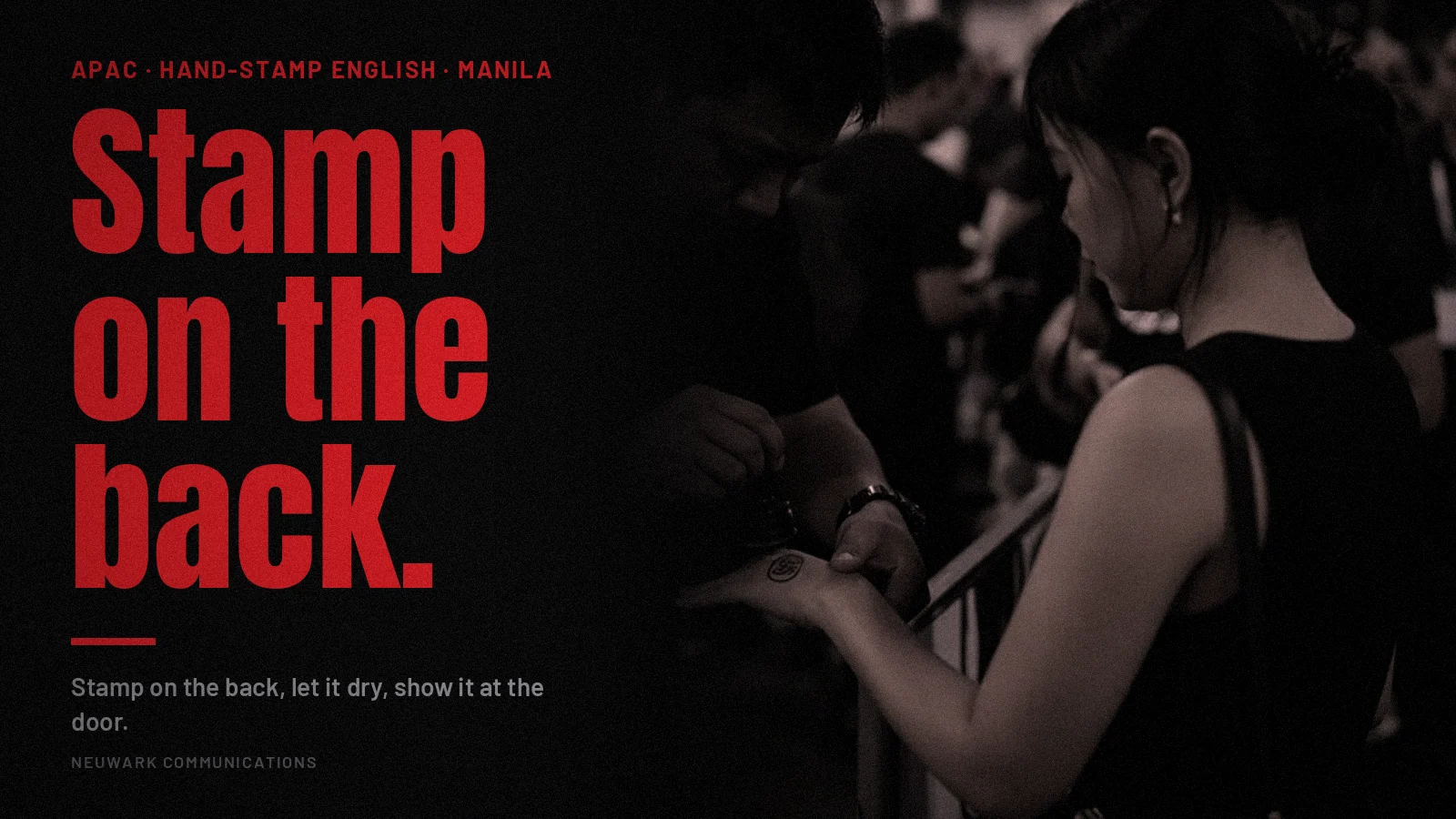
Stamp on the back, let it dry, show it at the door.
Street-smart APAC English: short sentences a tired operator can say out loud.
Quick answer: A hand-stamp line English APAC is the door marshal’s rule for a re-entry stamp at a public event: stamp on the back, let it dry, show it at the door. The marshal stamps the back of the hand, waits a beat for the ink to set, and tells the guest to show that same stamp when they come back.
A evening festival block in Manila, one main gate and a side re-entry lane already humming.
Guests duck out for food and come back waving palms that never took a stamp, or a smear of ink across the knuckles.
A marshal stamps the next hand on the palm, the guest closes a fist, and the mark is gone before they reach the food stall.
Pair it with the bag-check line English APAC for the security gate and the wristband-check line English APAC for colour-matched door bands. Same craft: one short rule, said early and said the same way.
What is a hand-stamp line English APAC?
It is the door marshal’s three-part rule for re-entry at a stamped gate. Stamp on the back, let it dry, show it at the door. Said at the stamp table before the guest walks away.
1. Stamp on the back. The back of the hand keeps the mark visible and away from bag straps and sweat on the palm.
2. Let it dry. Hold the hand open for a beat. Closing a fist or stuffing it in a pocket smears the ink into nothing.
3. Show it at the door. Tell guests now that the same stamp is their way back in, so they do not argue at re-entry.
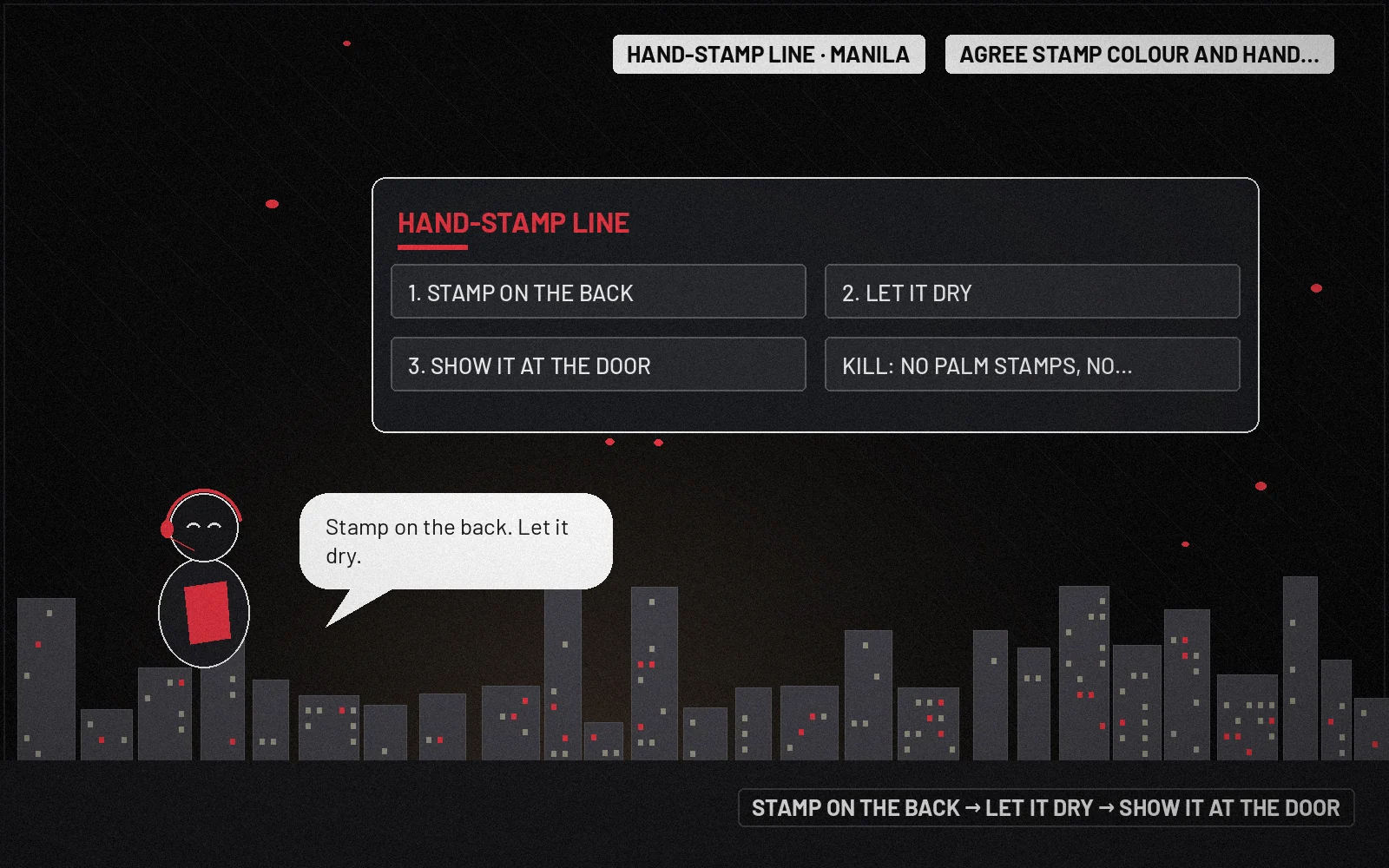
The habit to break is the rushed dab. A marshal stamps anywhere to clear the queue, and by the time guests return the mark has rubbed off.
What should a door marshal stop saying?
Stop stamping anywhere and stop waving guests through without the dry beat. Give the three parts in order, then release the hand.
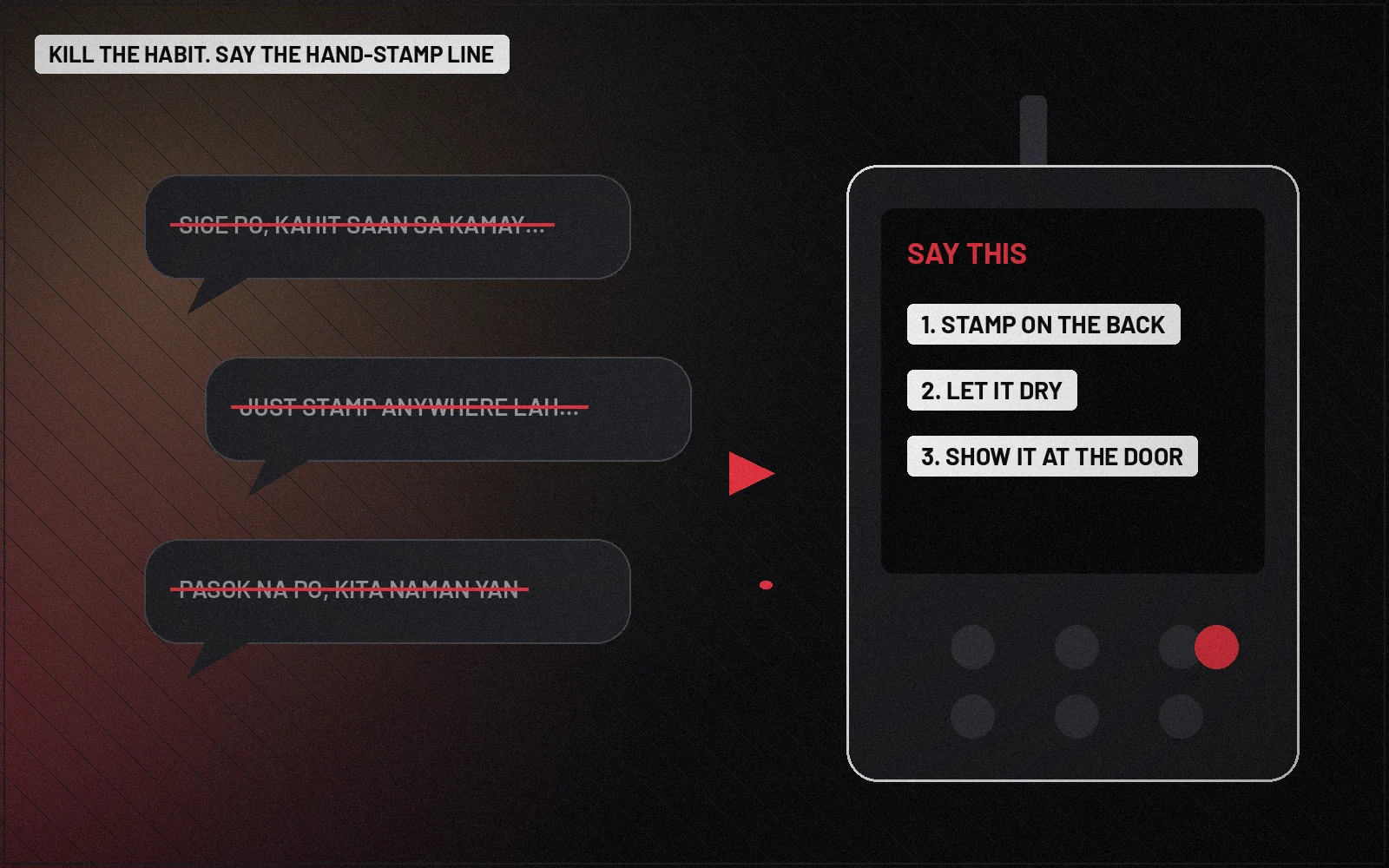
| Kill this | Say this (illustrative) | Why |
|---|---|---|
| Sige po, kahit saan sa kamay, bilisan niyo. | Stamp on the back. | The back of the hand keeps the mark clear |
| Just stamp anywhere lah, hurry up. | Let it dry. | A wet stamp on a closed fist is gone in minutes |
| Pasok na po, kita naman yan. | Show it at the door. | Naming re-entry now stops the argument later |
Lines in this table are illustrative, not quotes from real people.
Keep a spare pad and a cloth at the table, not in your pocket.
What if a guest says the stamp washed off?
Restamp once at the desk after a quick ID check, and log the name. Do not invent a second mark at the side gate.
This is the uncomfortable rung. The guest is wet from rain, insists they paid, and the queue is loud. The marshal stays calm, calls the desk lead, and only restamps after the check.
Who decides the stamp colour and placement?
The site lead sets the colour and the placement with security before doors. The brief names which hand, which colour for which night, and who may restamp.
PH / SG / Jakarta desk notes
Same three parts. Different desks.
Philippines desk. Polite and clear. Stamp on the back po, ma’am. Wait lang po, let it dry. Show this po at the door when you come back. Hold the wrist lightly, not the fingers.
Singapore desk. Brisk and even. Stamp on the back. Let it dry. Show it at the door. Same words for every guest.
Jakarta desk. Jakarta festival desks often run stamp and wristband together. Use Bapak or Ibu only if the house style asks, then the three parts in plain English.
Paste-ready lock
Speakable lock (illustrative): “Stamp on the back, let it dry, show it at the door.”
Monday field kit
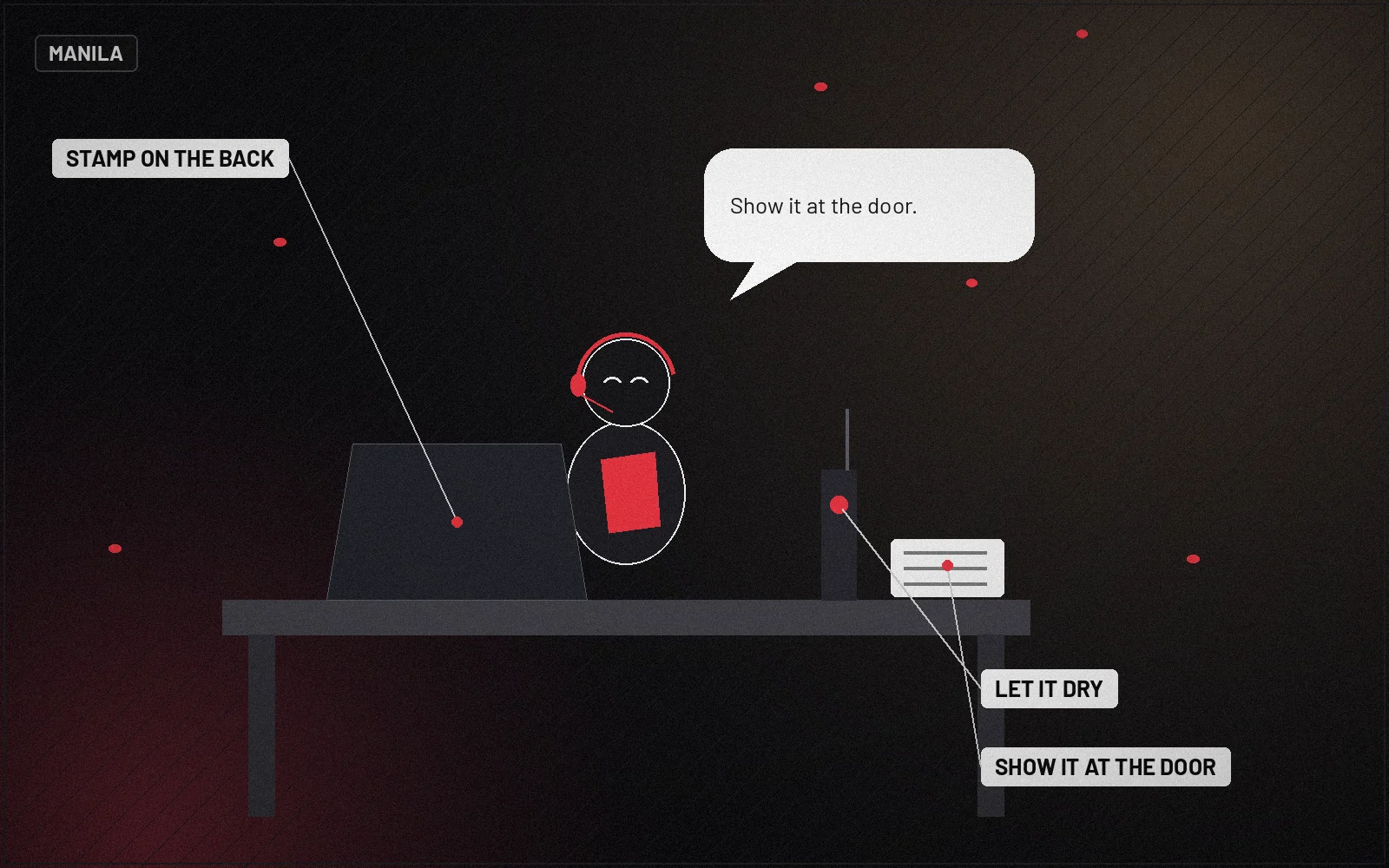
- Agree stamp colour and hand placement with the site lead before doors.
- Set a stamp table with spare pads, cloths and a restamp log.
- Brief marshals on the lock: stamp on the back, let it dry, show it at the door.
- Practise the washed-off restamp once, from ID check to log entry.
- Kill rule: no palm stamps, no wet fists, no side-gate restamps without the desk.
Illustrative only. Agree who may restamp before the first guest leaves for food.
FAQs
What is a hand-stamp line English APAC?
A hand-stamp line English APAC is the door marshal’s rule for a re-entry stamp at a public event: stamp on the back, let it dry, show it at the door. The marshal stamps the back of the hand, waits a beat for the ink to set, and tells the guest to show that same stamp when they come back.
What should a door marshal stop saying?
Stop stamping anywhere and stop skipping the dry beat. Stamp the back, wait, then name re-entry.
What if a guest says the stamp washed off?
Restamp once at the desk after an ID check and a log entry. Call the desk lead if the story does not match.
Who decides the stamp colour and placement?
The site lead sets colour and placement with security before doors. Marshals follow that brief and only the desk restamps.
Gate wording like this is drafted at our Manila HQ in Makati, and our account office at MBFC Tower 2 in Singapore reviews it with teams working there.
Neuwark Communications builds event and campaign communications as part of our strategy and messaging work. More street-smart lines live in Insights.
Related: bag-check line English APAC · wristband-check line English APAC
Talk to us about your next event script.
Illustrative lines only. Communications craft, not legal advice.