
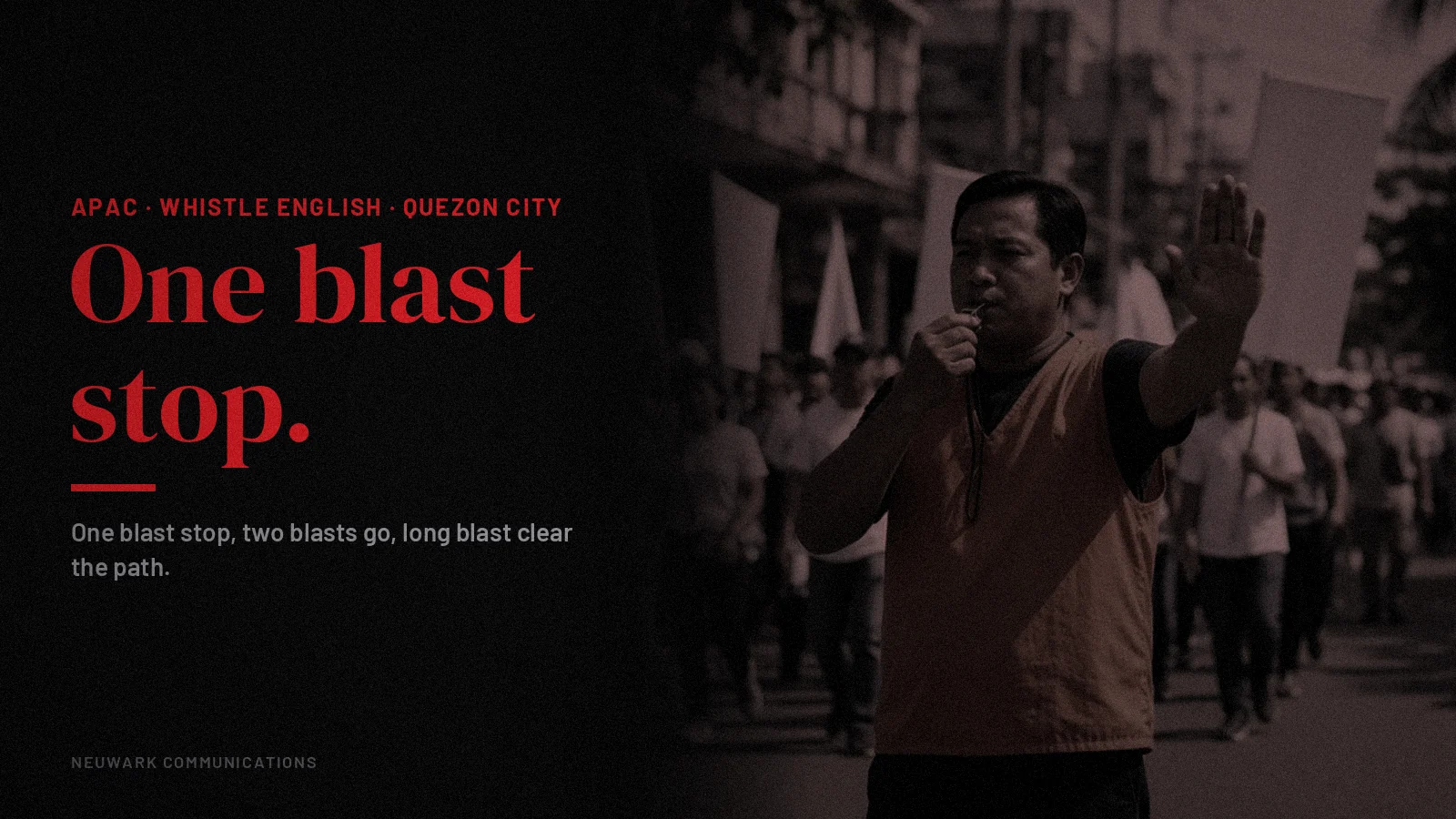
One blast stop, two blasts go, long blast clear the path.
Street-smart APAC English: short sentences a tired operator can say out loud.
Quick answer: A whistle line English APAC is the route marshal’s rule for whistle signals on a march or parade: one blast stop, two blasts go, long blast clear the path. Every marshal uses the same three signals, says them out loud at the briefing, and never blows a whistle for anything else.
A Sunday march in Quezon City, mid-morning, the route lined with supporters.
Three marshals along one block all have whistles, and each uses them differently.
At the corner, a support van needs to pass, and nobody in the march can tell what the whistles mean.
Pair it with the crowd-barrier line English APAC for people at the rails and the radio-check line English APAC for marshals on channel. Same craft: one short rule, said early and said the same way.
What is a whistle line English APAC?
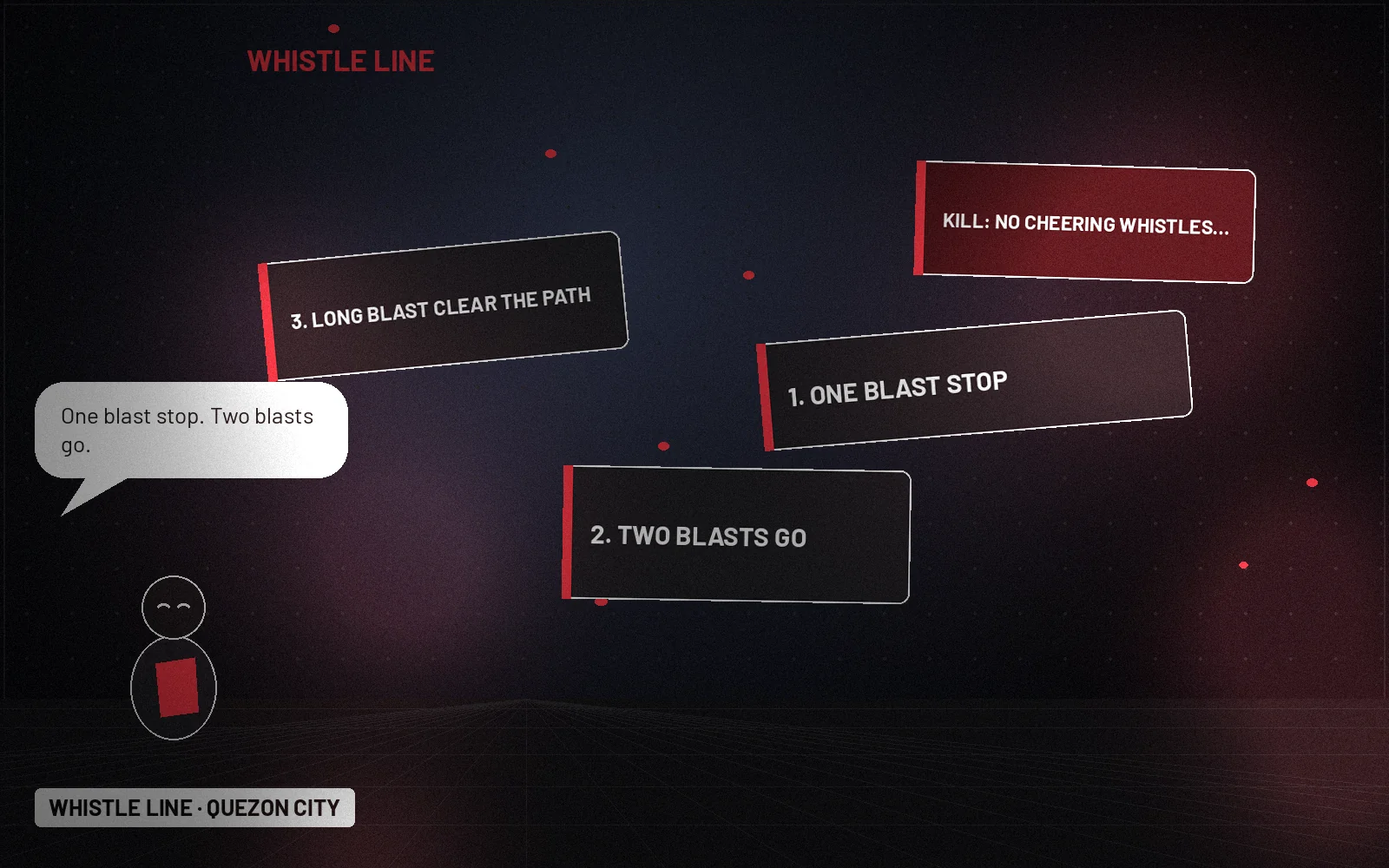
It is the route marshal’s three-part rule for every whistle on the route. One blast stop, two blasts go, long blast clear the path. Said out loud at the briefing and to the front rows before stepping off.
1. One blast, stop. The block halts where it is.
2. Two blasts, go. The block moves again at walking pace.
3. Long blast, clear the path. People step to the sides so a van or a team can pass.
The habit to break is the excited whistle. Marshals blow to cheer, to call a friend or to hurry people, and when a real signal comes nobody can hear the difference.
What should route marshals stop doing with whistles?
Stop using the whistle for anything except the three signals. Use your voice for everything else.
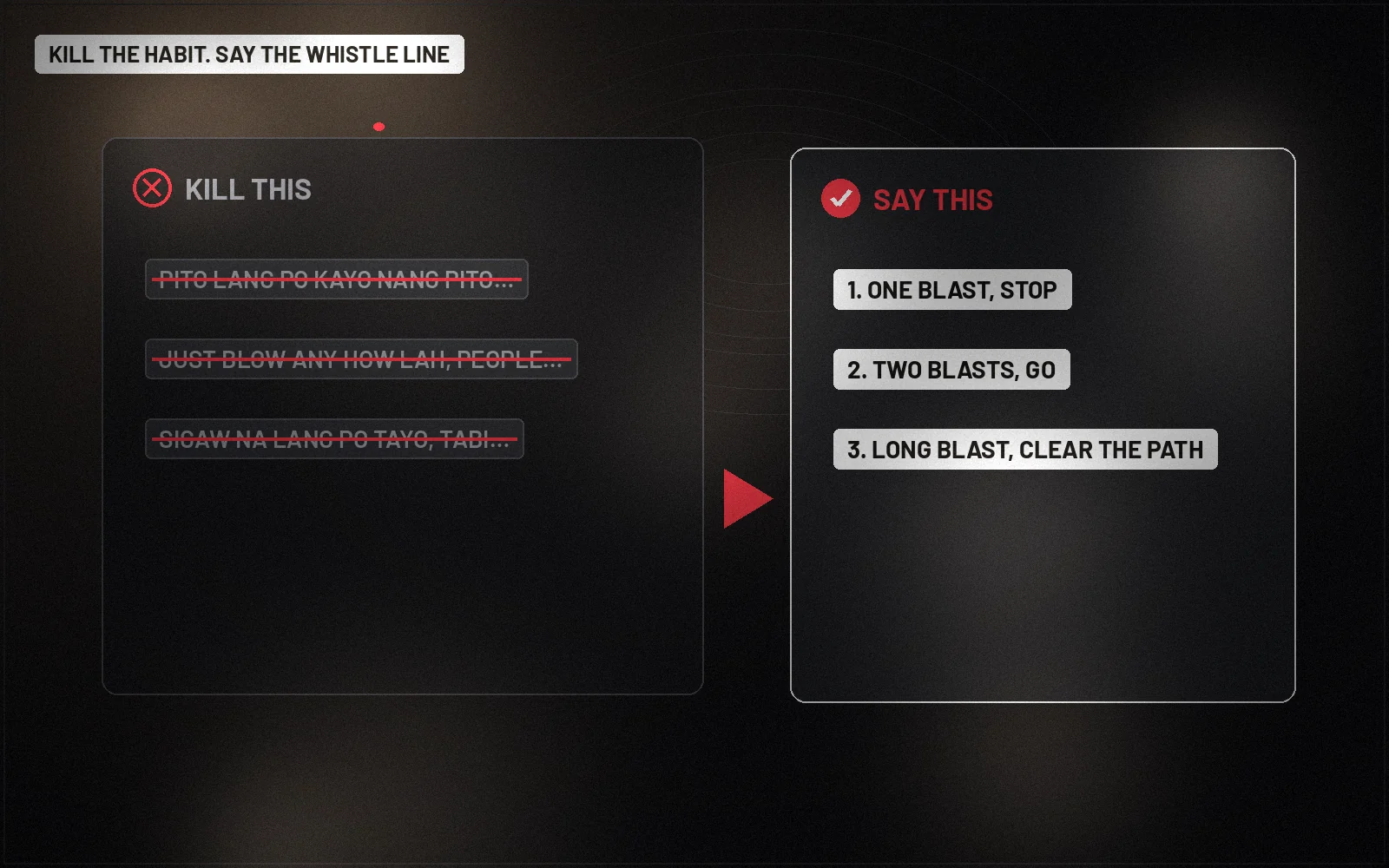
| Kill this | Say this (illustrative) | Why |
|---|---|---|
| Pito lang po kayo nang pito, basta maingay po, okay na yan. | One blast, stop. | One meaning per signal |
| Just blow any how lah, people will know. | Two blasts, go. | Nobody guesses |
| Sigaw na lang po tayo, tabi, tabi! | Long blast, clear the path. | The path opens fast |
Lines in this table are illustrative, not quotes from real people.
Say each signal out loud the first time you blow it, so the front rows learn it.
Who agrees the whistle signals for a march?
The route lead agrees it with the organiser and the marshal captains. The signals go in the route brief, and every marshal hears them at the same briefing.
New marshals practise the three signals once before step-off. The route lead decides if a signal changes, and tells everyone by radio.
What if the crowd ignores the whistle?
Blow it once, then use your voice and arm, and radio the route lead. Do not keep blowing harder.
This is the uncomfortable rung. The crowd is loud and moving, and the marshal feels unheard. The marshal stays calm, steps forward with a raised arm, and says the plain words.
PH / SG / Jakarta desk notes
Same three parts. Different desks.
Philippines desk. Clear and friendly. One blast stop po. Two blasts go po. Long blast, tabi po, clear the path, salamat.
Singapore desk. Brisk, no filler. One blast, stop. Two blasts, go. Long blast, clear the path. Say it once, then blow it.
Jakarta desk. A firm “Bapak-bapak, Ibu-ibu” to the front rows, then the three signals in plain English. Show the arm signal with each one.
Paste-ready lock
Speakable lock (illustrative): “One blast stop, two blasts go, long blast clear the path.”
Monday field kit
- Get the route brief and the signal list from the route lead.
- Give each marshal one whistle and a picture-only signal card.
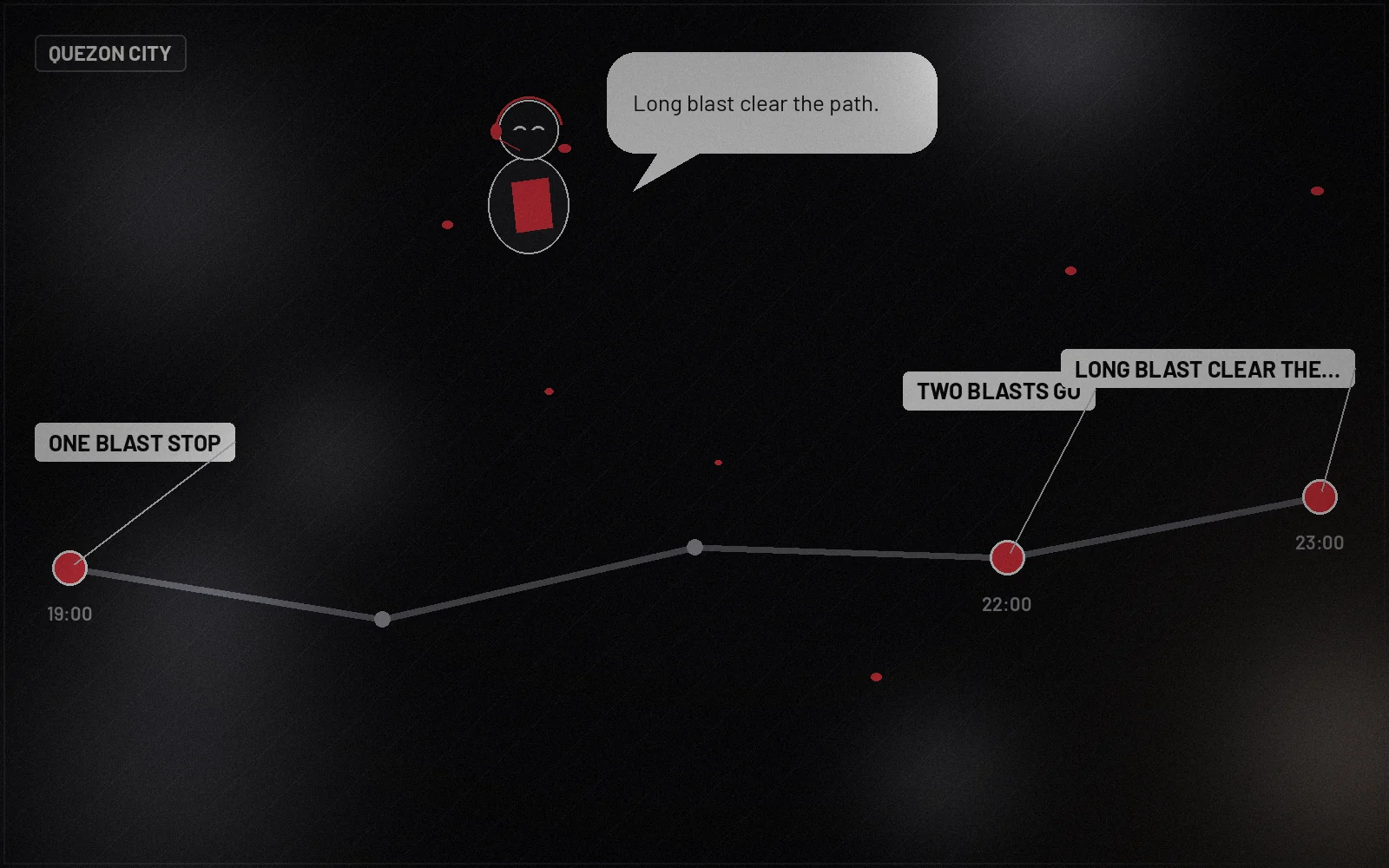
- Brief marshals on the lock: one blast stop, two blasts go, long blast clear the path.
- Agree who can change a signal and how the radio call sounds.
- Kill rule: no cheering whistles, no random blasts, no signal without saying it.
Illustrative only. The route lead’s brief comes first.
FAQs
What is a whistle line English APAC?
A whistle line English APAC is the route marshal’s rule for whistle signals on a march or parade: one blast stop, two blasts go, long blast clear the path. Every marshal uses the same three signals, says them out loud at the briefing, and never blows a whistle for anything else.
What should route marshals stop doing with whistles?
Stop using the whistle for anything except the three signals. Use your voice for everything else.
Who agrees the whistle signals for a march?
The route lead agrees it with the organiser and the marshal captains. Every marshal hears the signals at one briefing.
What if the crowd ignores the whistle?
Blow it once, then use your voice and arm, and radio the route lead. Do not keep blowing harder.
Neuwark Communications builds event and campaign communications as part of our strategy and messaging work. More street-smart lines live in Insights.
Related: crowd-barrier line English APAC · radio-check line English APAC
Talk to us about your next event script.
Illustrative lines only. Communications craft, not legal advice.