
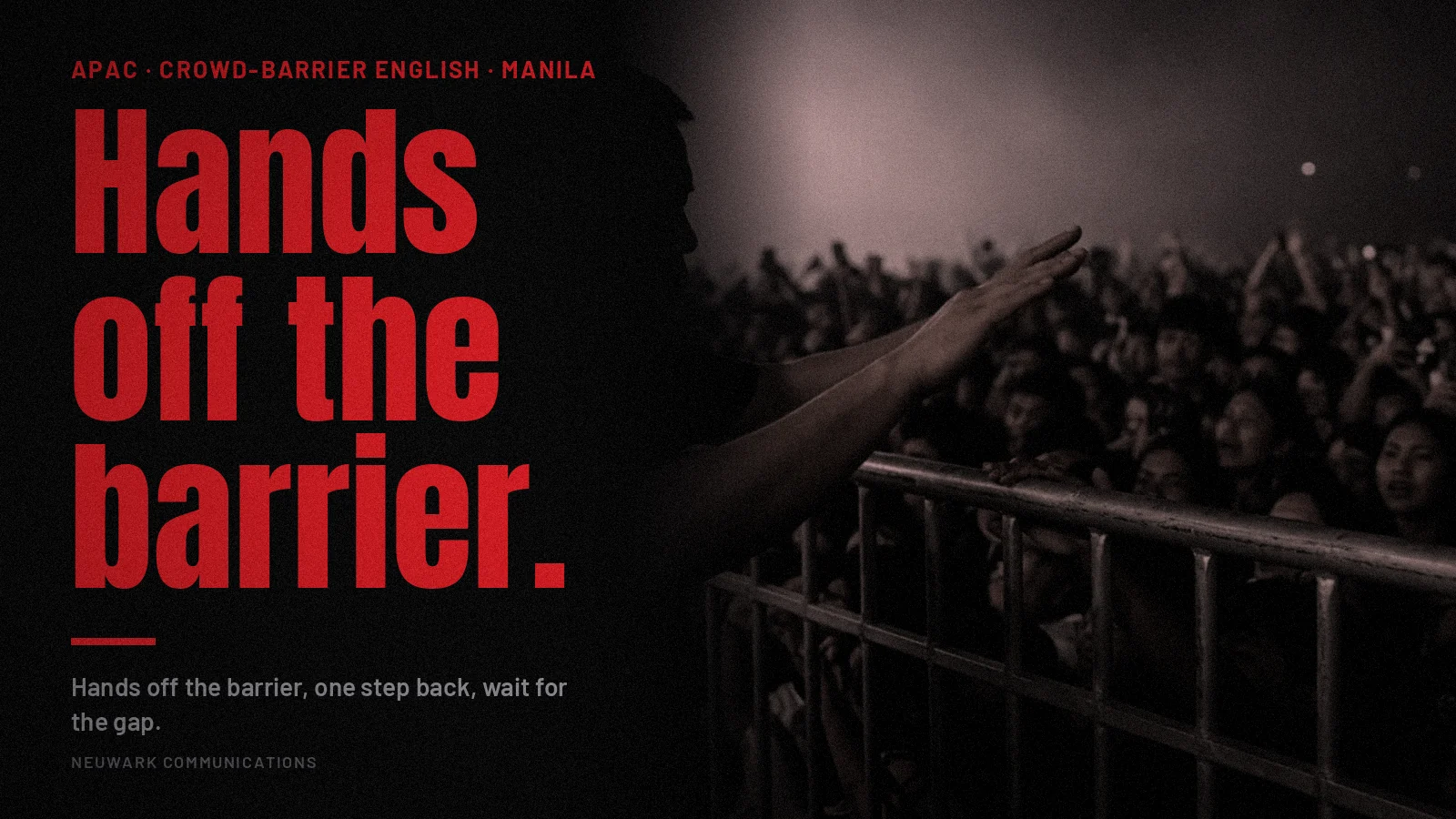
Hands off the barrier, one step back, wait for the gap.
Street-smart APAC English: short sentences a tired operator can say out loud.
Quick answer: A crowd-barrier line English APAC is the steward’s front-of-house rule: hands off the barrier, one step back, wait for the gap. Say it before the push starts, not after.
A Manila concert, front of house, minutes before the headline set.
The front rows lean on the steel and phones go up.
Behind them, the crowd starts to press forward.
Pair it with the queue-rope line English APAC for the line outside the gates and the quiet-hold line English APAC for the calm before a speech. Same craft: one short rule, said early and said the same way.
What is a crowd-barrier line English APAC?
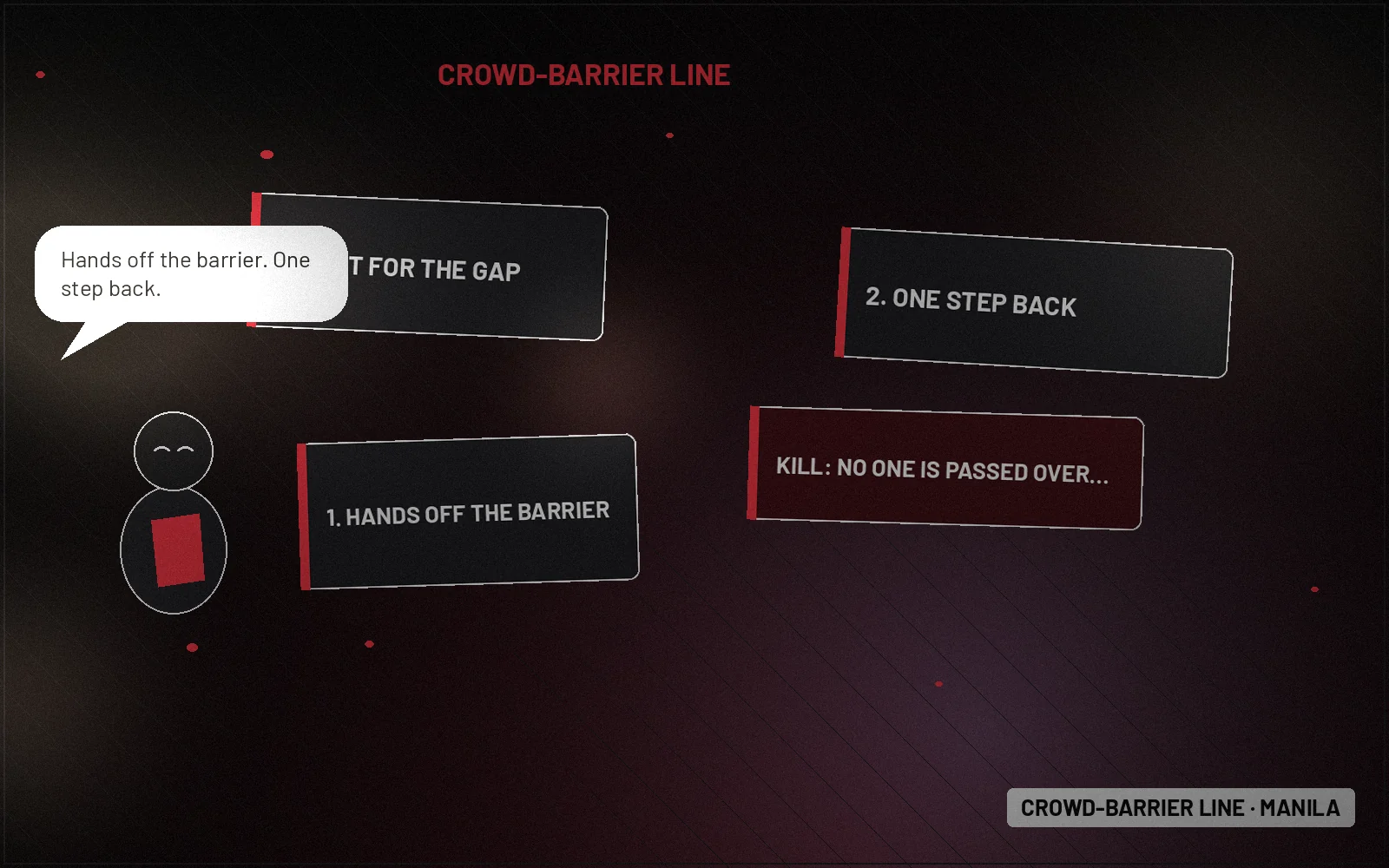
It is the steward’s three-part rule at the front barrier. Hands off the barrier, one step back, wait for the gap. Stewards say it along the barrier before the lights drop, so the front rows hear it while they can still move.
1. Hands off the barrier. Hands come off the steel. Leaning, climbing and hanging phones over the top all put weight where the barrier was not set for it.
2. One step back. One step, not a speech about space. One step gives the front row room to breathe and gives stewards room to work along the line.
3. Wait for the gap. When someone needs to come out, stewards open a gap in the barrier line. Fans wait for it. Nobody climbs over, and nobody gets passed over the top unless stewards call it.
The habit to break is the late shout. Stewards who wait for the surge end up yelling into noise. Said early, the line is a request. Said late, it is a scramble.
What should a steward stop saying at the barrier?
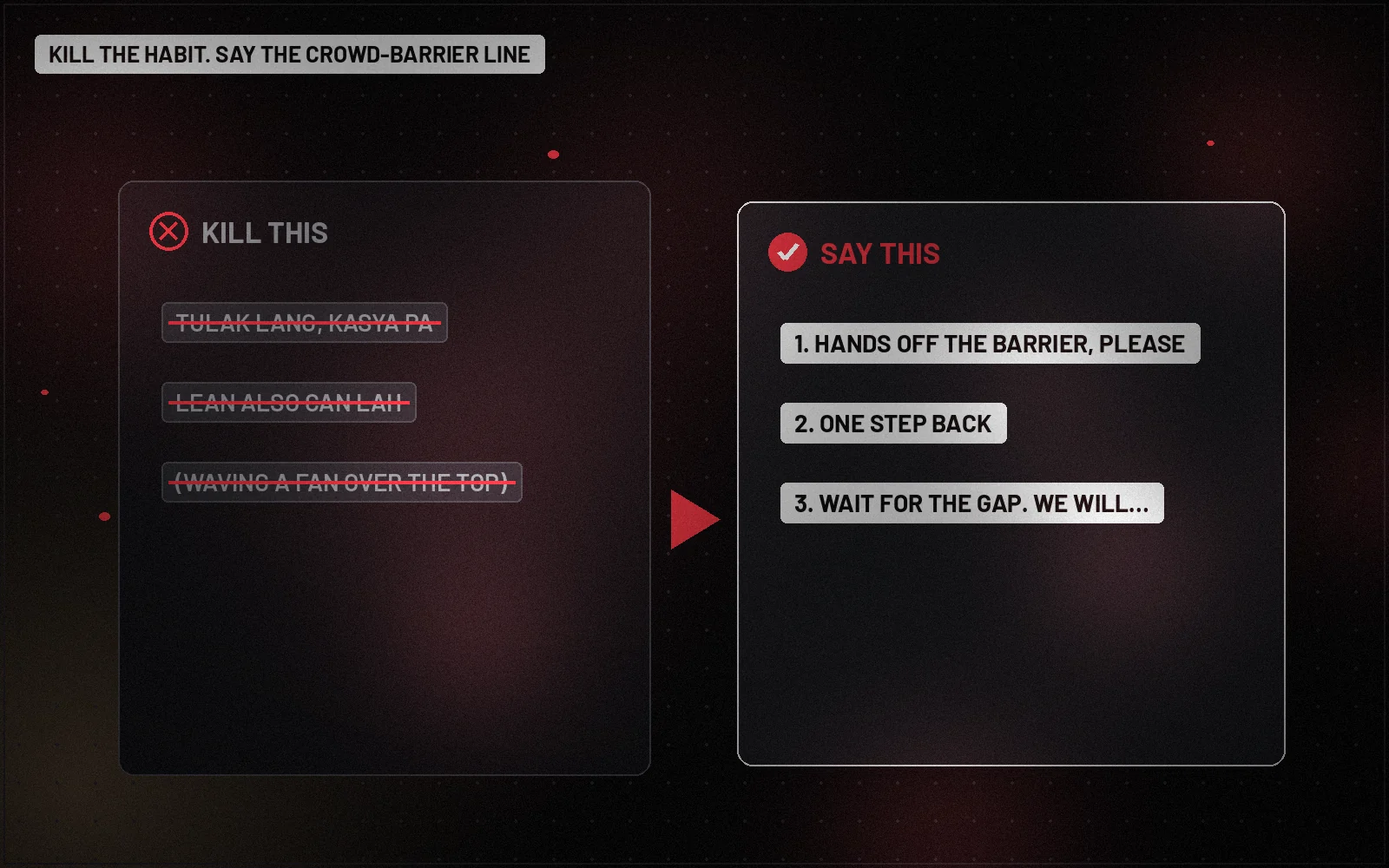
Stop saying there is still room and stop allowing the lean. Both tell the crowd the front can take more. Say the three parts, calmly, row by row.
| Kill this | Say this (illustrative) | Why |
|---|---|---|
| Tulak lang, kasya pa. | Hands off the barrier, please. | No push, no lean |
| Lean also can lah. | One step back. | Space at the front |
| (waving a fan over the top) | Wait for the gap. We will open it. | Stewards control the exit |
Lines in this table are illustrative, not quotes from real people.
Say it at speaking volume, eye to eye with the front row, before the music is loud.
Who opens the gap in the barrier?
Stewards open it, on the call of the front-of-house lead. The lead watches the whole barrier and decides when and where a gap opens. Stewards nearest the gap open it, bring the fan out, and close it again.
Fans never make their own gap. A barrier section pulled aside by the crowd is not a gap. It is a hole the stewards did not plan.
What if the crowd keeps pushing after the warning?
Say the line again, then radio the front-of-house lead at once. Do not argue with one fan while the press builds. The lead and the security team decide the next step from the crowd plan, which may include a pause called from the stage.
This is the uncomfortable rung. A steward cannot hold a crowd back alone and should not try. The job is to say the line clearly, watch, and call it in early.
PH / SG / Jakarta desk notes
Same three parts. Different desks.
Philippines desk. Front rows are often fans who queued for hours. Keep it warm, with po: hands off the barrier po, one step back. Sir, ma’am, we will open the gap.
Singapore desk. Crowds expect short, firm instructions. Say the three parts in plain English and point. No jokes at the barrier and no long explanations.
Jakarta desk. Open with Bapak dan Ibu if that is the house style, then the three parts in plain English. Keep the gesture the same along the whole barrier so every section sees one signal.
Paste-ready lock
Speakable lock (illustrative): “Hands off the barrier, one step back, and wait for the gap.”
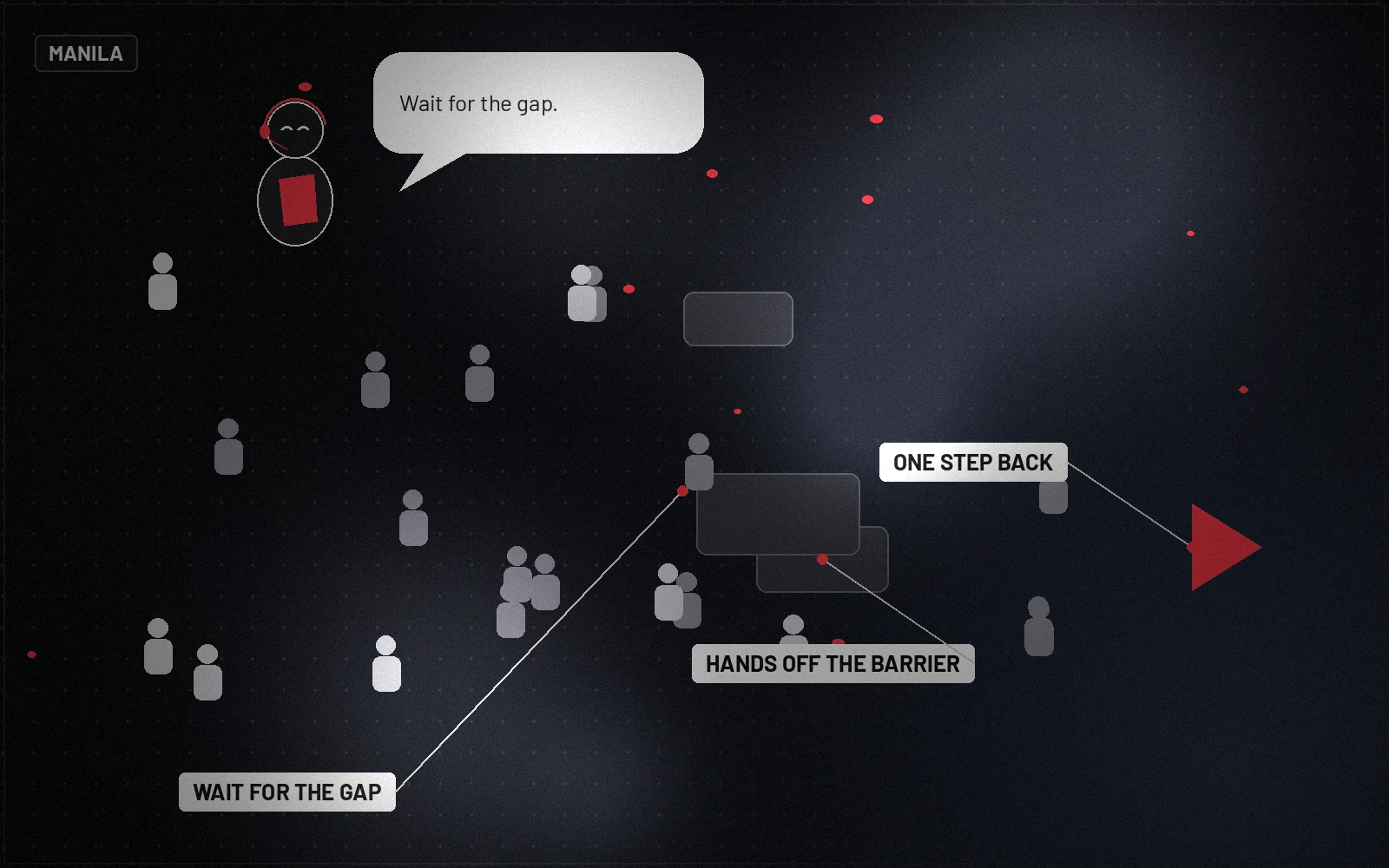
Monday field kit
- Walk the barrier line with the front-of-house lead and mark where gaps can open.
- Place stewards along the barrier with clear sightlines to the lead.
- Brief every steward on the lock: hands off the barrier, one step back, wait for the gap.
- Agree one radio call for a press building at the front.
- Kill rule: no one is passed over the top unless stewards call it.
Illustrative only. The venue and the security lead’s crowd plan come first.
FAQs
What is a crowd-barrier line English APAC?
A crowd-barrier line English APAC is the steward’s front-of-house rule: hands off the barrier, one step back, wait for the gap. Say it before the push starts, not after.
What should a steward stop saying at the barrier?
Stop telling the crowd there is still room, and stop allowing the lean. Say the three parts calmly, row by row.
Who opens the gap in the barrier?
Stewards open it on the call of the front-of-house lead. Fans never make their own gap.
What if the crowd keeps pushing after the warning?
Say the line again and radio the front-of-house lead at once. The lead and security decide the next step from the crowd plan.
Neuwark Communications builds event and campaign communications as part of our strategy and messaging work. More street-smart lines live in Insights.
Related: queue-rope line English APAC · quiet-hold line English APAC
Talk to us about your next event script.
Illustrative lines only. Communications craft, not legal advice.