

Horn first, reverse slow, spotter stays.
Street-smart APAC English: short sentences a tired operator can say out loud.
Quick answer: A loading-dock line English APAC is the dock rule for drivers and spotters: horn first, reverse slow, the spotter stays in sight.
A Taguig event venue loading dock at dusk, the night before a launch.
A box truck lines up to reverse into the bay.
A crew member waves from the blind side and shouts to hurry.
Pair it with the truss-call line English APAC for the moves overhead and the hard-hat line English APAC for the path around the dock. Same craft: three short parts, said before anything moves.
What is a loading-dock line English APAC?
It is the three-part dock rule for every reverse. Horn first, reverse slow, spotter stays. The driver and the spotter agree it before the truck moves, and the dock crew hears the same words.
1. Horn first. The driver sounds the horn before the reverse starts. Everyone on the dock hears that a truck is about to move. Nobody gets surprised by a silent start.
2. Reverse slow. Slow is the rule, even when the load-in is late. A slow reverse gives the spotter time to stop the truck and the crew time to step clear.
3. Spotter stays. The spotter stands where the driver can see them in the mirror, and stays there. The spotter never stands between the truck and the dock.
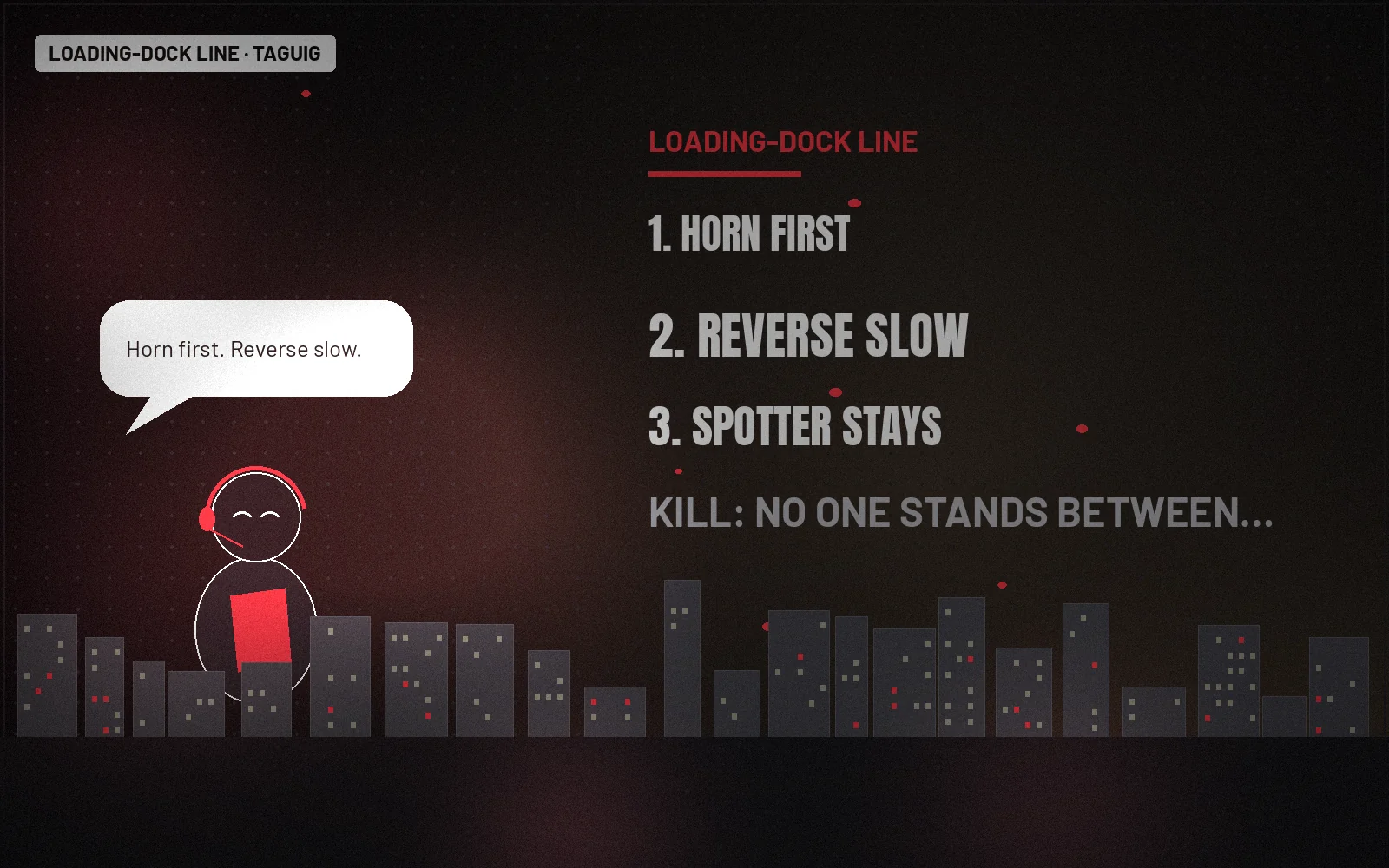
Speakable lock (illustrative): “Horn first, reverse slow, and the spotter stays where you can see them.”
The habit to break is the blind-side wave. A spotter the driver cannot see is not spotting. They are just another person behind a moving truck.
What should a spotter stop doing at the loading dock?
Stop waving from the blind side and stop rushing the driver. Both turn a slow, seen reverse into a fast, unseen one.
| Kill this | Say this (illustrative) | Why |
|---|---|---|
| (rolling back with no warning) | Horn first. | Everyone hears the move |
| Bilisan mo. | Reverse slow. | Slow is the rule |
| (waving from the blind side) | The spotter stays where you can see them. | A seen spotter |
Lines in this table are illustrative, not quotes from real people.
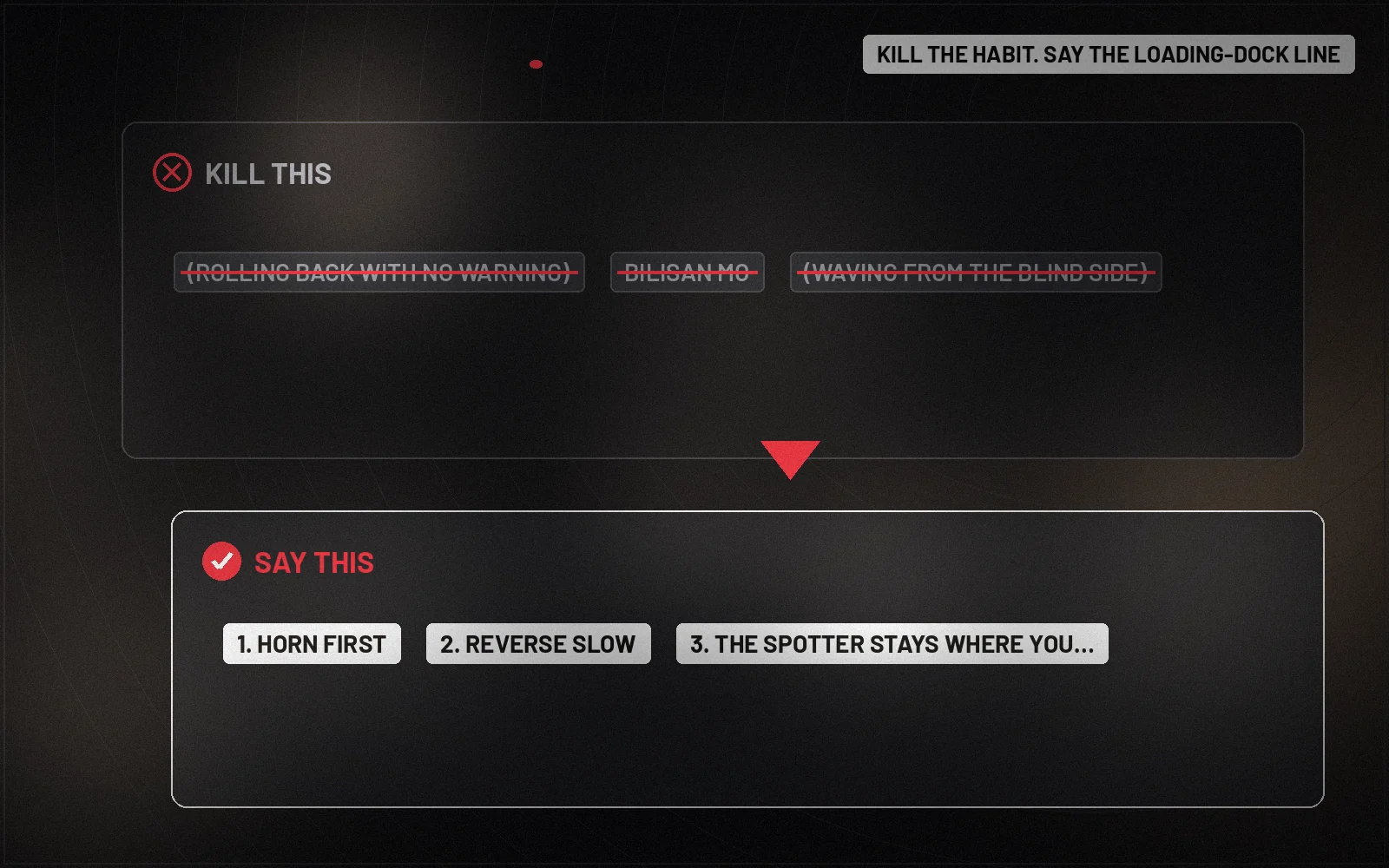
Agree the stop signal before the reverse, not during it. One clear signal means stop, and the driver stops every time they see it, or stop seeing the spotter.
Who controls the reverse at a loading dock?
The spotter calls the reverse, and the driver keeps the spotter in sight. The dock marshal clears the bay and names the spotter for each truck. One spotter per truck, not a crowd of helpers waving at once.
If the venue or the transport company has its own dock procedure, that comes first. The line is the short version everyone can say out loud.
What if the driver cannot see the spotter?
The driver stops, and the reverse does not start again until the spotter is back in sight. No horn, no guess, no slow creep while someone walks over. The spotter steps back into the mirror line, and the driver sounds the horn again.
This is the uncomfortable rung. A late truck and a tired crew will push to keep moving. The rule holds anyway.
PH / SG / Bangkok desk notes
Same three parts. Different desks.
Philippines desk. Crews mix Tagalog and English on the dock. Keep the three parts in English so every crew hears the same words, and add kuya or sir for the driver if that is the habit. Respect, then the rule.
Singapore desk. Docks expect a short, firm brief. Say the three parts once, agree the stop signal, and let the spotter run it. No extra chatter during the reverse.
Bangkok desk. Same three parts, in slow, plain English, backed by one agreed hand signal for stop. When language is thin, the signal and the mirror line do the work.
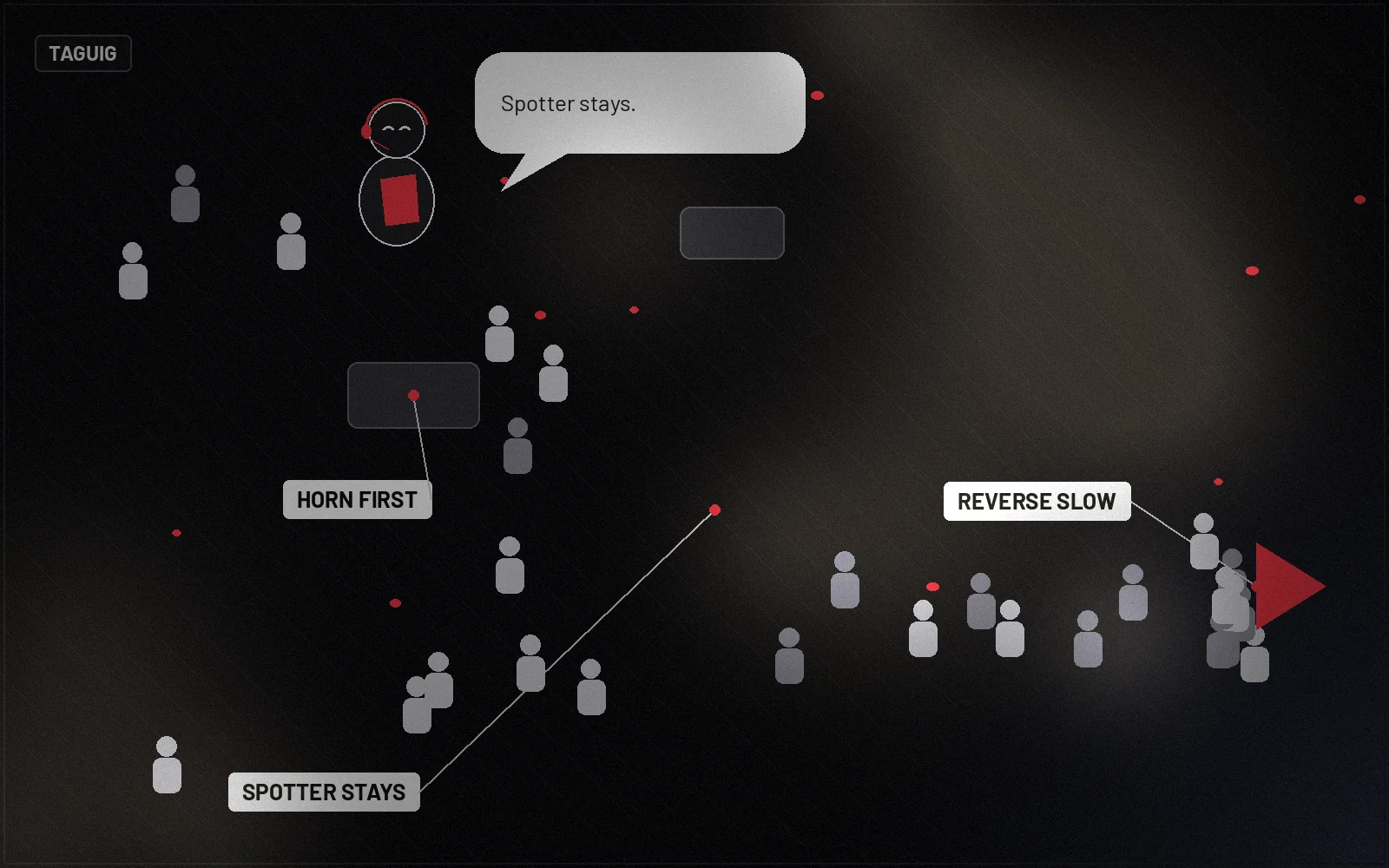
Monday field kit
- Tape a clear walkway beside the dock so crew are never behind a bay.
- Name one spotter per truck on the load-in schedule.
- Brief drivers and spotters on the lock: horn first, reverse slow, spotter stays.
- Agree one hand signal for stop before the first truck arrives.
- Kill rule: no one stands between a reversing truck and the dock.
Illustrative only. Not legal advice. Venue dock rules and the transport company’s procedures come first.
FAQs
What is a loading-dock line English APAC?
A loading-dock line English APAC is the dock rule for drivers and spotters: horn first, reverse slow, the spotter stays in sight. It keeps every reverse slow and seen.
What should a spotter stop doing at the loading dock?
Stop waving from the blind side and stop rushing the driver. Stay in the mirror line and call a slow reverse.
Who controls the reverse at a loading dock?
The named spotter calls the reverse, and the driver keeps the spotter in sight. The venue’s own dock procedure comes first.
What if the driver cannot see the spotter?
The driver stops. The reverse starts again only when the spotter is back in sight and the horn sounds.
Neuwark Communications builds event and campaign communications as part of our strategy and messaging work. More street-smart lines live in Insights.
Related: truss-call line English APAC · hard-hat line English APAC
Talk to us about your next event script.
Illustrative lines only. Communications craft, not legal advice.