
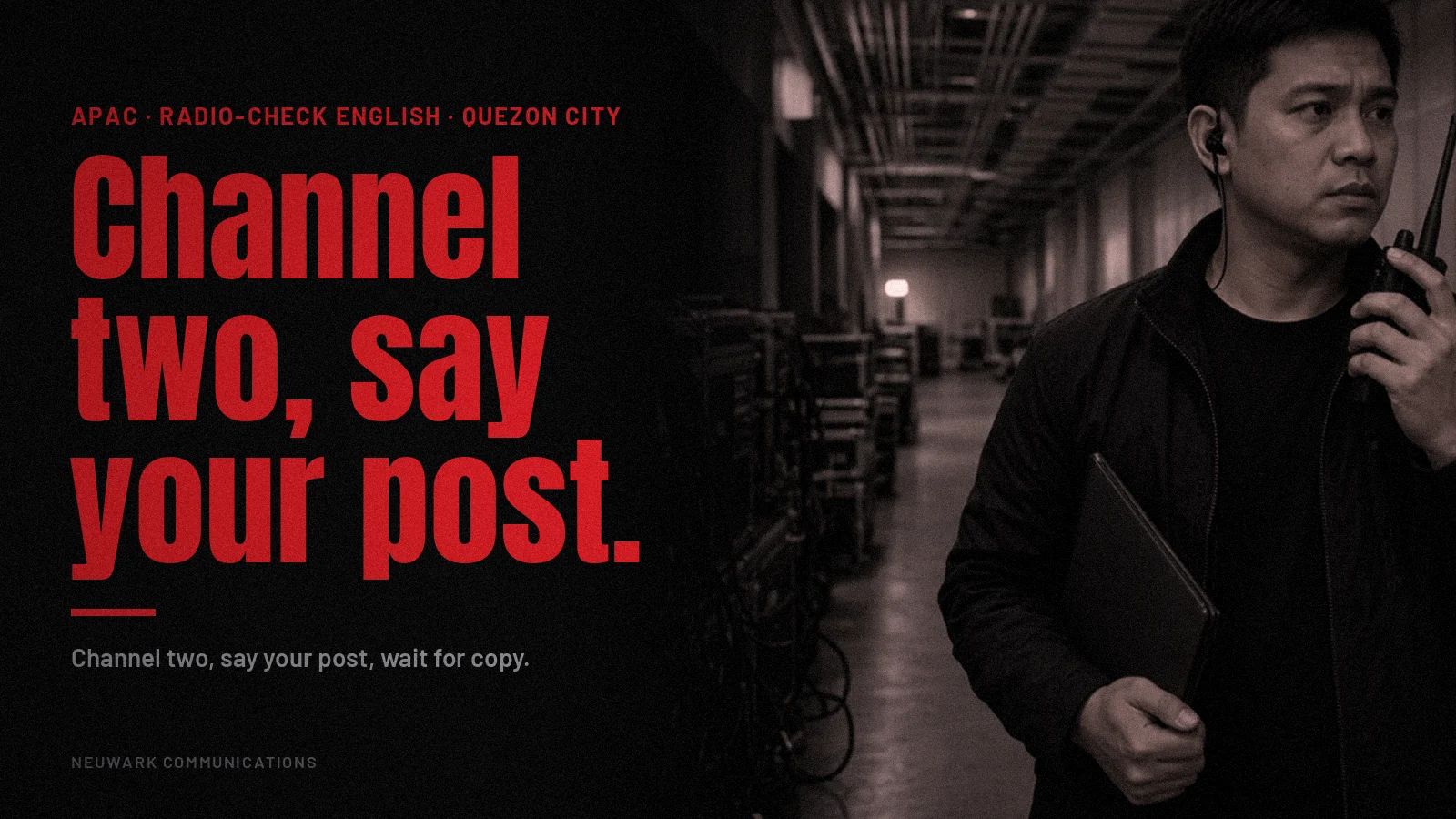
“Channel two, say your post, wait for copy.”
Street-smart APAC English: short sentences a tired operator can say out loud.
Quick answer: A radio-check line English APAC is the crew check before doors: channel two, say your post, wait for copy. One channel, one post name, then stop talking.
A Quezon City load-in, the last hour before doors.
Road cases are still rolling in from the dock.
Six crew key their radios at once and nobody hears anybody.
Pair it with the hard-hat line English APAC for the site rule guests hear first and the badge-scan line English APAC for the door your crew will soon be holding. Same idea: short words, said in order.
What is a radio-check line English APAC?
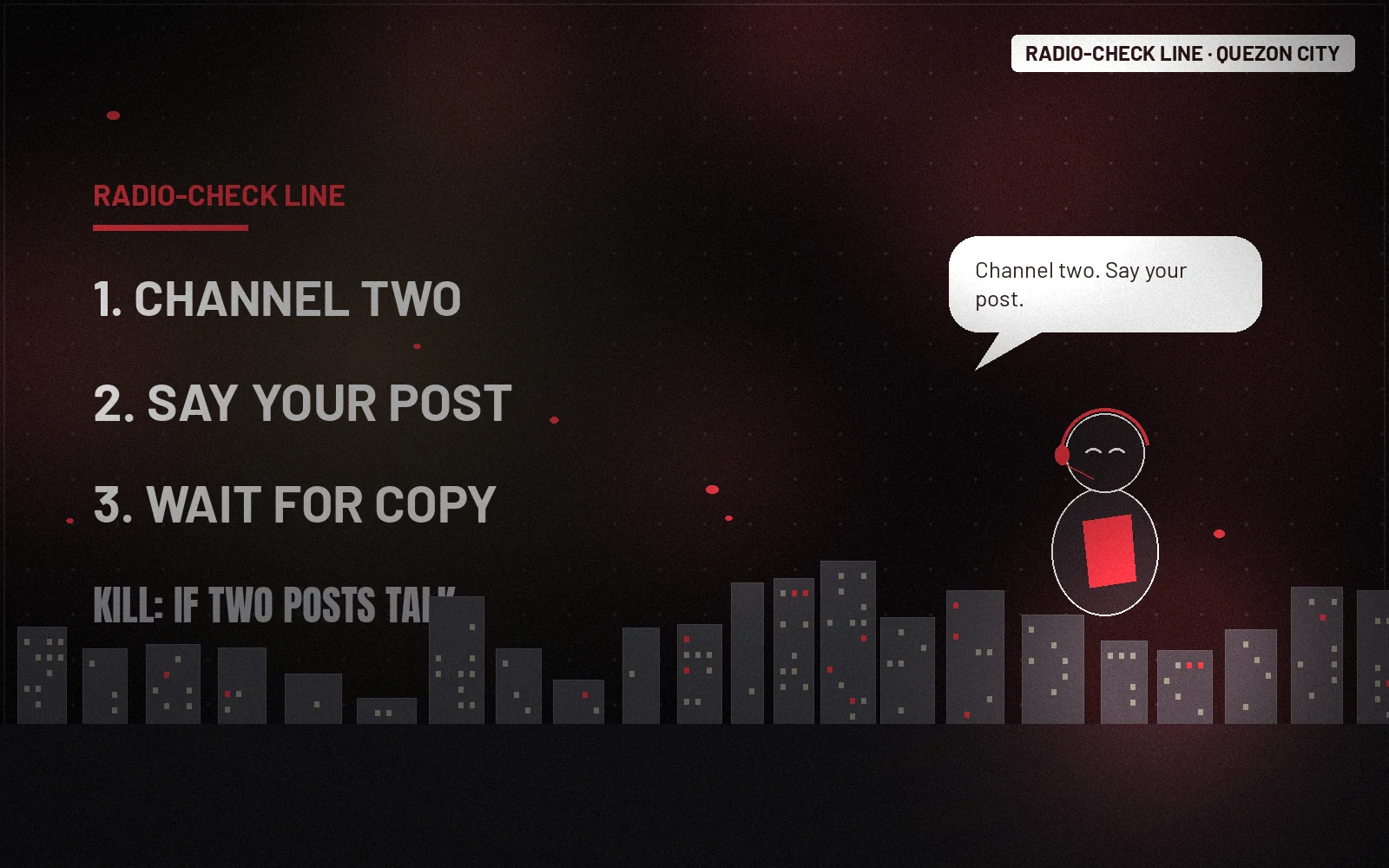
It is the three-beat check every crew member says when control calls a radio check before doors. Three parts. Channel two, say your post, wait for copy.
1. Channel two. Everyone checks the knob first. One agreed channel for the whole crew during the check.
2. Say your post. Name where you are standing, not who you are. Door three, dock, stage left.
3. Wait for copy. Then stop talking. Control answers each post with copy before the next post speaks.
What should a crew member stop saying on the radio?
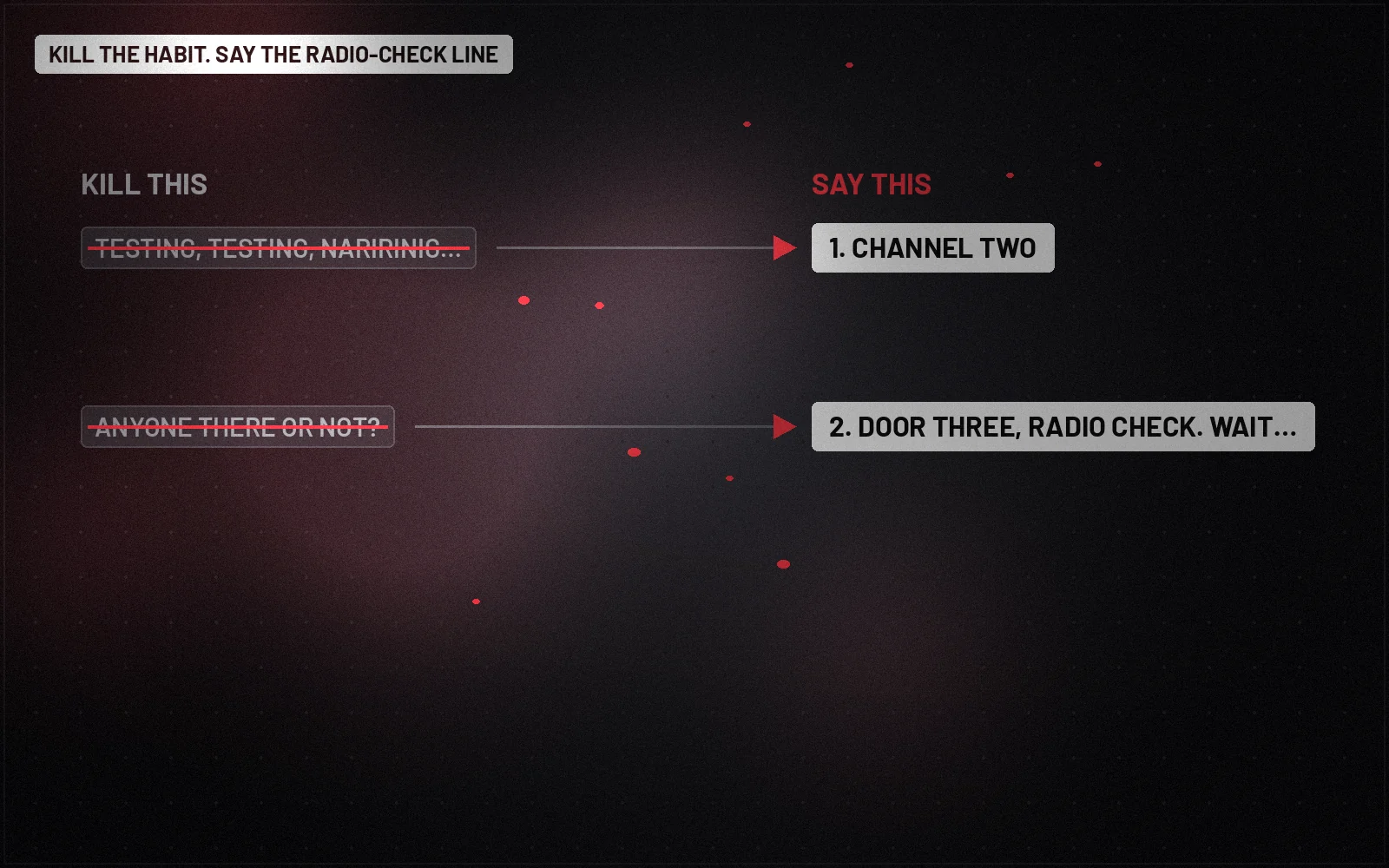
Stop asking if anyone is there and start saying where you are. Open questions invite five answers at once, and the channel jams right before doors.
| Kill this | Say this (illustrative) | Why |
|---|---|---|
| Testing, testing, naririnig niyo ba? | Channel two. | Confirms the channel |
| Anyone there or not? | Door three, radio check. Wait for copy. | Names the post |
Lines in this table are illustrative, not quotes from real people.
Who runs the radio check before doors?
Control runs it, from one post, in one order. Control calls the check, then answers each post with copy. Crew speak only when it is their post’s turn.
Why name the post instead of the person?
Because posts stay put and people move. If the dock calls in, control knows exactly where help is needed. Names change between shifts; door three is still door three.
How does it play out on PH and SG crews?
In Quezon City, crews often mix Tagalog and English on the radio. Keep the check itself in short English so every post sounds the same. In Singapore, crews tend to expect formal call signs. Keep the post name short and wait for copy before speaking again.
What is the speakable lock?
Speakable lock (illustrative): “Channel two, say your post, wait for copy.”
Monday field kit
- Write the post names on the crew sheet and tape one to each post.
- Set every radio to channel two before it leaves the charging table.
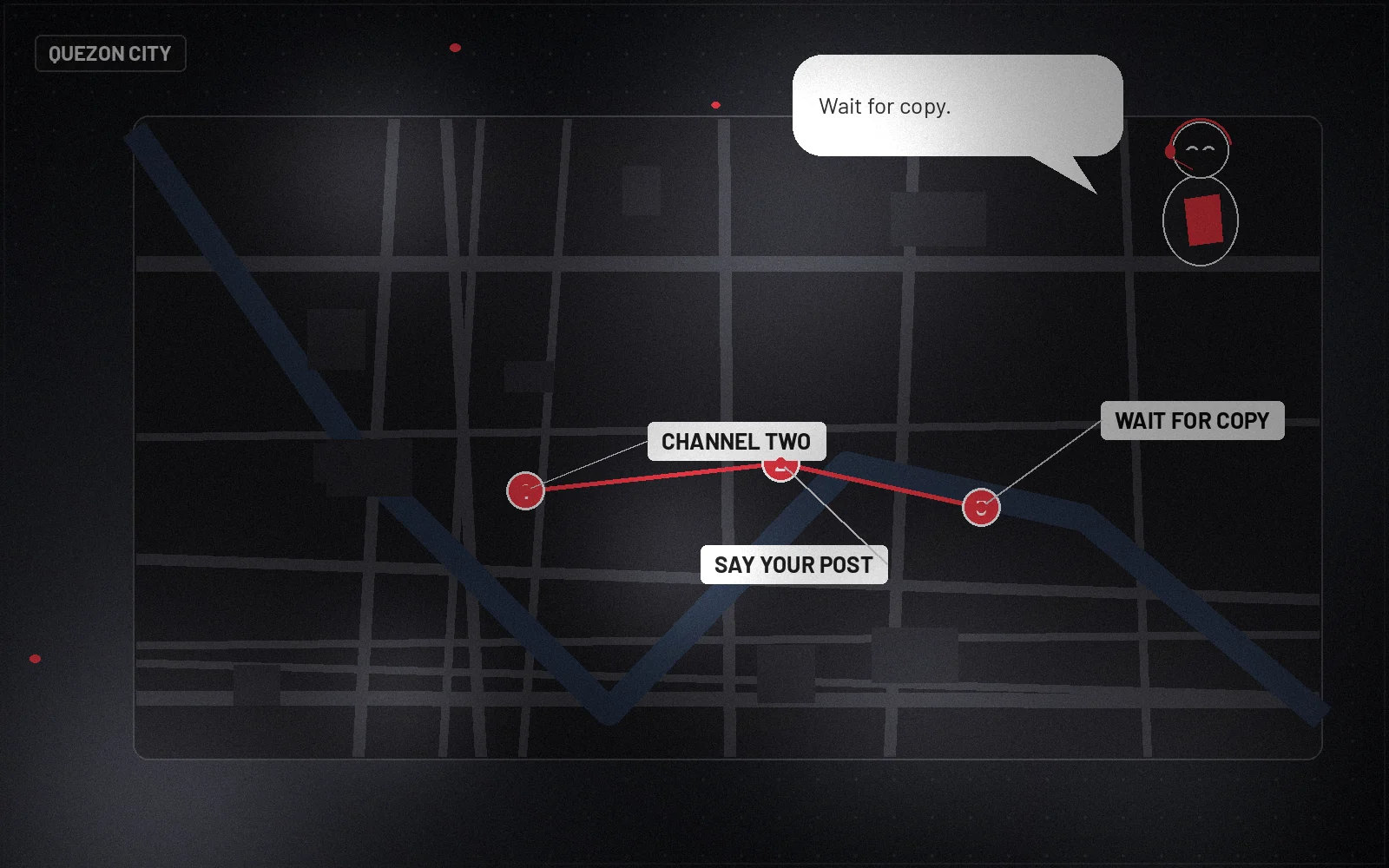
- Brief the crew: channel two, say your post, wait for copy.
- Run the check from control in the same order every time.
- Kill rule: if two posts talk over each other, control says “hold” and restarts from the top of the list.
FAQs
What is a radio-check line English APAC?
A radio-check line English APAC is the crew check before doors: channel two, say your post, wait for copy. It tells control every post is live without jamming the channel.
What does copy mean on an event radio?
Copy means control heard you clearly. Wait for it before you speak again.
What if a post does not answer the radio check?
Control calls that post once more, then sends a runner to check in person. The check carries on with the next post.
Neuwark Communications builds event and campaign communications as part of our strategy and messaging work. More street-smart lines live in Insights.
Related: hard-hat line English APAC · badge-scan line English APAC
Talk to us about your next event script.
Illustrative lines only. Communications craft, not legal advice.