
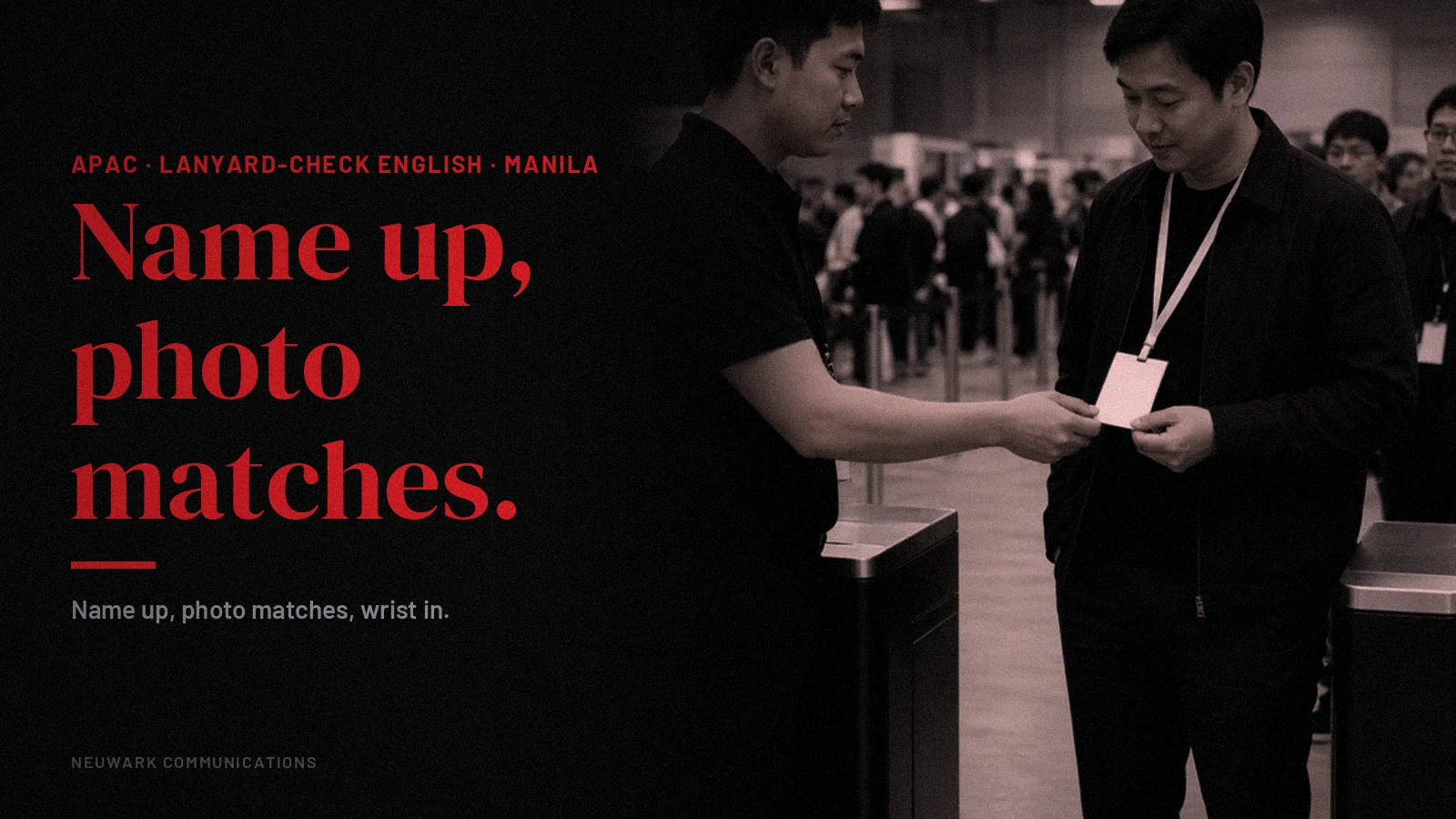
“Name up, photo matches, wrist in.”
Street-smart APAC English: short sentences a tired operator can say out loud.
Quick answer: A lanyard-check line English APAC is the gate line for a tired scanner: name up, photo matches, wrist in. Say it the same way to every badge so the queue does not invent its own rule.
A Singapore expo gate, minutes before the hall opens.
The queue bends past the barrier and half the badges hang backwards.
The scanner has been saying “okay, go” since early morning.
Pair it with the badge-scan line English APAC for the first scan at registration and the hard-hat line English APAC for gates where guests get kitted before they walk in. Same idea: one rule, said the same way to everyone.
What is a lanyard-check line English APAC?
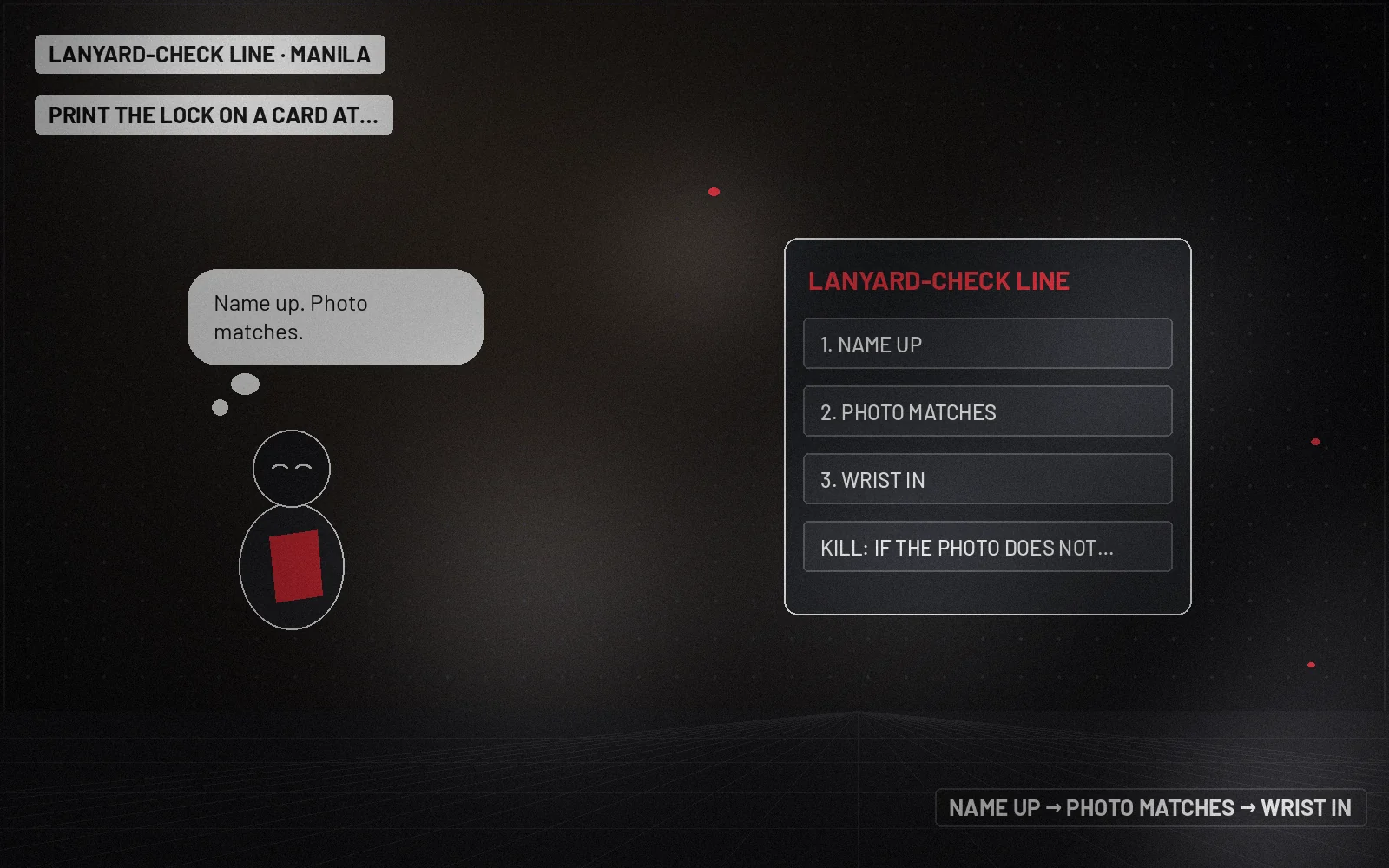
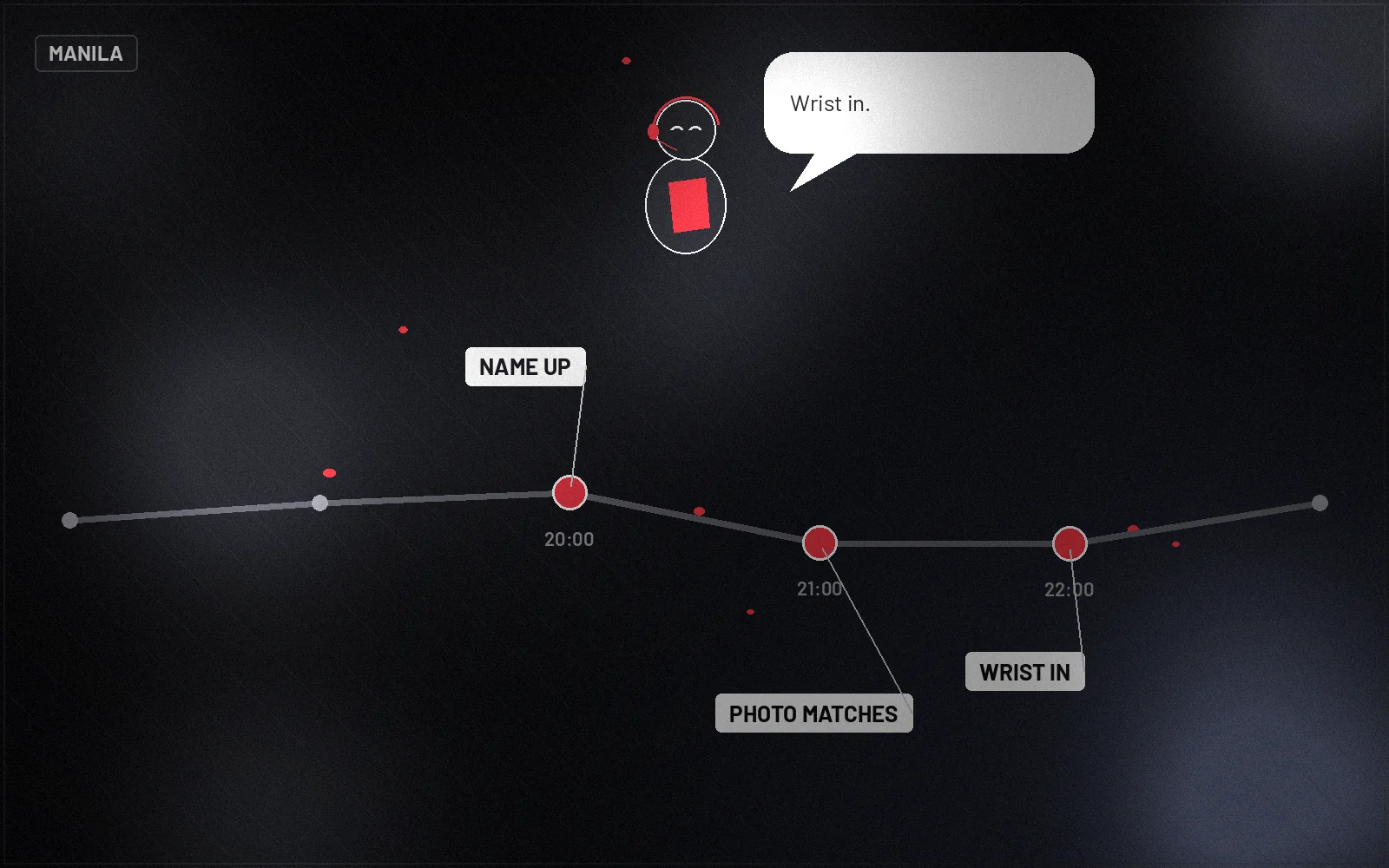
It is the three-beat check a gate scanner says to every guest with a badge. Three parts. Name up, photo matches, wrist in.
1. Name up. The badge faces out, name side up, at chest height. The scanner should never have to flip it.
2. Photo matches. The scanner looks at the photo, then the face, and says it out loud. Saying it is the check, not the glance.
3. Wrist in. The guest holds the wrist in for the band. Then the badge goes back on the chest, not into a pocket.
What should a gate scanner stop saying?
Stop waving people in and start naming the step. Friendly filler feels faster, but it teaches the queue that the check is optional.
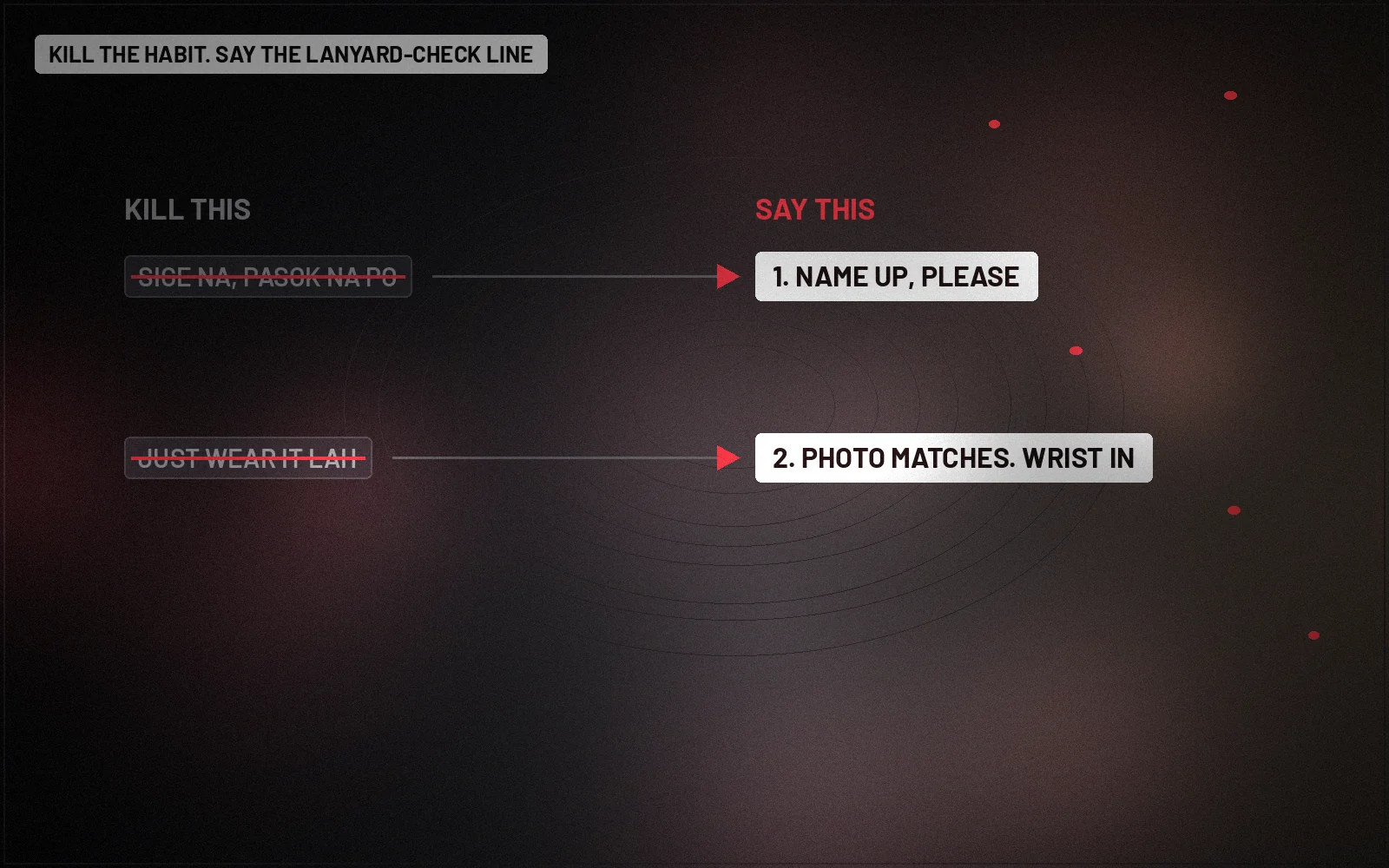
| Kill this | Say this (illustrative) | Why |
|---|---|---|
| Sige na, pasok na po. | Name up, please. | Check before entry |
| Just wear it lah. | Photo matches. Wrist in. | Names the step |
Lines in this table are illustrative, not quotes from real people.
Who says the lanyard-check line, and when?
The gate scanner says it, to every badge, every time. Registration prints the badge; the gate confirms it. If two scanners share a lane, they agree on the exact words before doors so the queue hears one rule, not two.
Why say the same line to every badge?
Because a queue copies whatever it hears first. Skip the photo check for one familiar face and the next guests expect the same. One line, said evenly, keeps the gate fair and moving.
How does it change between Singapore and Manila?
In Singapore, visitors expect the photo check said out loud. In Manila, say the wrist step so the badge is not in a pocket.
Keep po and sir or ma’am for warmth in Manila. Keep the three beats in plain English in both cities.
What is the speakable lock?
Speakable lock (illustrative): “Name up, photo matches, wrist in.”
Monday field kit
- Print the lock on a card at each scanner post.
- Brief scanners together before doors and have each one say the line once out loud.
- Ask registration to print names large enough to read at arm’s length.
- Keep spare lanyard clips at the gate for badges that hang backwards.
- Kill rule: if the photo does not match, the guest steps aside to the help desk and the lane keeps moving.
FAQs
What is a lanyard-check line English APAC?
A lanyard-check line English APAC is the gate line for a tired scanner: name up, photo matches, wrist in. It gives every badge the same three-step check.
Why should the scanner say the photo check out loud?
Saying “photo matches” makes the check visible to the guest and to the queue. It also stops a tired scanner from quietly skipping it.
What happens if the badge photo does not match?
The guest steps aside to the help desk instead of arguing at the gate. The scanner keeps the lane moving for the next badge.
Neuwark Communications builds event and campaign communications as part of our strategy and messaging work. More street-smart lines live in Insights.
Related: badge-scan line English APAC · hard-hat line English APAC
Talk to us about your next event script.
Illustrative lines only. Communications craft, not legal advice.