
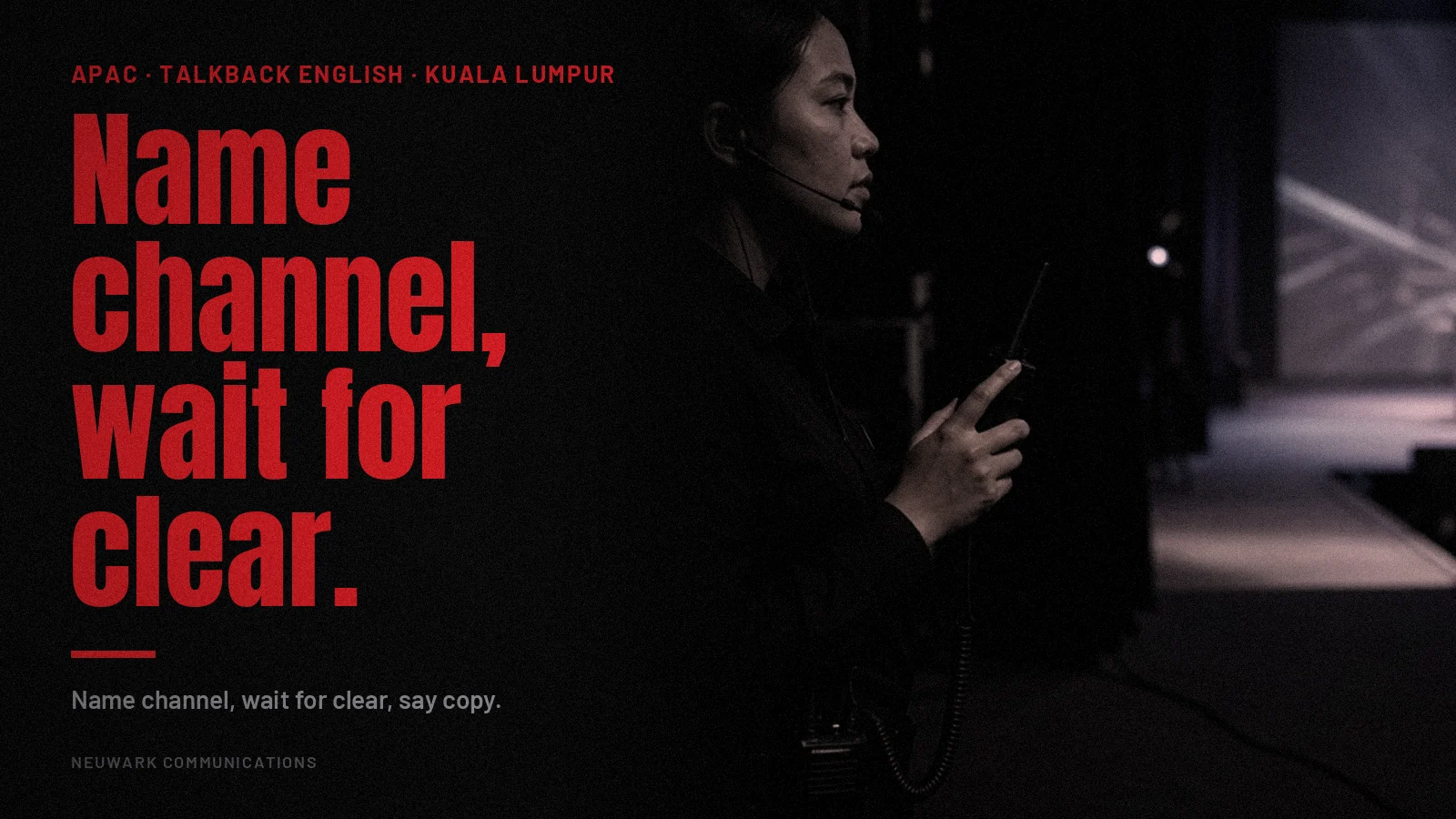
Talkback line English APAC is the stage crew’s short headset rule: name channel, wait for clear, say copy.
Street-smart APAC English: short sentences a tired operator can say out loud.
A Kuala Lumpur stage wing, two minutes to cue.
Three voices stack on the same talkback channel.
The stage manager cannot hear the go call.
Quick answer: A talkback line English APAC is the headset rule: name channel, wait for clear, say copy. Say it in the radio brief so every operator names the channel, waits for clear air, and confirms with copy.
Pair it with the headset-check line English APAC before doors and the runner-radio line English APAC for floor runners. Good event language on talkback keeps every cue heard without stacked chatter. A clean channel is part of street-smart APAC English on the wing: short, named, and confirmed.
What goes in a talkback line English APAC?
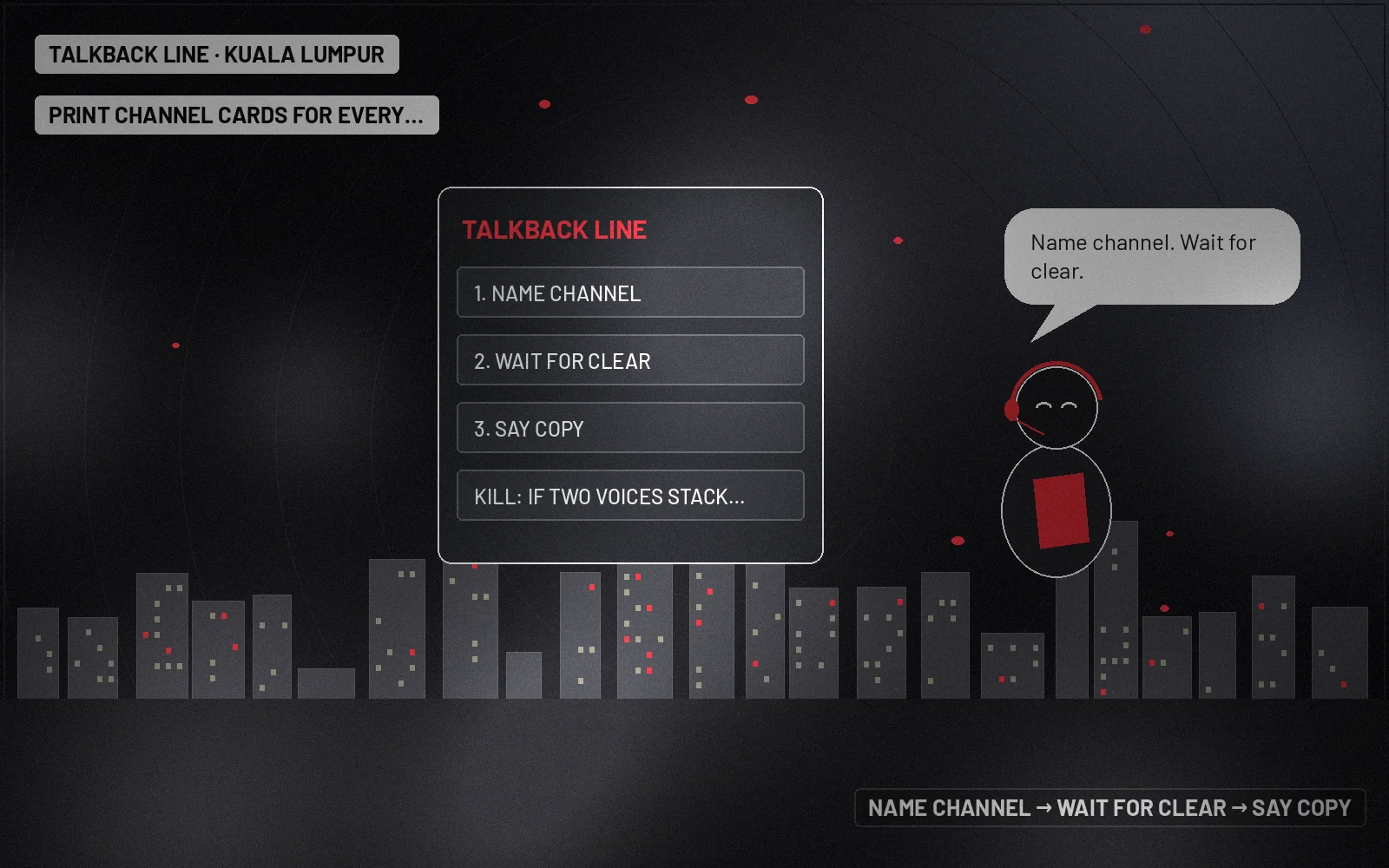
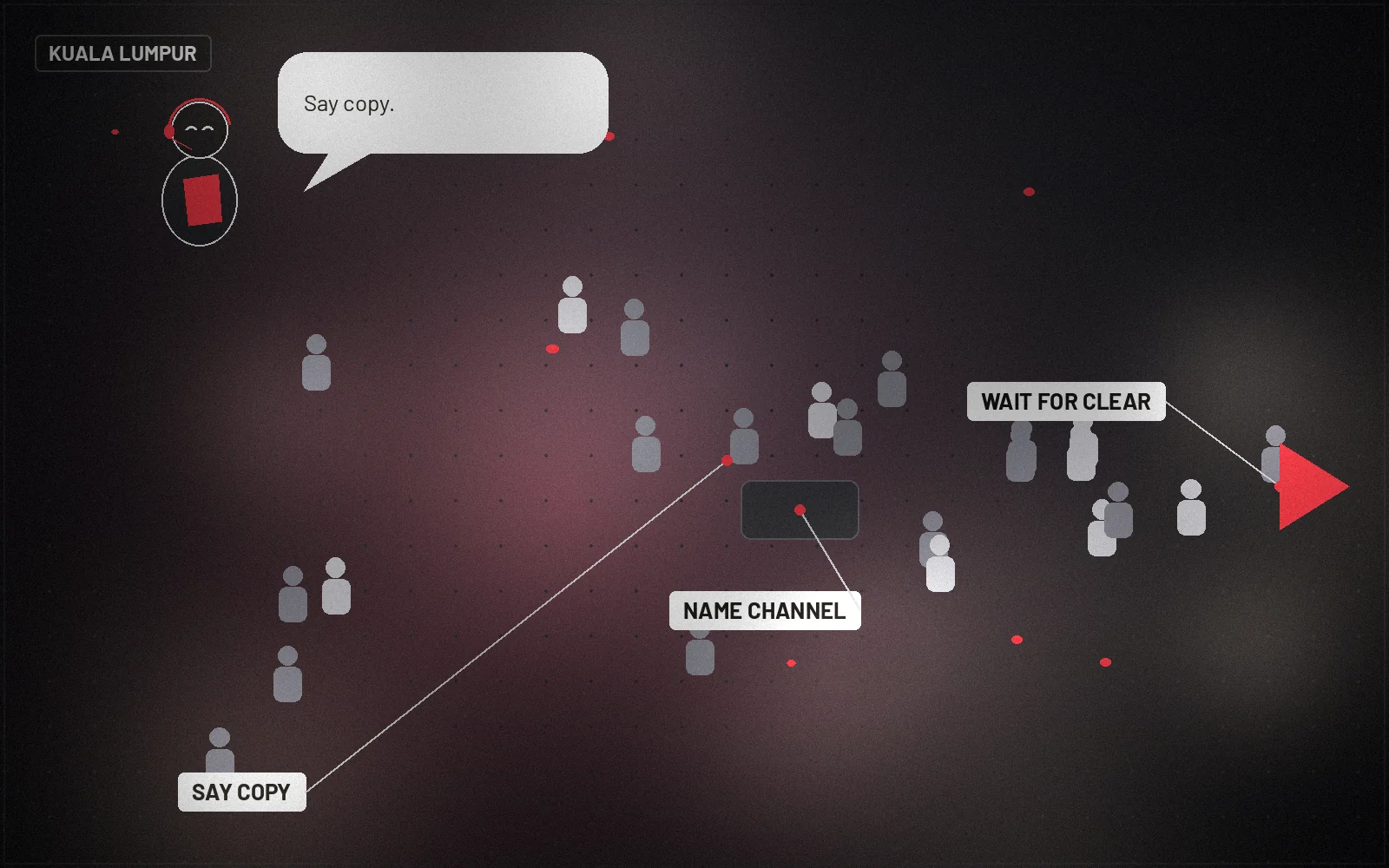
Three parts. Name channel, wait for clear, say copy.
Talkback line (illustrative):
“Name your channel before you speak.”
“Wait for clear air; do not talk over the call.”
“Say copy when you have the message.”
Speakable lock (illustrative): “Name the channel, wait for clear, say copy.”
Wait for clear matters most. Stacked talkback hides the go call, and a missing copy leaves the wing guessing. Name the channel first, deliver one short line, then leave the air open so the stage manager can still be heard on the go.
What should operators stop saying on live talkback?
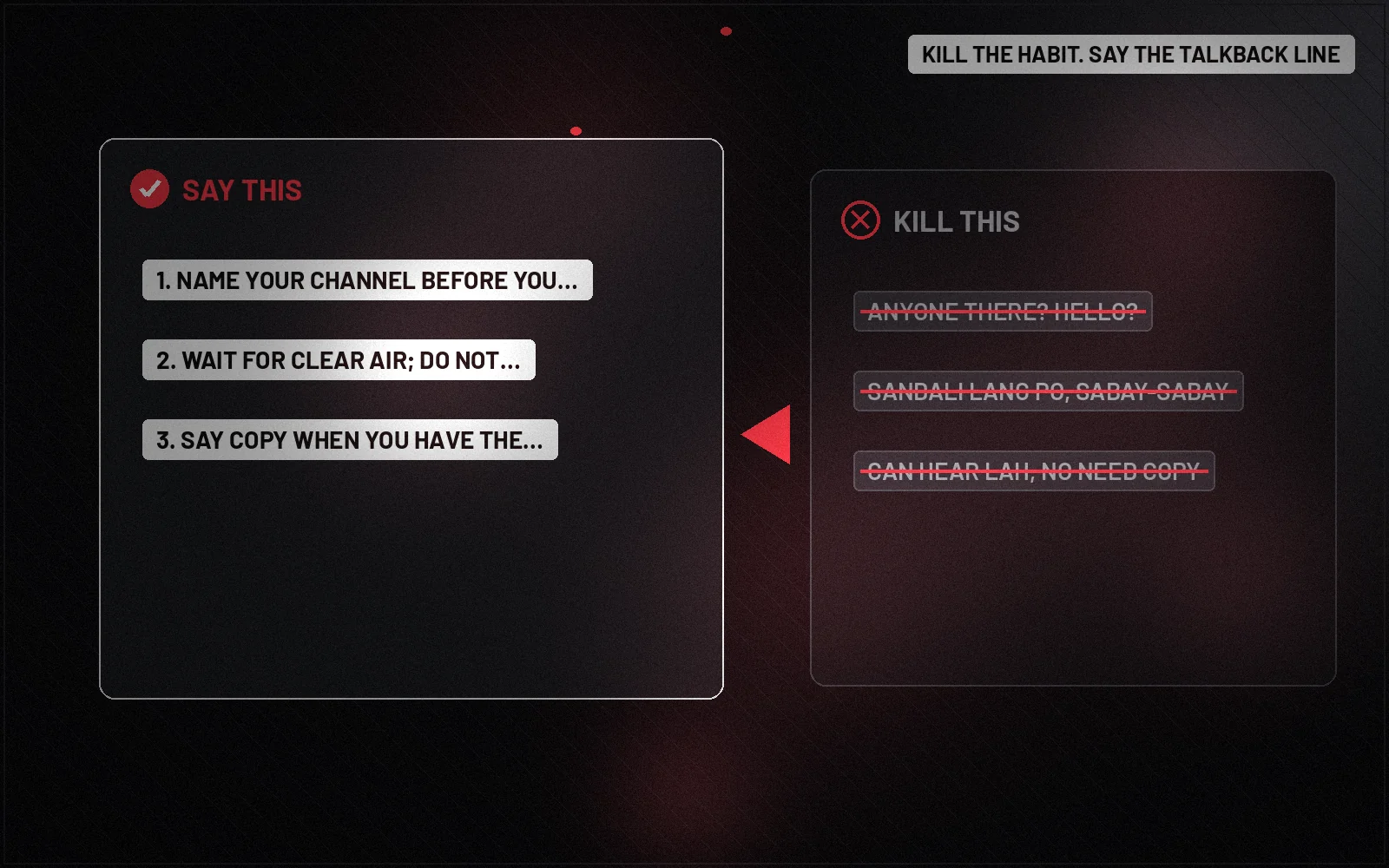
Stop saying anyone there and start naming the channel. Anyone there burns air. Name the channel, wait for clear, deliver one line, and say copy when you have it. If the channel is busy, hold your key until the current call finishes.
| Kill this | Say this (illustrative) | Why |
|---|---|---|
| Anyone there? Hello? | Name your channel before you speak. | Named channel |
| Sandali lang po, sabay-sabay. | Wait for clear air; do not talk over the call. | Clear air |
| Can hear lah, no need copy. | Say copy when you have the message. | Confirm copy |
| Bahala na, go na. | Hold until clear, then say the cue once. | One cue |
| Talk later also fine. | Confirm copy now, then leave the channel clear. | Clear after |
Lines in this table are illustrative, not quotes from real people.
Who owns the talkback channel during the show?
The stage manager owns the primary talkback channel, with each wing confirming copy. Runners stay on their assigned channel. Nobody keys over a live cue. If you need the stage manager, wait for clear, name your channel, say the need in one line, and wait for copy.
What if two people talk over the go call?
Stop, wait for clear, and let the stage manager repeat the cue once. Do not stack apologies on the channel. Say copy only after you have the repeated call, then leave the air quiet so the next wing can confirm.
How does this play out on PH, SG and Jakarta desks?
Same three parts. Different desks.
Philippines desk. In Manila and across Metro Manila, wings often share one busy channel. Say it with po: name channel po, wait for clear po, say copy po. Keep a printed channel card at each pack and drill the clear-air pause once before half-hour.
Singapore desk. In Singapore, cue clocks are tight and stacked talkback is costly. Keep the line in plain English, name the channel, wait for clear, and say copy once. Leave the air open after copy so the stage manager can still land the go.
Jakarta desk. In Jakarta, open the radio brief with Bapak dan Ibu, then the same three beats in English. Keep channel names short so every operator keys the same way.
Monday field kit
- Print channel cards for every pack before doors and tape one at each wing station.
- Run a thirty-second clear-air drill: name channel, one line, say copy.
- Assign the stage manager as the only voice for go calls on the primary channel.
- Rehearse the three-beat script once: name channel, wait for clear, say copy.
- Kill rule: if two voices stack on a cue, freeze, clear the air, and repeat the cue once.
FAQs
What is a talkback line English APAC?
A talkback line English APAC is the short floor rule for talkback: Name the channel, wait for clear, say copy. It keeps the team aligned before doors.
When do you say the talkback line?
Say it in the brief before doors, then once more if the floor drifts. Repeat only when the team needs the reset.
Who owns the talkback line?
One lead owns the line on the floor, with the stage or booth lead confirming. Guests do not rewrite the rule.
Neuwark Communications builds event and campaign communications as part of our strategy and messaging work. More street-smart lines live in Insights.
Related: headset-check line English APAC · runner-radio line English APAC
Talk to us about your next event script.
Illustrative lines only. Communications craft, not legal advice.