
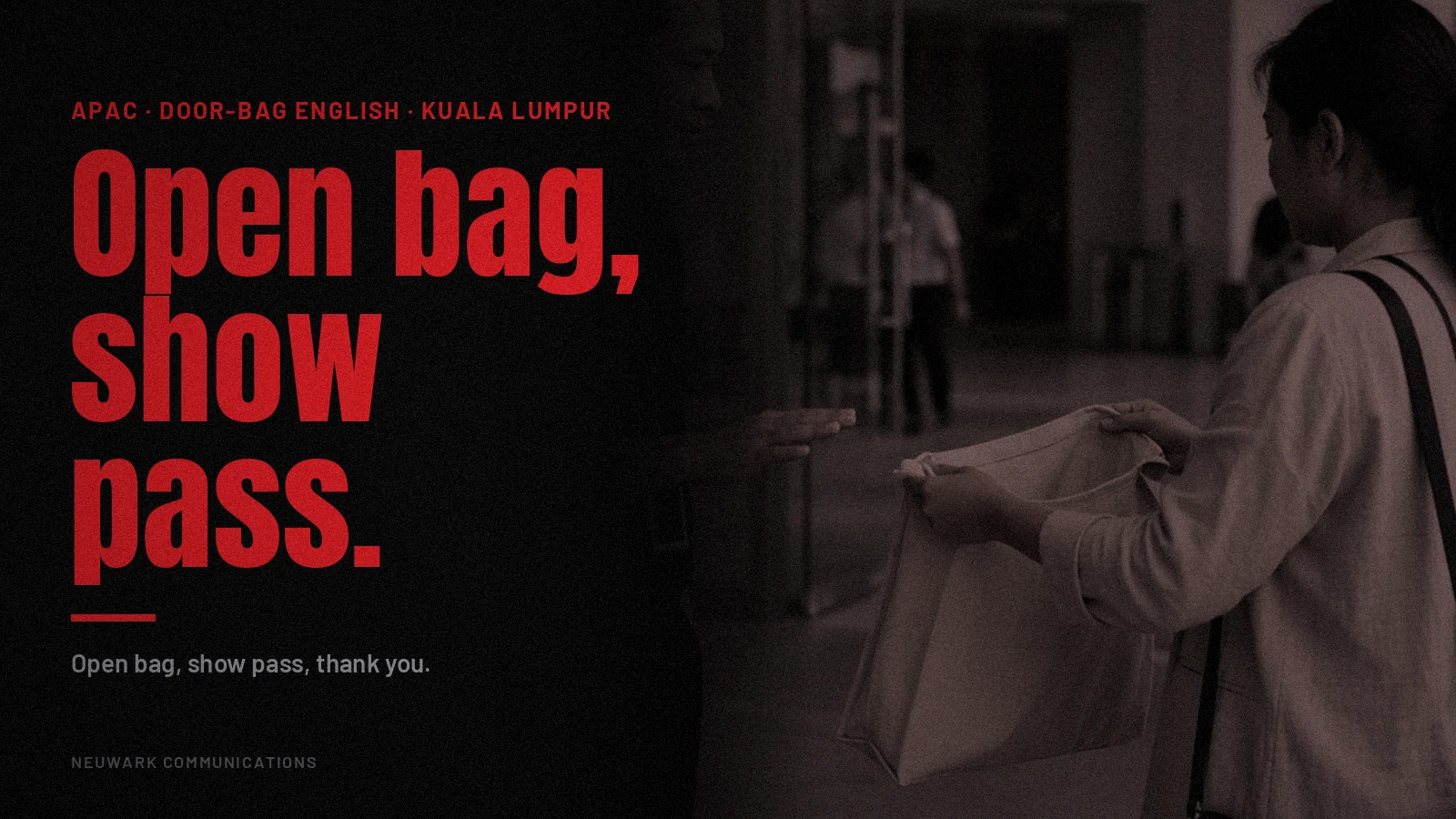
Door-bag line English APAC is the door staff’s short entry rule at security: open bag, show pass, thank you.
Street-smart APAC English: short sentences a tired operator can say out loud.
A Cebu forum entrance, doors about to open.
A guest holds a closed backpack and argues in the queue.
The line stacks while the chair waits inside an empty hall.
Quick answer: A door-bag line English APAC is the door staff’s entry rule: open bag, show pass, thank you. Say it at the door so every check stays short, polite, and the same for every guest walking in.
Pair it with the badge-scan line English APAC at the scanner and the credential-pickup line English APAC at pickup. Good event language at the door keeps security fast without a fight in the queue.
What goes in a door-bag line English APAC?
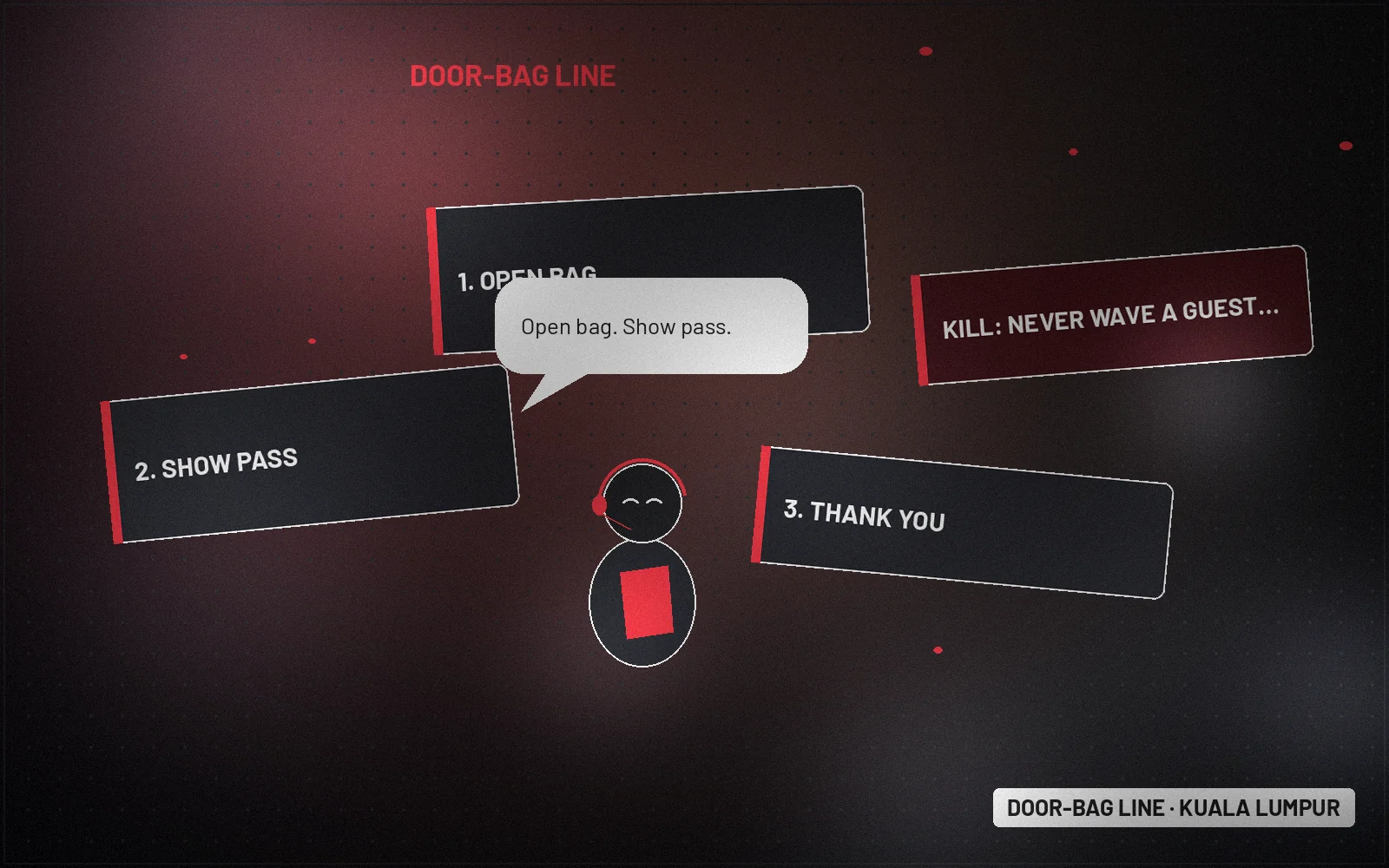
Three parts. Open bag, show pass, thank you.
Door-bag line (illustrative):
“Please open your bag for a quick look.”
“Show your pass on the lanyard as well.”
“Thank you; you may go through.”
Speakable lock (illustrative): “Open the bag, show your pass, thank you.”
Thank you matters most. A check without a clear close leaves guests unsure whether to move, and the queue grows behind a silent stare. Keep the three beats short, warm, and identical for every guest so the door never becomes an argument.
What should door staff stop saying at the door-bag check?
Stop saying just go in and start naming the three beats. Just go in skips the check and trains the next guest to push. Ask for an open bag, a visible pass, then thank them so the next guest hears the same close and the queue keeps moving.
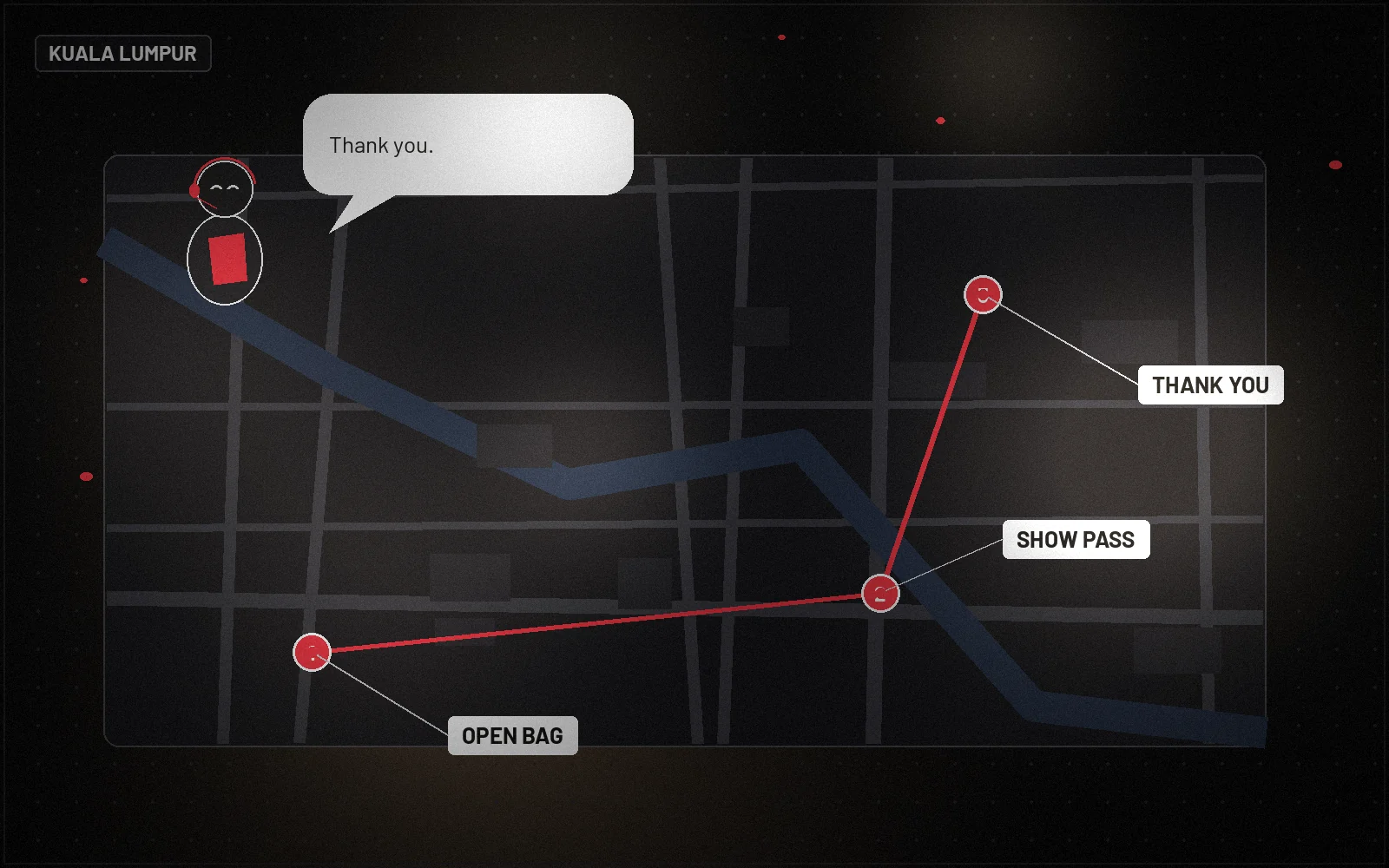
| Kill this | Say this (illustrative) | Why |
|---|---|---|
| Just go in, we are busy. | Please open your bag for a quick look. | An open bag |
| Sige po, pasok na lang. | Show your pass on the lanyard as well. | A visible pass |
| No need check lah, you look fine. | Thank you; you may go through. | A clear close |
| Ay, tingnan ko na lang sa break. | Open bag and pass now, then thank you. | Check now |
| Queue later also can. | One bag at a time; next guest wait here. | One at a time |
Lines in this table are illustrative, not quotes from real people.
Who runs bag check when the queue is long?
Two door staff: one speaks the line, one keeps the queue. The speaker never leaves the bag. The second person holds the next guest at a mark until the thank-you close lands, then waves them forward one at a time.
What if a guest refuses to open the bag?
Repeat the line once, offer a private side table, and radio the floor lead. Do not argue in the main queue. Hold the guest at the side until the lead decides, keep the line moving, and never leave the door empty while you debate.
How does this play out on PH, SG and Kuala Lumpur desks?
Same three parts. Different desks.
Philippines desk. In Cebu and across the Visayas, greet with po and sir or ma’am: open bag po, show pass po, thank you po. Keep the tone warm so the check feels like care, not a scold, and keep a side table ready for guests who want a quieter look.
Singapore desk. In Singapore, keep the line in plain English, keep the check under a few seconds, and always close with thank you so the guest knows to move without waiting for a nod.
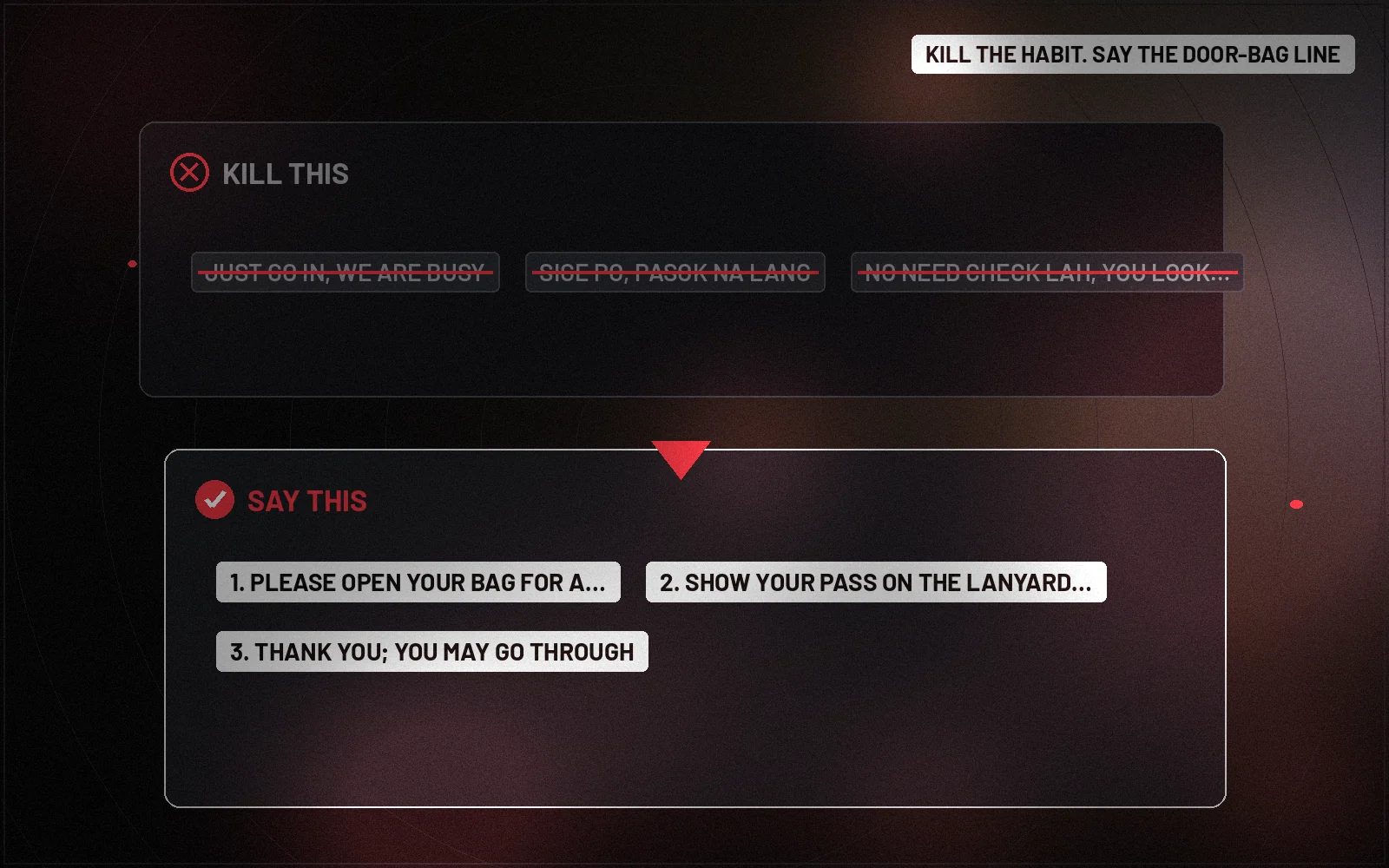
Kuala Lumpur desk. In Kuala Lumpur, greet with Encik or Puan, then the same three beats in English. Keep a side table ready for guests who want a quieter check.
Monday field kit
- Open bag, show pass, thank you.
- Two door staff when the queue grows.
- Side table ready for a private check.
- Pass must be visible on the lanyard.
- Kill rule: never wave a guest through without the open-bag beat.
FAQs
What is a door-bag line English APAC?
A door-bag line English APAC is the door staff’s entry rule: open bag, show pass, thank you. Every guest hears the same three beats.
How do you keep a door-bag check polite and fast?
Ask for an open bag, a visible pass, then thank the guest so they know to move. Use a second staffer to hold the queue.
Why thank the guest after the door-bag check?
Thank you is the close. Without it, guests freeze and the queue stacks behind a silent stare.
Neuwark Communications builds event and campaign communications as part of our strategy and messaging work. More street-smart lines live in Insights.
Related: badge-scan line English APAC · credential-pickup line English APAC
Talk to us about your next event script.
Illustrative lines only. Communications craft, not legal advice.