
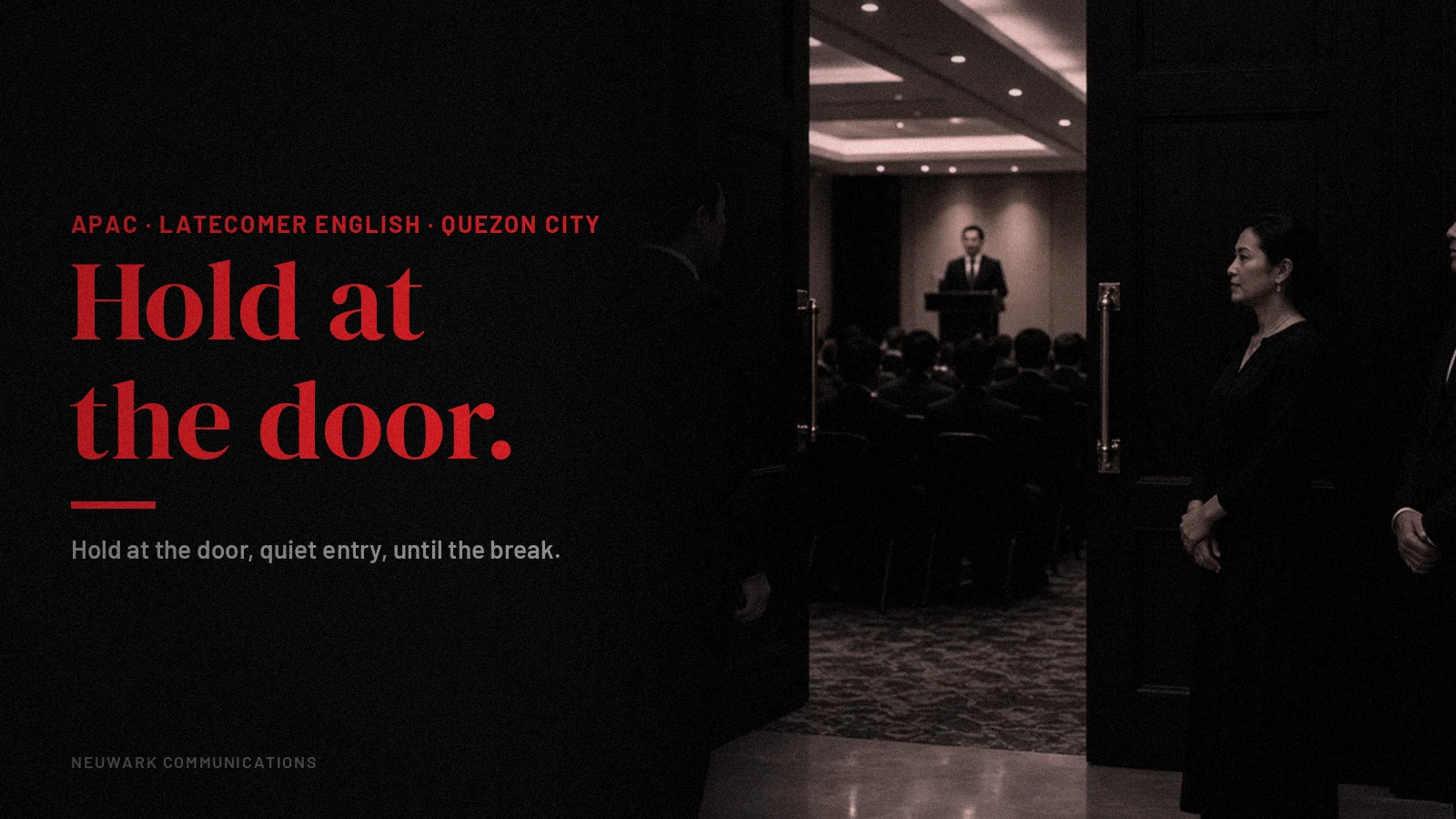
Latecomer line English APAC is the door usher’s short rule when guests arrive after the talk starts: hold at the door, quiet entry, until the break.
Street-smart APAC English: short sentences a tired operator can say out loud.
A Quezon City forum theatre, twelve minutes into the keynote.
A late group pushes the door and walks the centre aisle.
Front-row heads turn, and the speaker loses the next line.
Quick answer: A latecomer line English APAC is the door usher’s rule: hold at the door, quiet entry, until the break. Say it at every late arrival, so the talk stays intact and seating stays calm.
Pair it with the doors-open announcement English APAC before the session and the coat-check line English APAC for bags that slow the aisle. Good event language at the door protects the speaker without shaming late guests.
What goes in a latecomer line English APAC?
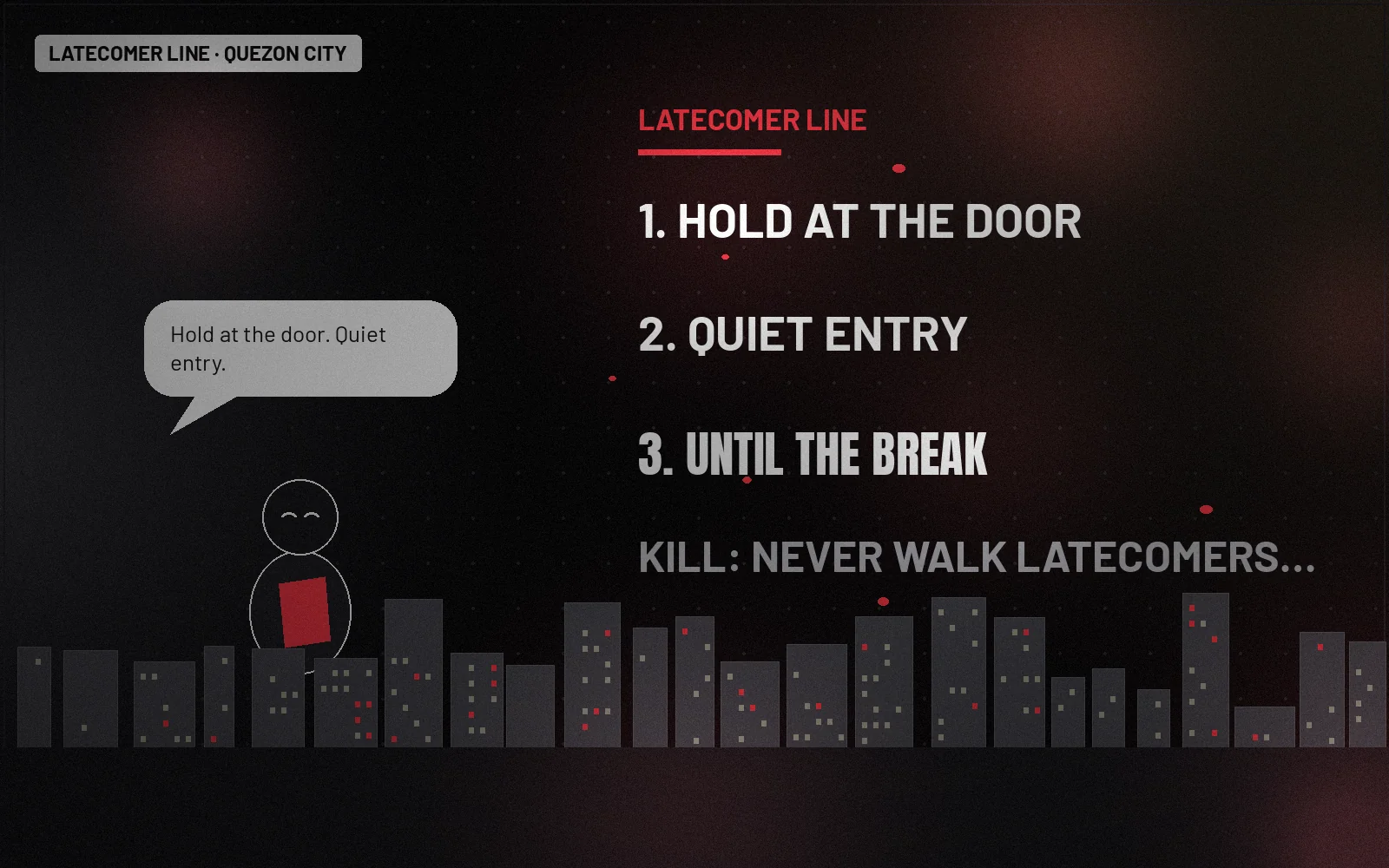
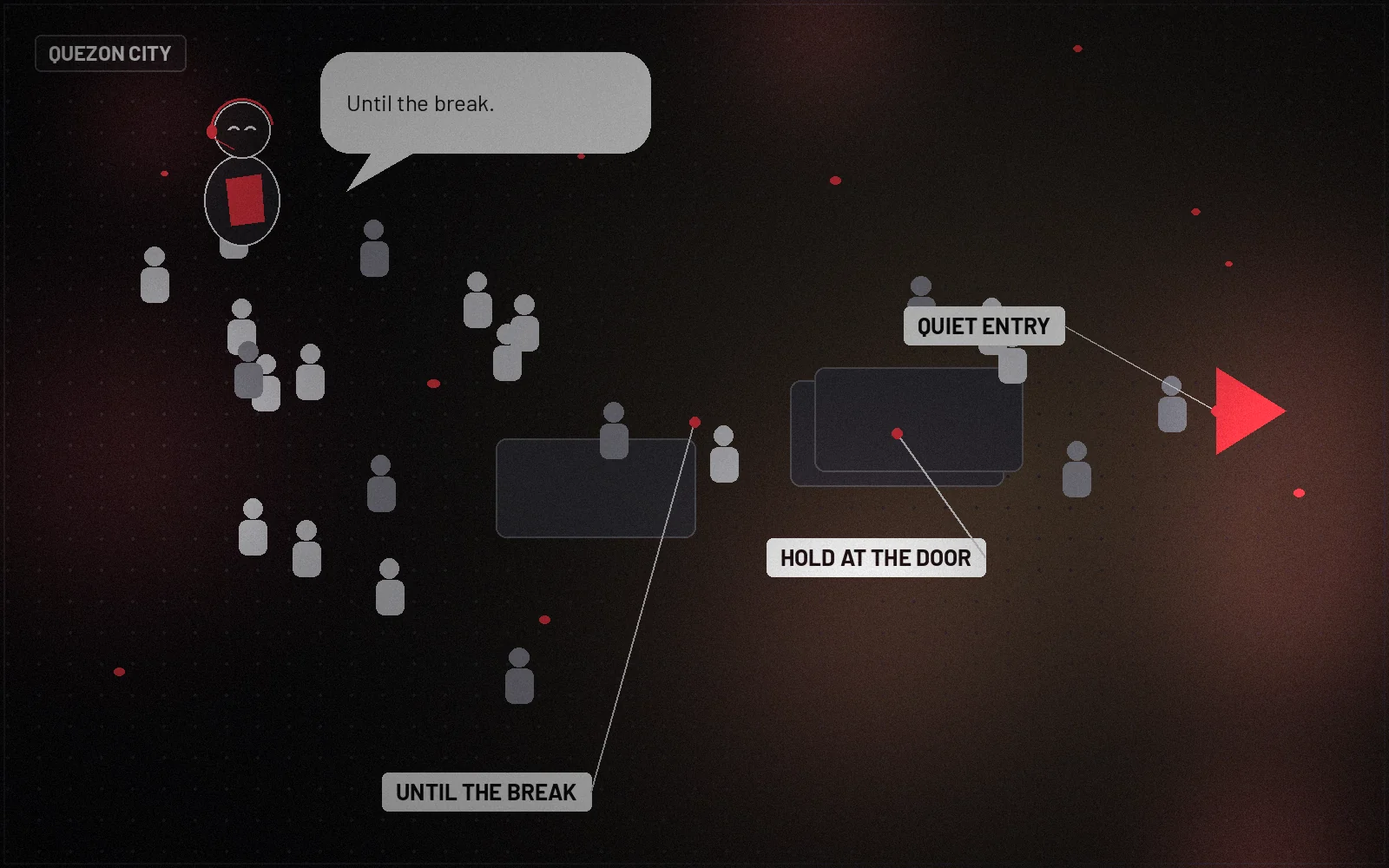
Three parts. Hold at the door, quiet entry, until the break.
Latecomer line (illustrative):
“Please hold here at the door for a moment.”
“If we enter, we walk quiet along the side aisle.”
“Full seating waits until the next break.”
Speakable lock (illustrative): “Hold at the door, enter quiet, wait for the break.”
Hold at the door matters most. A late walk down the centre aisle costs the room more than a short wait, and most guests accept the hold when the usher explains the break.
What should door ushers stop saying to late arrivals?
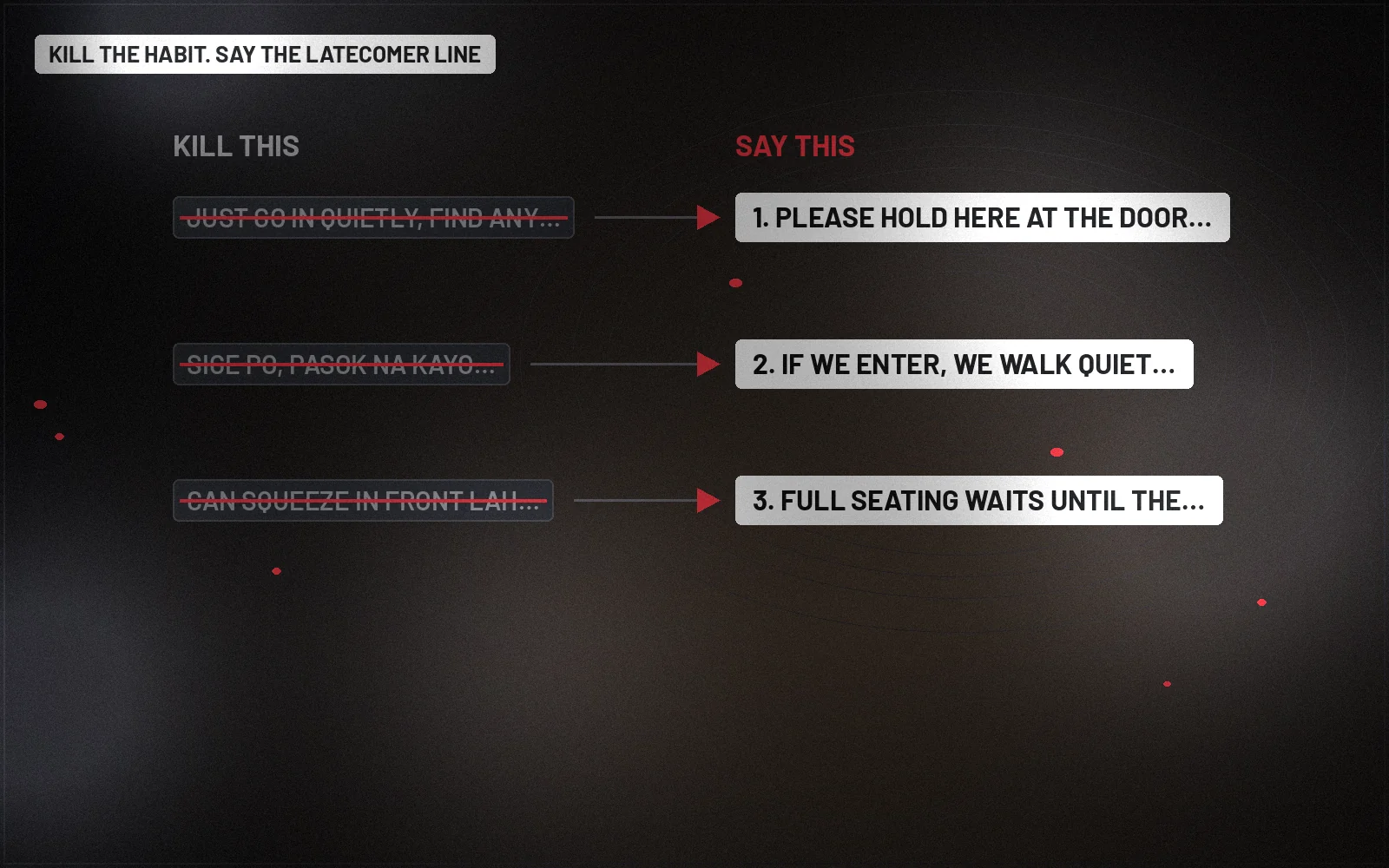
Stop saying just go in quietly and start holding at the door. Just go in still puts bodies in the aisle mid-sentence. Hold them, offer the side aisle only if the talk allows, and promise seats at the break.
| Kill this | Say this (illustrative) | Why |
|---|---|---|
| Just go in quietly, find any seat. | Please hold here at the door for a moment. | A door hold |
| Sige po, pasok na kayo, dahan-dahan lang. | If we enter, we walk quiet along the side aisle. | Side aisle only |
| Can squeeze in front lah, empty one. | Full seating waits until the next break. | Seats at break |
| Ay, okay lang, centre aisle maluwag. | We hold at the door until the speaker finishes this block. | No centre walk |
| Come in whenever, nobody mind one. | Hold here; I will walk you in at the break. | A timed entry |
Lines in this table are illustrative, not quotes from real people.
When may latecomers enter during a live talk?
Only on a quiet cue from the floor lead, and only along the side aisle. If the speaker is mid-point or AV is dark, hold everyone until the next break. Write the rule on the usher card so every door says the same words.
What do you offer guests who must wait at the door?
A clear reason, a seat in the lobby if the wait is long, and a promise of the next break. Offer water and the program. Never argue about whose fault the late arrival is; keep the talk safe and the guest dignified.
How does this play out on PH, SG and Kuala Lumpur desks?
Same three parts. Different desks.
Philippines desk. In Quezon City and across the Philippines, late groups often arrive together after traffic. Say it kindly, with po: hold at the door po, quiet entry po, until the break po. Point to lobby seats so the wait feels planned, not like a scolding.
Singapore desk. In Singapore, sessions run to the minute and doors are strict. Keep the line in plain English, hold late arrivals without debate, and open the side aisle only on the floor lead’s quiet cue.
Kuala Lumpur desk. In Kuala Lumpur, greet late guests in English or Bahasa Malaysia, then the same three beats. Keep one usher at each door with the identical card so no door improvises a centre-aisle walk.
Monday field kit
- Hold at the door, quiet entry, until the break.
- Usher card with the three beats at every door.
- Side-aisle only on a floor-lead quiet cue.
- Lobby seats and water for longer holds.
- Kill rule: never walk latecomers down the centre aisle mid-talk.
FAQs
What is a latecomer line English APAC?
A latecomer line English APAC is the door usher’s rule: hold at the door, quiet entry, until the break. Every late guest hears the same words.
How should ushers seat guests who arrive after a talk starts?
Hold them at the door, use the side aisle only on a quiet cue, and finish seating at the next break. Centre aisles stay clear mid-talk.
Why hold latecomers instead of seating them at once?
A mid-talk aisle walk turns heads and breaks the speaker’s line. A short hold protects the room and still seats the guest with dignity.
Neuwark Communications builds event and campaign communications as part of our strategy and messaging work. More street-smart lines live in Insights.
Related: doors-open announcement English APAC · coat-check line English APAC
Talk to us about your next event script.
Illustrative lines only. Communications craft, not legal advice.