
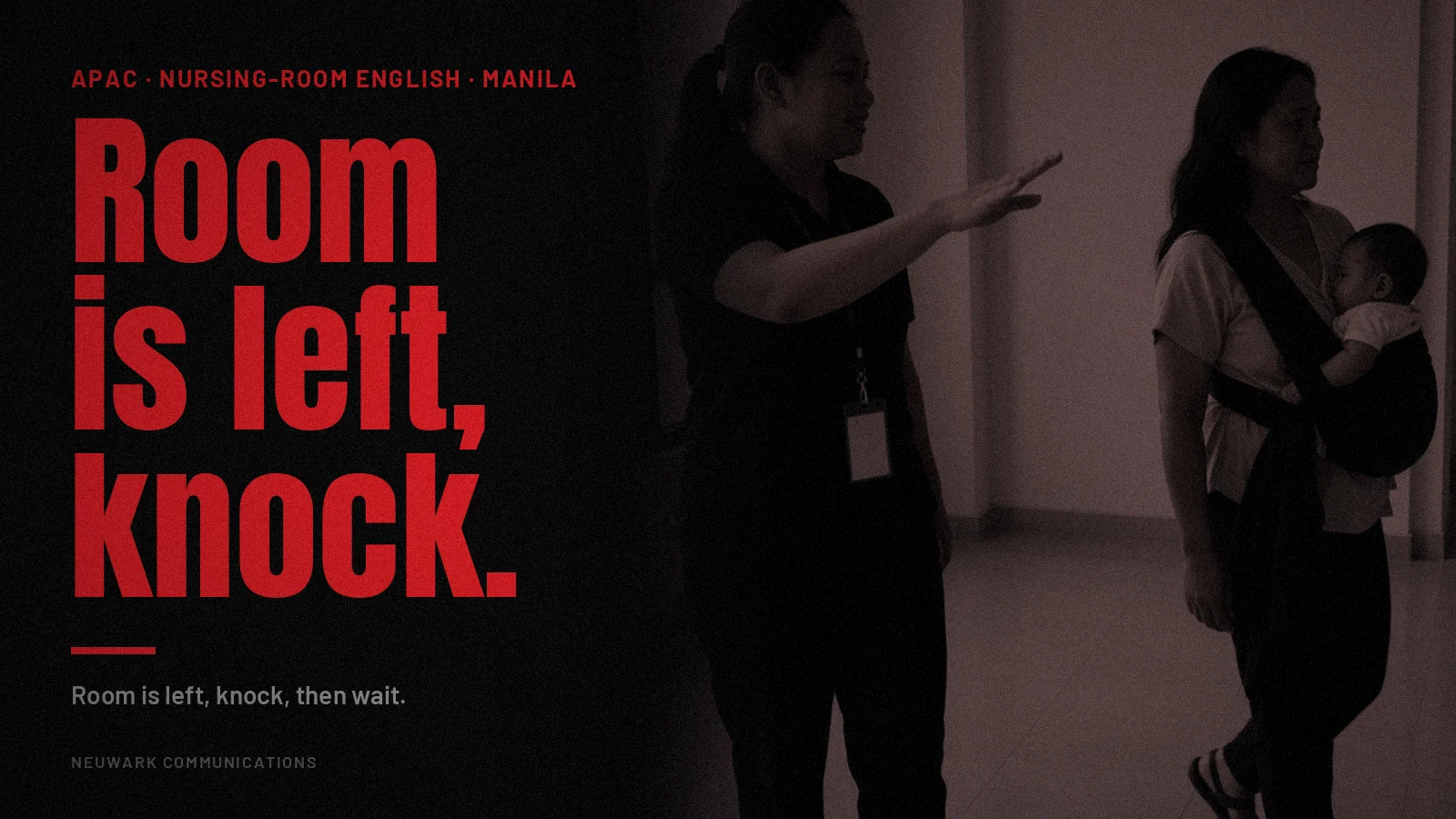
“Room is left, knock, then wait.”
Point, give the door, protect the privacy.
Street-smart APAC English: short sentences a tired operator can say out loud.
Quick answer: A nursing-room line English APAC is the usher’s three-beat direction for a parent who asks: the room is left, knock, then wait, and the door stays closed until someone answers.
A Manila function hall, mid-programme.
A parent with a baby carrier stops at the usher desk.
She asks quietly, so the answer should be quiet too.
Pair it with the prayer-room line English APAC and the stroller-parking line English APAC for more event language on the floor.
What is a nursing-room line English APAC?
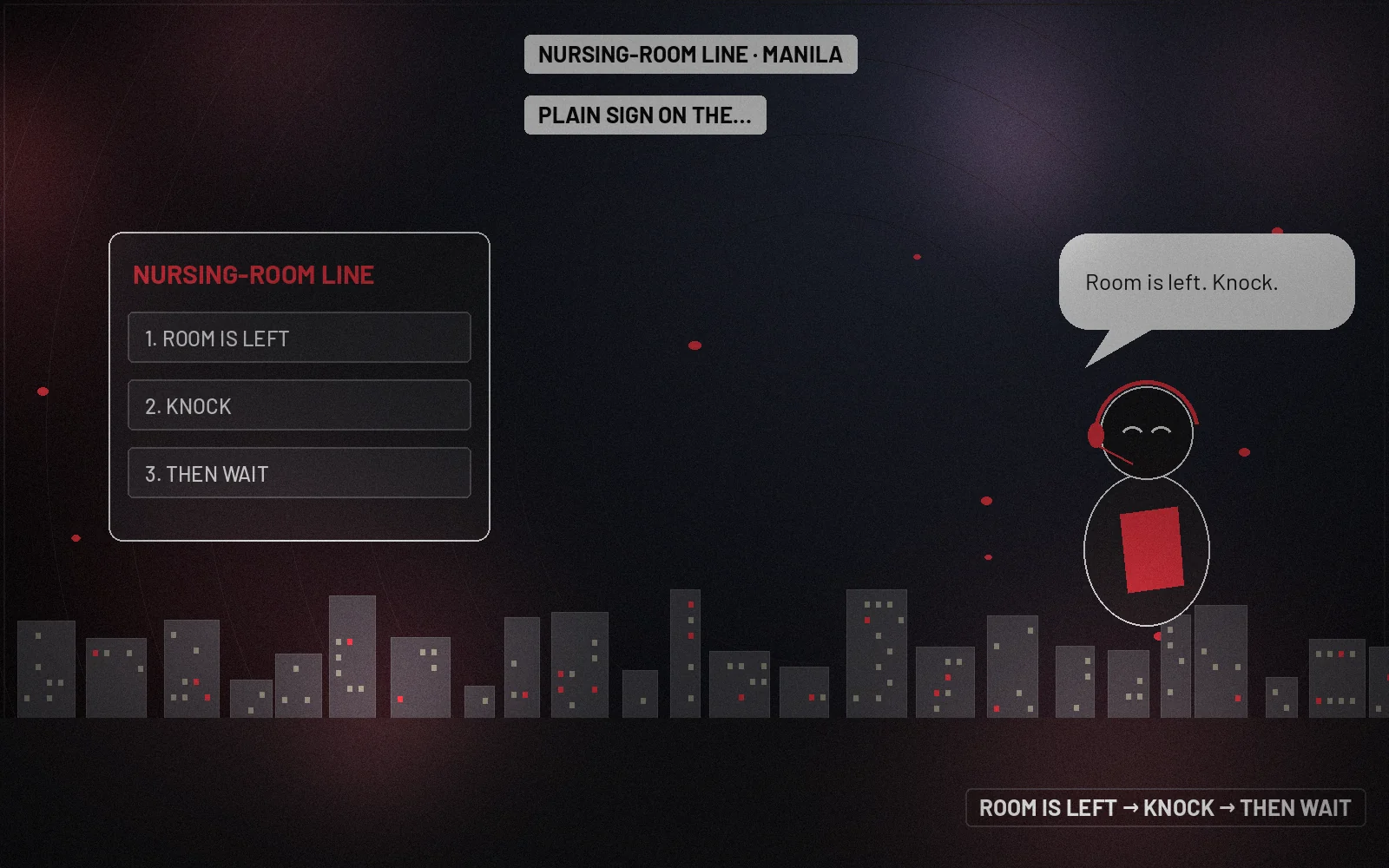
A nursing-room line English APAC is a short wayfinding line with three beats: where, how to enter and what to expect. Room is left gives the direction. Knock, then wait protects whoever is inside. The door stays closed tells the parent the room is private before they reach it.
Nursing-room line (illustrative):
“The nursing room is on your left, second door.”
“Knock, then wait for an answer.”
“The door stays closed, and the room is yours while you use it.”
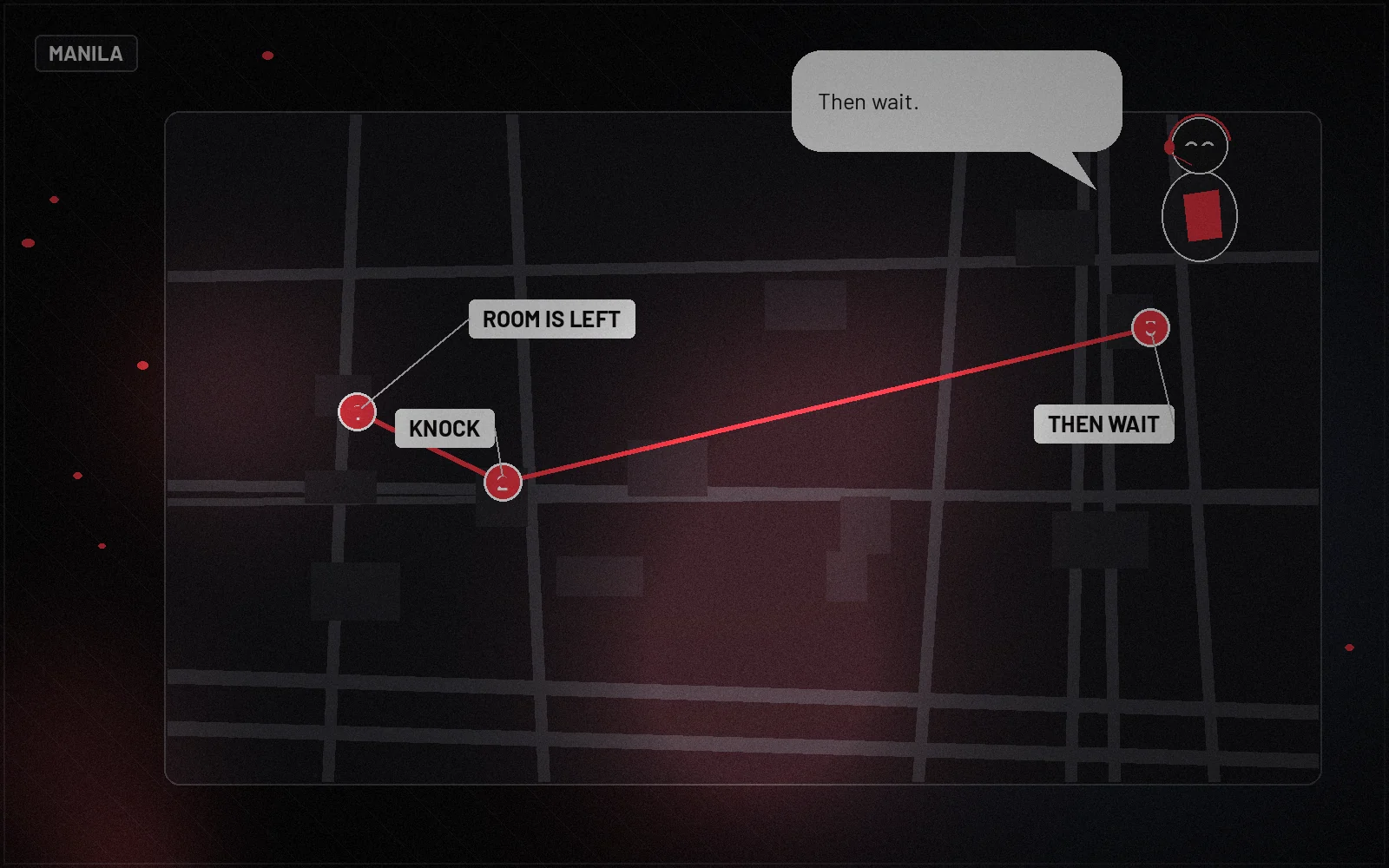
Speakable lock (illustrative): “Room is left, knock, then wait, and the door stays closed.”
Where should the usher point for a nursing-room line English APAC?
Point with an open hand toward the door, not at the parent, and name one landmark: second door, past the water station. Say it at normal volume, no louder. If the route is longer than one turn, walk a few steps with the parent, then stop and let them go on.
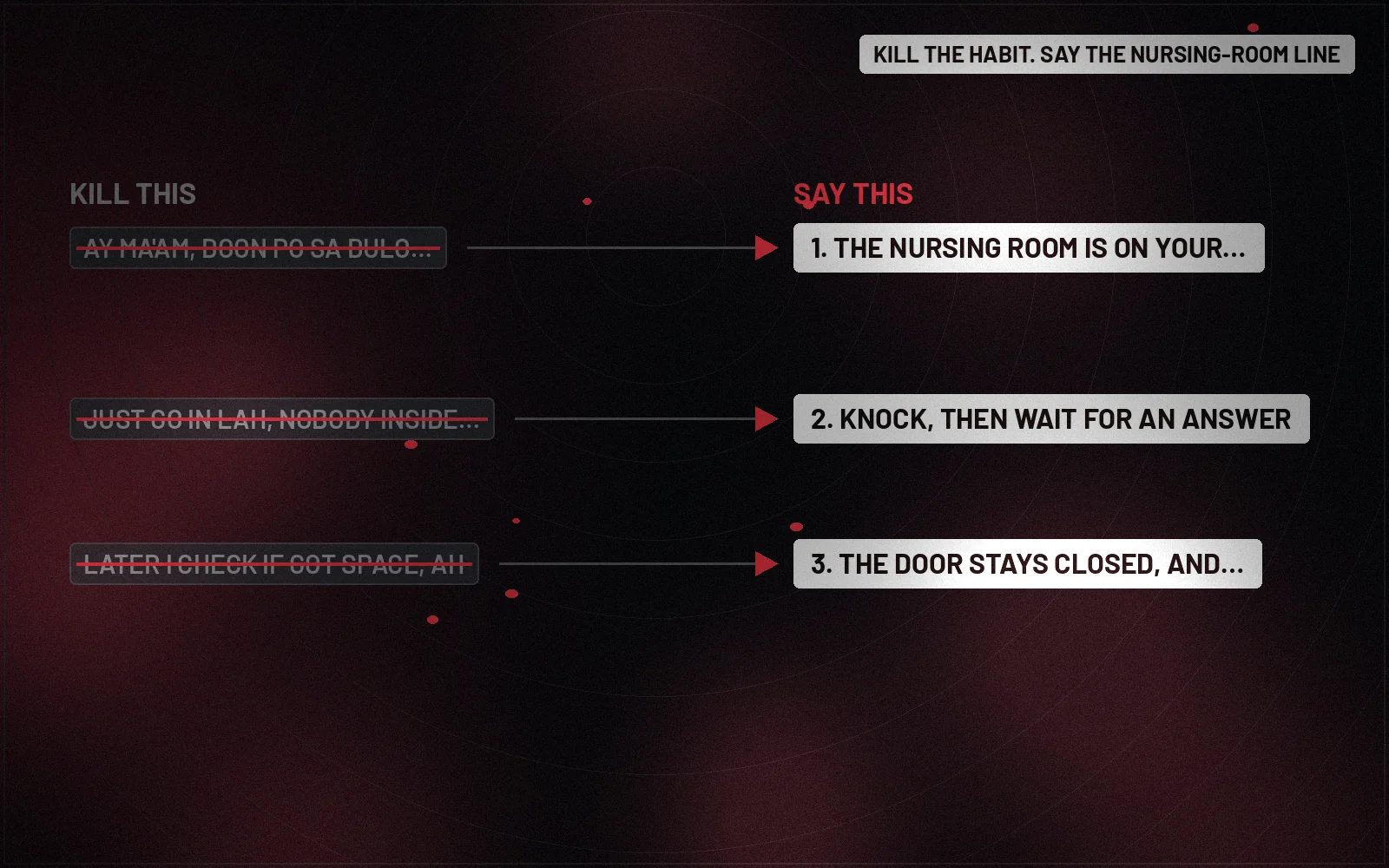
| Kill this | Say this (illustrative) | Why |
|---|---|---|
| Ay ma’am, doon po sa dulo, hanapin niyo na lang. | The nursing room is on your left, second door. | One direction, one landmark |
| Just go in lah, nobody inside one. | Knock, then wait for an answer. | Protects whoever is inside |
| Later I check if got space, ah. | The door stays closed, and the room is yours while you use it. | No vague later |
Lines in this table are illustrative, not quotes from real people.
What if the room is occupied after the nursing-room line English APAC?
Say it plainly: someone is using the room now, please wait on the bench outside, and it is yours next. Never knock for the parent or open the door to check. Offer a chair and water if the wait looks long, and tell the desk so the next guest hears the same answer.
Why does this line work?
It answers the three things a parent wonders on the way: where is it, can I just walk in, and will anyone walk in on me? Left gives the where, knock, then wait gives the rule, and the closed door gives the privacy. The usher never asks why they need it.
How does the line play out on PH and SG desks?
Philippines desk. In Manila halls, add po and ma’am or sir if it fits: nursing room po, on your left. Keep the usher’s voice low and post room status in the crew Viber group, so the desk knows when it frees up.
Singapore and wider APAC desk. In Singapore and Malaysia, keep it brisk and plain: nursing room on your left, knock, then wait. In Indonesia, open with Bapak dan Ibu when you address a couple.
Monday field kit
- Plain sign on the nursing-room door, at eye level.
- One landmark agreed for every usher: second door, past the water station.
- Bench and spare chair outside the door.
- Room status posted in the crew Viber group.
- Line printed on every usher card.
Kill rule: Never open, or knock on, the nursing-room door for a guest.
FAQs
What is a nursing-room line English APAC?
A nursing-room line English APAC is the usher’s short wayfinding script for a parent who asks where to go: room is left, knock, then wait, and the door stays closed. It gives direction and privacy in one breath, without questions, and keeps the answer quiet enough for the parent alone.
When do you say the nursing-room line English APAC?
Say the nursing-room line whenever a guest asks for the nursing room, at the desk, at the door or in the corridor. Say it once, quietly, with an open-hand point. Do not announce the room on the house mic or call across the foyer, because the question was private.
Who owns the nursing-room line English APAC on the floor?
Every usher and desk volunteer owns the spoken nursing-room line on the floor, in the same words. The floor lead owns the room itself: the sign, the bench outside and the status in the crew Viber group. One script and one owner keep the answer identical at every door.
Neuwark Communications writes event scripts through strategy and messaging and digital and social. More lines live in Insights.
Talk to us about your next event script.
Lines are illustrative communications craft, not legal advice.