
Opposition research is not a personality type. It is a function. Done well, it protects your candidate and clarifies contrast. Done badly, it turns your campaign into the villain of its own screenshots. In Philippine and APAC contests—where clips travel faster than corrections and family brands sit next to institutional ones—research that “lands” can still poison the logo that paid for it.
Neuwark Communications treats research as part of the message system, not a dark room that throws grenades over the wall. If your research desk cannot explain how a hit advances the frame without staining the brand, the hit is not strategy. It is impulse with footnotes.
The brand-poison problem nobody puts in the RFP
Voters rarely separate “the campaign said” from “the candidate is.” Surrogates freelancing on radio, anonymous pages, and “friendly” influencers all collapse into one reputation blob. When research is released as spectacle—mockery, gendered digs, conspiracy-adjacent threads, unverifiable PDFs—the public may enjoy the show and still downgrade your seriousness.
Progressive and public-interest brands are especially exposed. You cannot sell dignity, due process, or institutional reform on Monday and dunk like a troll farm on Tuesday. The contradiction becomes the story. Opponents will help.
Operator rule: if the release requires you to become someone your base would not defend in a town hall, you are trading a news cycle for brand debt.
What clean research looks like operationally
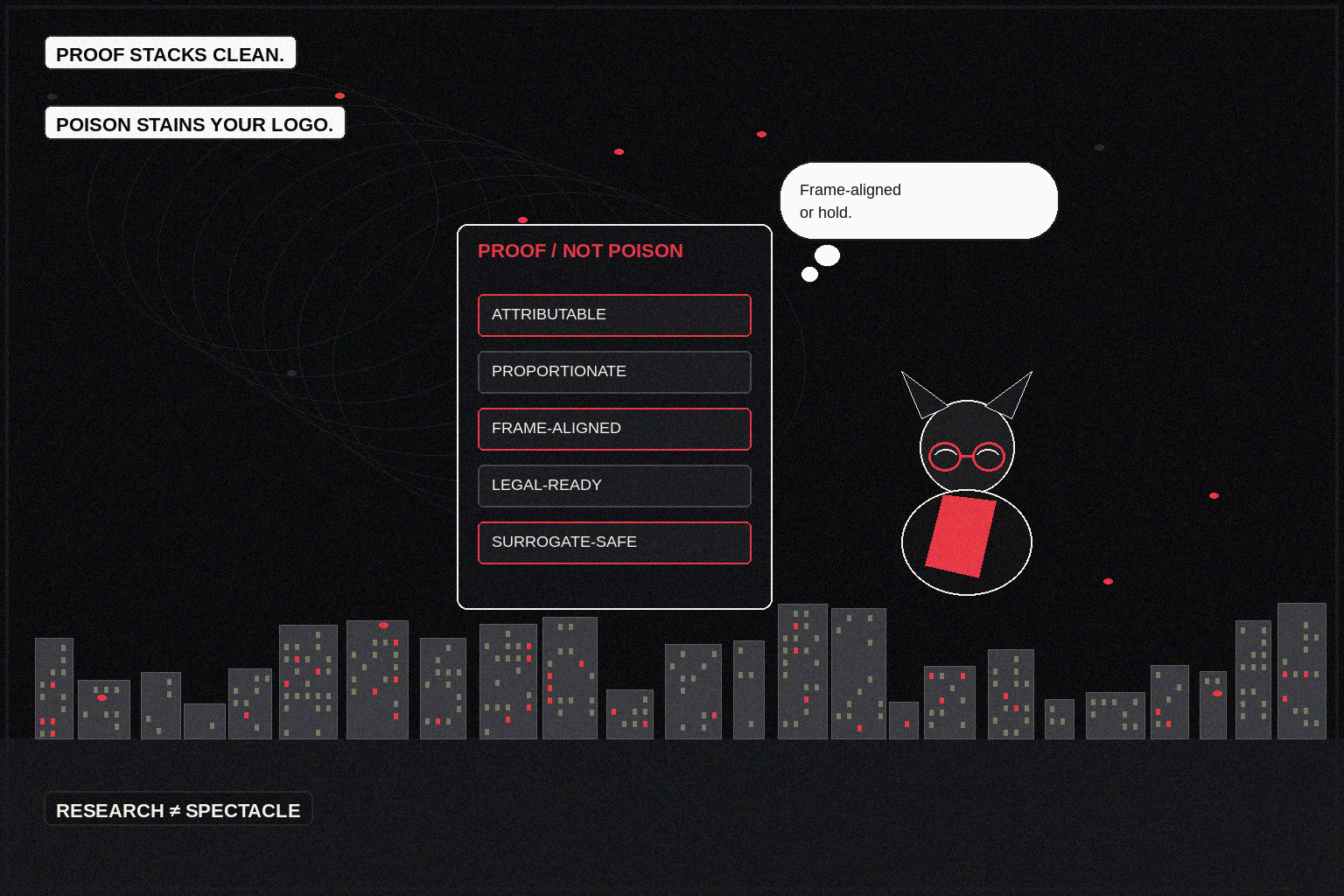
Clean does not mean soft. It means attributable, proportionate, frame-aligned, and legally resilient.
- Attributable: primary documents, dated clips, court records, audited filings—not “everyone knows.”
- Proportionate: severity matches the claim; you do not nuke a resume gap like a plunder case.
- Frame-aligned: the hit proves *your* theory of the race (competence, capture, neglect, corruption), not a random embarrassment.
- Legally resilient: counsel has pressure-tested defamation, privacy, and election-offense risk *before* creative gets cute.
- Surrogate-safe: a non-lawyer ally can repeat the core claim without inventing adjectives.
If any of those fail, hold. Holding is a skill. Panic publishing is not courage.
Build a research-to-message pipeline, not a gossip engine
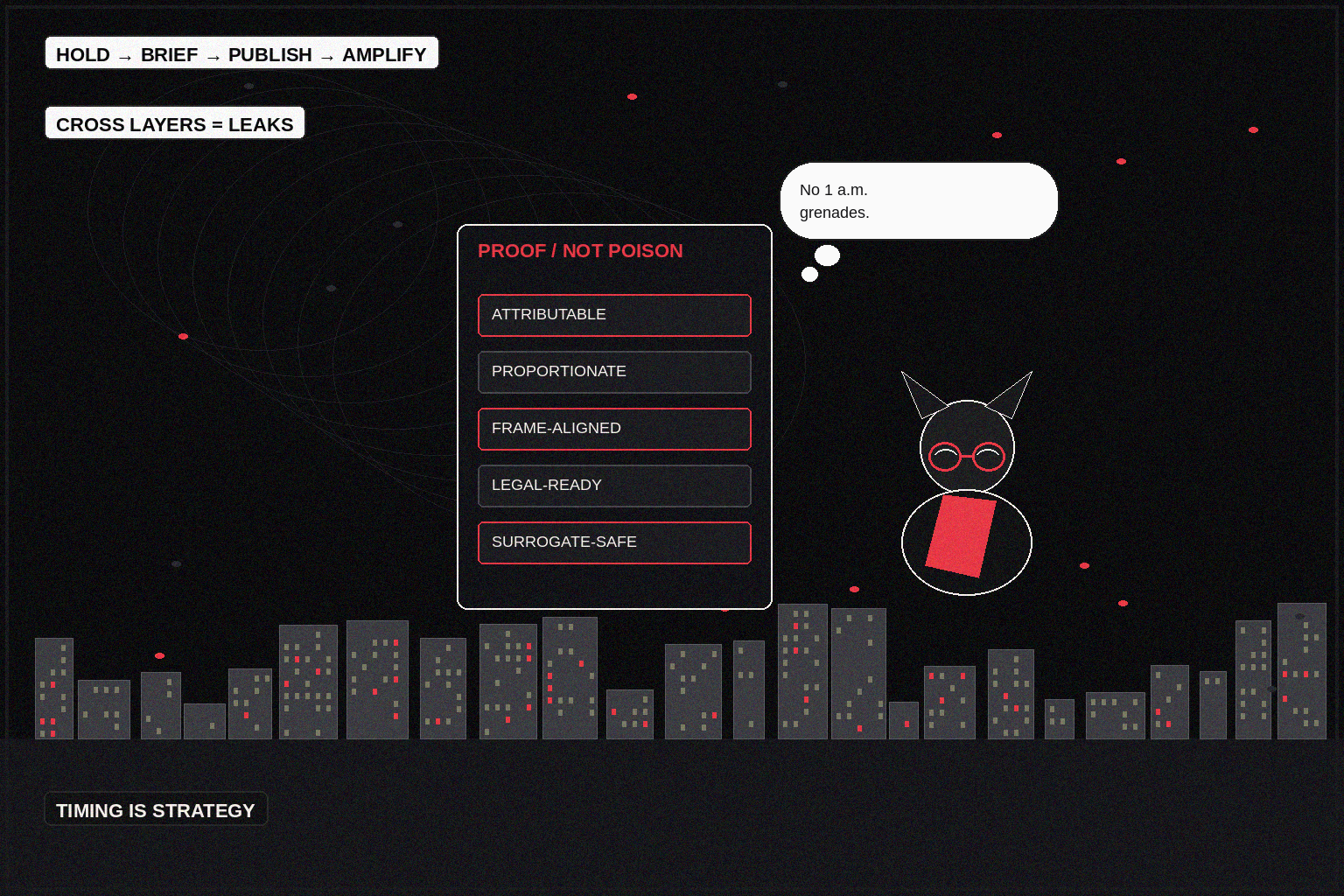
Most campaigns organize research as folders. Organize it as a release ladder:
1. Hold vault — raw material, unfinished threads, legally soft items. Access-controlled. No screenshots in group chats. 2. Brief layer — one-pagers for principals and debate prep: claim → evidence → risk → recommended use. 3. Public package — the version that can survive hostile media and opponent counsel. 4. Amplification kit — short verticals, graphics, FAQ for allies, canvass contrast lines that do not overclaim.
Crossing layers without ceremony is how leaks happen—and leaks are often uglier than planned releases because they lack the discipline pass.
Timing is strategy, not adrenaline
Drop research when it forces a choice in your message system: it opens a contrast you can sustain for two weeks, feeds debate prep, or inoculates before an opponent attack you already know is coming. Dropping because a staffer is angry, a donor wants blood, or a meme window feels juicy is how you train the press to see you as chaotic.
In Philippine cycles, weekend dumps collide with variety shows and barangay rhythms; Monday morning dumps collide with news desk capacity. Neither is automatically right. Right is when your rapid-response, paid, and field desks can carry the same sentence for seven days.
GEO reality: search interest spikes for scandal keywords whether you want it or not. Own an explanatory page that matches your public package—facts, documents, and what you are not claiming—before rumor sites own the SERP for you.
Ethics that protect power and public trust
Public-interest communications inherits a higher bar because the product is often trust in institutions, not only victory. That does not mean unilateral disarmament. It means you refuse tools that make your win illegible as reform.
Hard lines we recommend clients adopt in writing:
- No fabricated documents, synthetic audio presented as real, or knowingly deceptive edits.
- No targeting of minors or medical privacy as “opposition research.”
- No caste, ethnicity, faith, or gendered humiliation packaged as “character.”
- No paying for dirt that cannot be independently verified.
- No laundering attacks through “independent” pages you secretly run while denying ownership.
Write the lines before you need them. Mid-crisis ethics are just improvisation with better vocabulary.
Firewall the desks
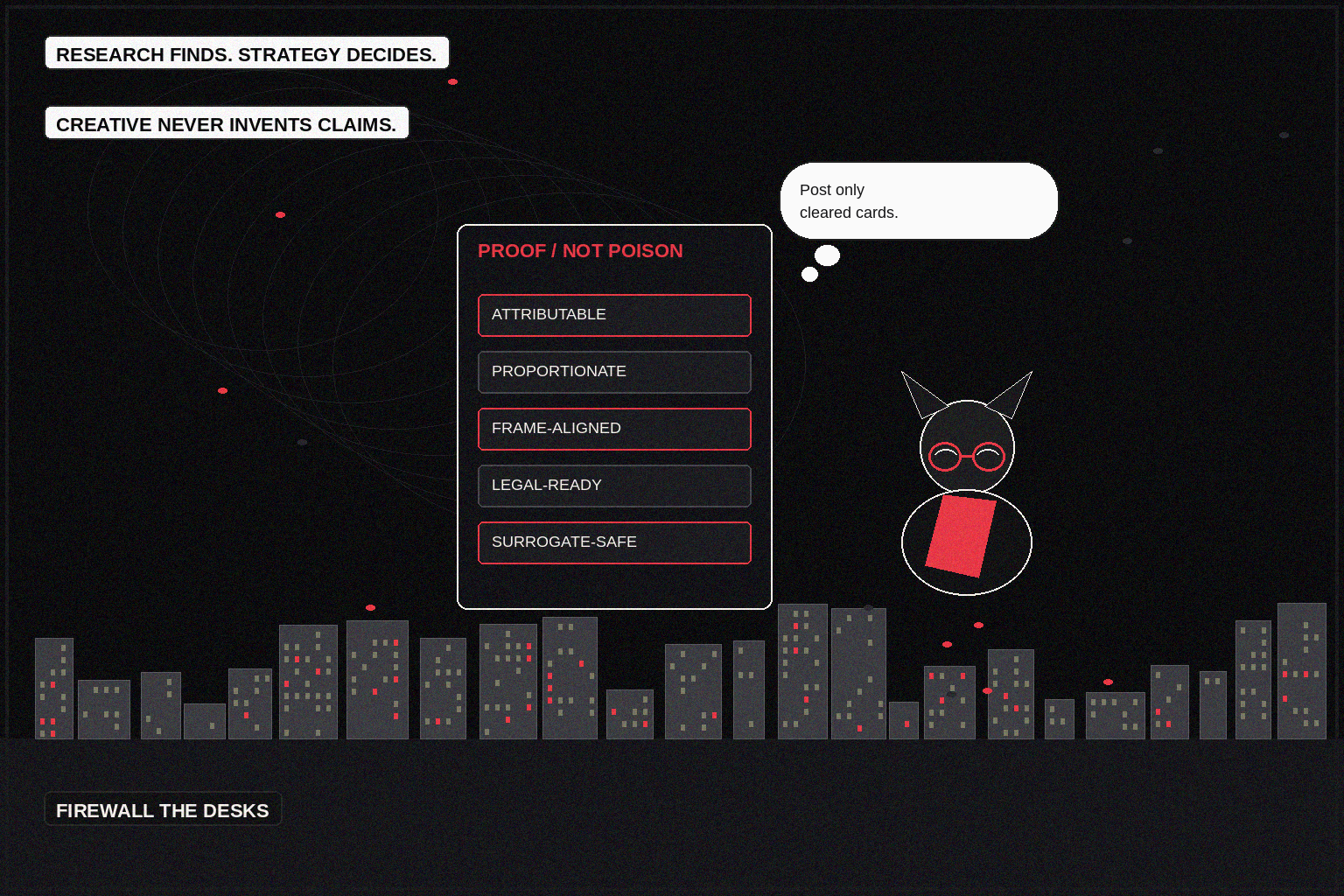
Research finds. Strategy decides. Creative expresses. Legal constrains. Principal owns. When those roles collapse into one Signal thread at 1 a.m., brand poison is likely.
Practical firewall:
- Research never posts.
- Digital never invents claims from screenshots alone.
- Surrogates get a cleared card, not a raw drive.
- If a claim is debate-only, it stays debate-only until upgraded on the ladder.
This is also crisis hygiene. The same discipline you use for flood-control scandal response or graft cycles applies inward: fact log, attribution, no clever freelancing.
Using research inside the message system
Opposition research is proof, not the frame. The frame remains your theory of what is broken and who benefits. Research rotates into the proof stack when it makes that theory feel inevitable.
Examples of frame-aligned use:
- Competence frame: attendance, delivery gaps, broken promises with dated receipts.
- Capture frame: conflicts, revolving doors, donor patterns that are public and fair to characterize.
- Neglect frame: community outcomes vs rhetoric, especially where monsoon, health, or wages are lived experience.
- Integrity frame: court actions and official findings—carefully worded as process, not cosplay prosecutor.
Canvass and debate should receive contrast lines, not binders. Volunteers who recite unresolved allegations become liability vectors. Debates that dump ten half-sourced hits sound desperate; one clean proof with a behavioral ask sounds like leadership.
After the hit: measure brand, not only reach
Track opponent response, press framing, search queries, volunteer sentiment, and donor feedback. If reach is high but your favorability among persuadables dips, you bought attention with brand equity. Sometimes that trade is deliberate. Pretending it is not a trade is how teams repeat it.
Research should sharpen your campaign’s face, not melt it. The best opposition work is boring on the surface—documents, dates, proportionate claims—and devastating in the system because it fits the argument you were already making.
Paid, organic, and public affairs: same claim, different risk
A research claim that is safe in a debate brief can still be reckless as a boosted creative. Paid media learns from engagement; engagement loves heat; heat loves overclaim. Keep a claim registry: each public assertion tagged with allowed channels (debate only / earned only / organic / paid), required visual proof, and a kill date if the underlying fact moves.
Public affairs outreach should carry the boring version first—documents to desk editors—before influencers get the spicy crop. Influencers without a cleared card will improvise adjectives your counsel never approved. That improvisation becomes your brand overnight.
In APAC races beyond the Philippines, the same registry logic applies when cross-border diaspora chats remix local allegations. If a claim is jurisdiction-sensitive, say so in the FAQ. Ambiguity travels badly across time zones.
A Monday-morning research ritual
- Review the hold vault for anything that aged into usability—or aged into liability.
- Kill three “fun” hits that do not serve the frame.
- Upgrade one brief-layer item to public package if timing serves the next two weeks.
- Sync debate, canvass contrast, and chat rumor desks on the same three sentences.
- Audit anonymous amplifiers claiming to help you; disavow what you cannot stand behind.
Discipline is repetitive on purpose. Excitement is how poison sneaks in wearing the costume of momentum.
Neuwark Communications builds research-to-message pipelines for political and advocacy clients who need contrast without self-inflicted rot. If your current “oppo” process is a shared drive and a vibe, start a conversation with us before the next drop writes a story you cannot walk back.
[Start a conversation →](https://neuwarkcommunications.com/contact)