
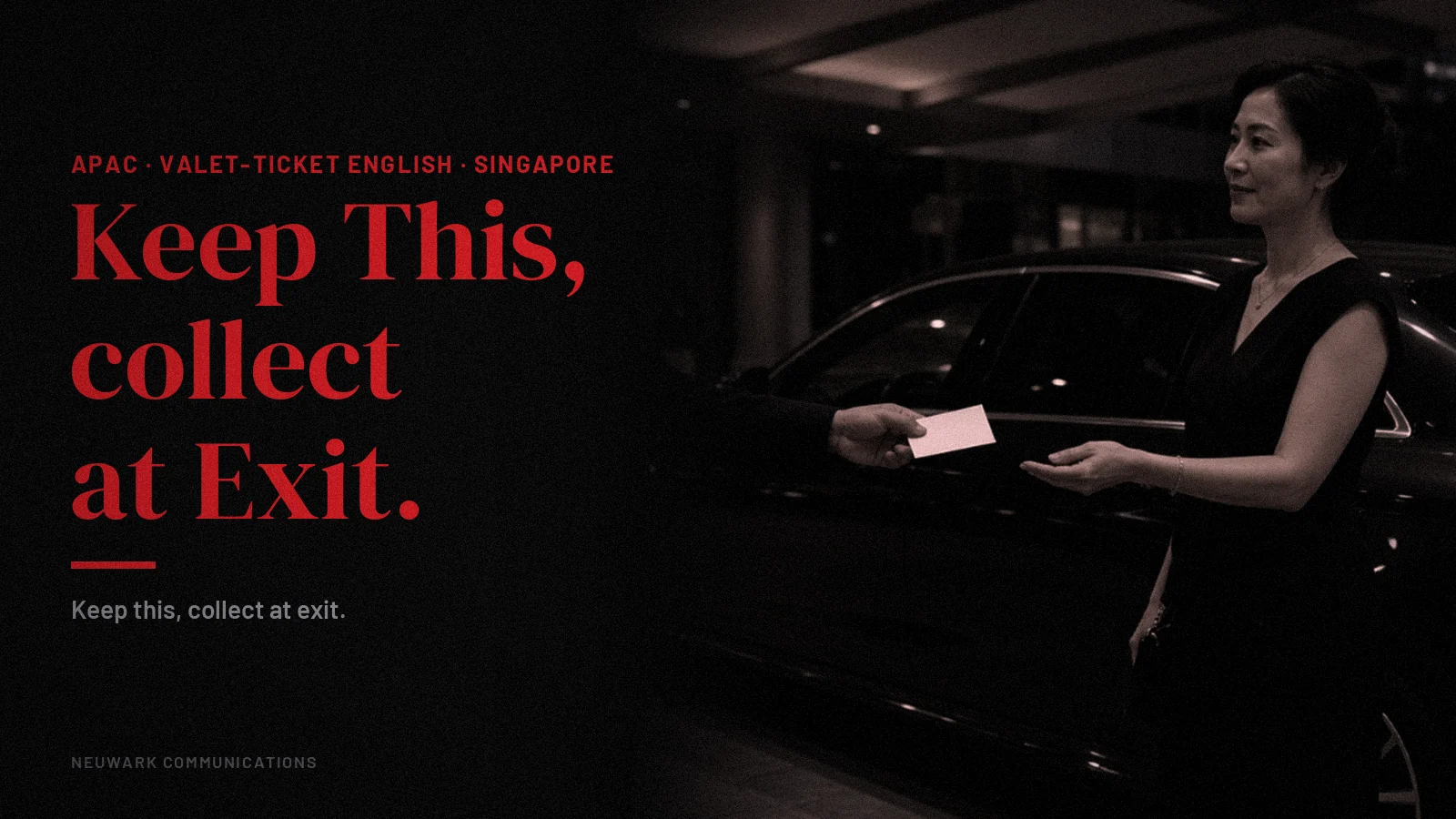
A covered drop-off canopy in Singapore, cars nosing in.
A valet holds out a blank ticket stub.
The guest reaches for a phone instead of the stub.
Valet-ticket line English APAC is the short driveway line that puts the stub in a guest’s hand: keep this, collect at exit, show it at the booth.
Street-smart APAC English: short sentences a tired operator can say out loud.
Quick answer: A valet-ticket line English APAC is what the canopy marshal says at handoff: keep this, collect at exit. Place the stub in the guest’s hand, point to the exit booth once, and keep campaign communications and event language identical for PH and SG protocol desks.
Pair it with the parking-exit line English APAC and the ride-share pickup text English APAC.
What goes in a valet-ticket line English APAC?
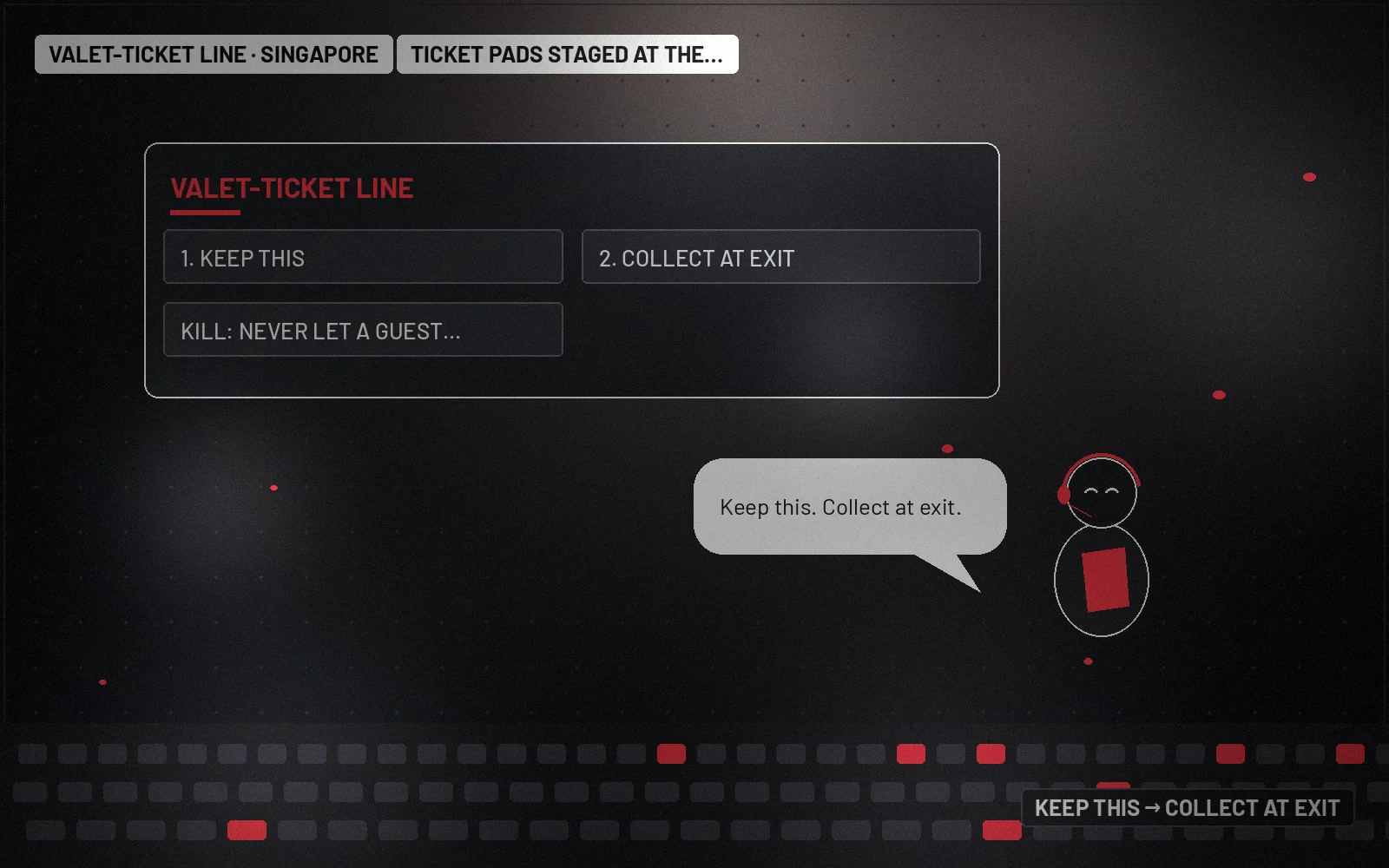
A valet-ticket line English APAC has three parts: the keep, the collect and the place. Keep this names the stub in the guest’s hand. Collect at exit names when it matters. The place, the exit booth, gives a clear reclaim point so cars do not jam the canopy.
Valet-ticket line (illustrative):
“Keep this ticket, please.”
“Collect your car at the exit booth.”
“Show the stub when you are ready to leave.”
Where should the marshal stand for the valet-ticket line English APAC?
Stand at the open car door under the canopy, so the stub meets the guest before they walk in. Say this line while placing the stub in their hand, and point once to the exit booth. If rain starts, keep the same order: stub first, then umbrella help.
Question ladder (illustrative):
- Typed question: “Can you just WhatsApp me the bay?” Opener: “Keep this stub; the exit booth matches it to your car.”
- Follow-up: “I already went inside without it.” Opener: “The desk can help; bring any photo of the stub if you have one.”
- Practical rung: “How long will retrieval take?” Opener: “Show the stub at exit; the bay team will bring it round.”
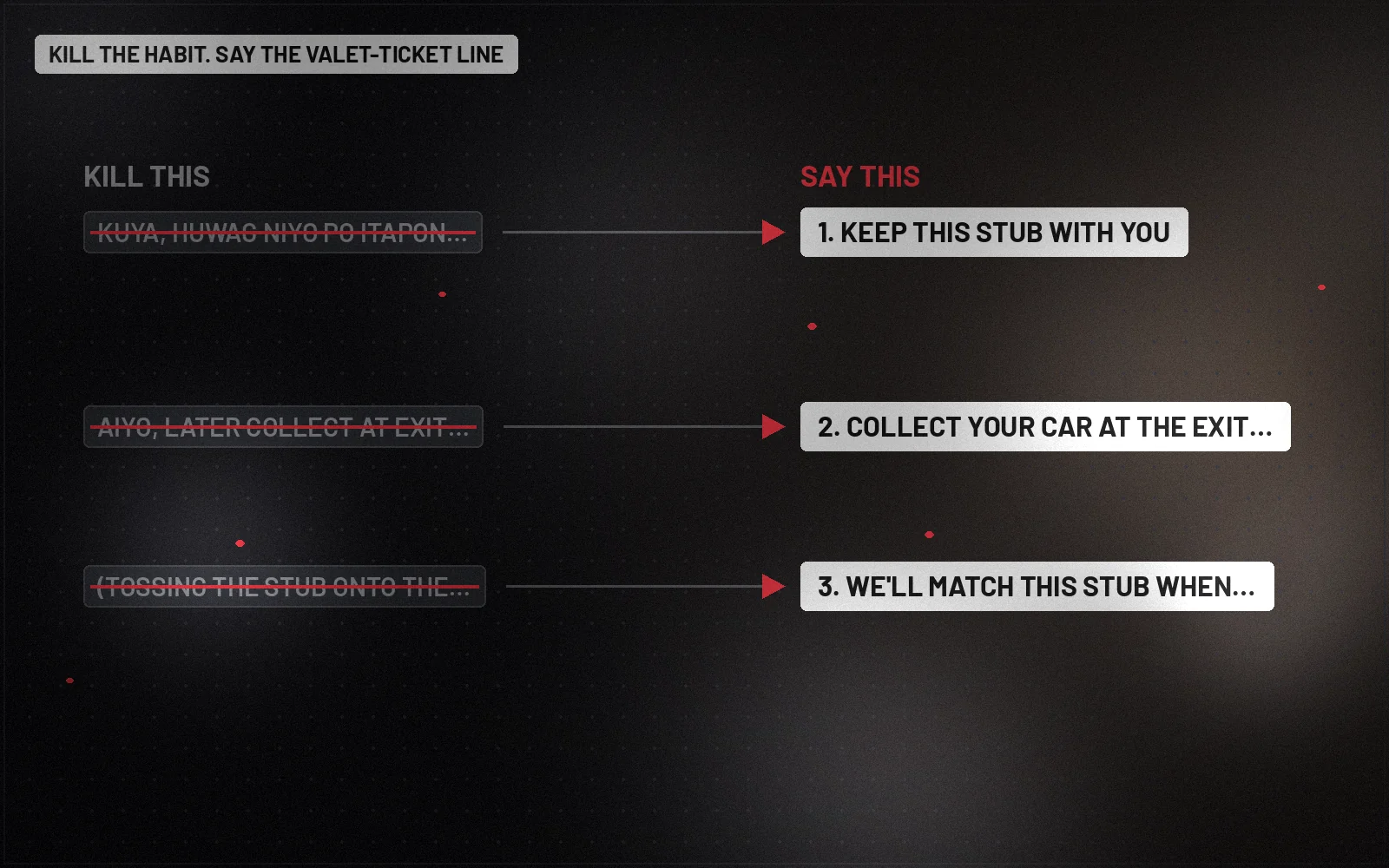
| Kill this | Say this (illustrative) | Why |
|---|---|---|
| Kuya, huwag niyo po itapon yan, ticket yan! | Keep this stub with you. | Names the object as a keep |
| Aiyo, later collect at exit lah, don’t lose! | Collect your car at the exit booth. | Names the reclaim place |
| (tossing the stub onto the dash) | We’ll match this stub when you leave. | Ties stub to the car |
What if a guest loses the valet-ticket line English APAC stub?
Stay calm and switch to the bay desk path: name, plate if known, and a supervisor check. Do not invent a new stub at the canopy. The same stub rule still holds for everyone else, so one lost stub never becomes an open bay free-for-all.
Why does this line work?
It answers what the guest needs: what do I keep, and where do I claim the car? The stub is the only token, the exit booth is the reclaim place, and the short line stops long explanations under a busy canopy. Cars leave in order, and the lobby stays clear.
The line shifts in word choice only: in the Philippines, add po or sir and ma’am; in Singapore and Malaysia, keep it brisk and plain; in Indonesia, open with Bapak dan Ibu.
PH and SG desk notes
Philippines desk. In Philippine hotel driveways, guests often pocket phones first. Place the stub in the hand, then nod to the exit booth. Share the bay map in the Viber crew chat before doors.
Singapore and wider APAC desk. In Singapore, give campaign communications staff, venue crew and valet the same stub-and-exit notes in one event language.
Paste-ready lock
Speakable lock (illustrative): “Keep this ticket, please, collect your car at the exit booth, and show the stub when you are ready to leave.”
Monday field kit
- Ticket pads staged at the canopy.
- Exit booth marked on the marshal card.
- Bay radio channel named.
- Lost-ticket path at the desk.
- Kill rule: never let a guest walk off without the stub in hand.
FAQs
What is a valet-ticket line English APAC?
A valet-ticket line English APAC is the short canopy script: keep this, collect at exit. It makes the stub the only reclaim token for the car.
When do you say the valet-ticket line English APAC?
Say the valet ticket line at the open door while you place the stub in the guest’s hand. Point the exit booth once before they enter the lobby.
Who owns the valet-ticket line English APAC on site?
The canopy marshal owns the spoken valet ticket line on site; the bay team owns retrieval. Both treat the stub as the only claim token.
What to do this week
- Write keep-this on the canopy card.
- Walk the exit booth route.
- Name the bay radio lead.
- Brief the desk on lost-ticket steps.
Neuwark Communications writes event scripts through public affairs, crisis and rapid response, strategy and messaging and digital and social within our services. More lines live in Insights.
Related: Parking-exit line English APAC · Ride-share pickup text English APAC
Talk to us about your next event script.
Illustrative lines only. Communications craft, not legal advice.