

A campaign page on a Monday night. A supporter comments that the rally bus never came, and replies pile up.
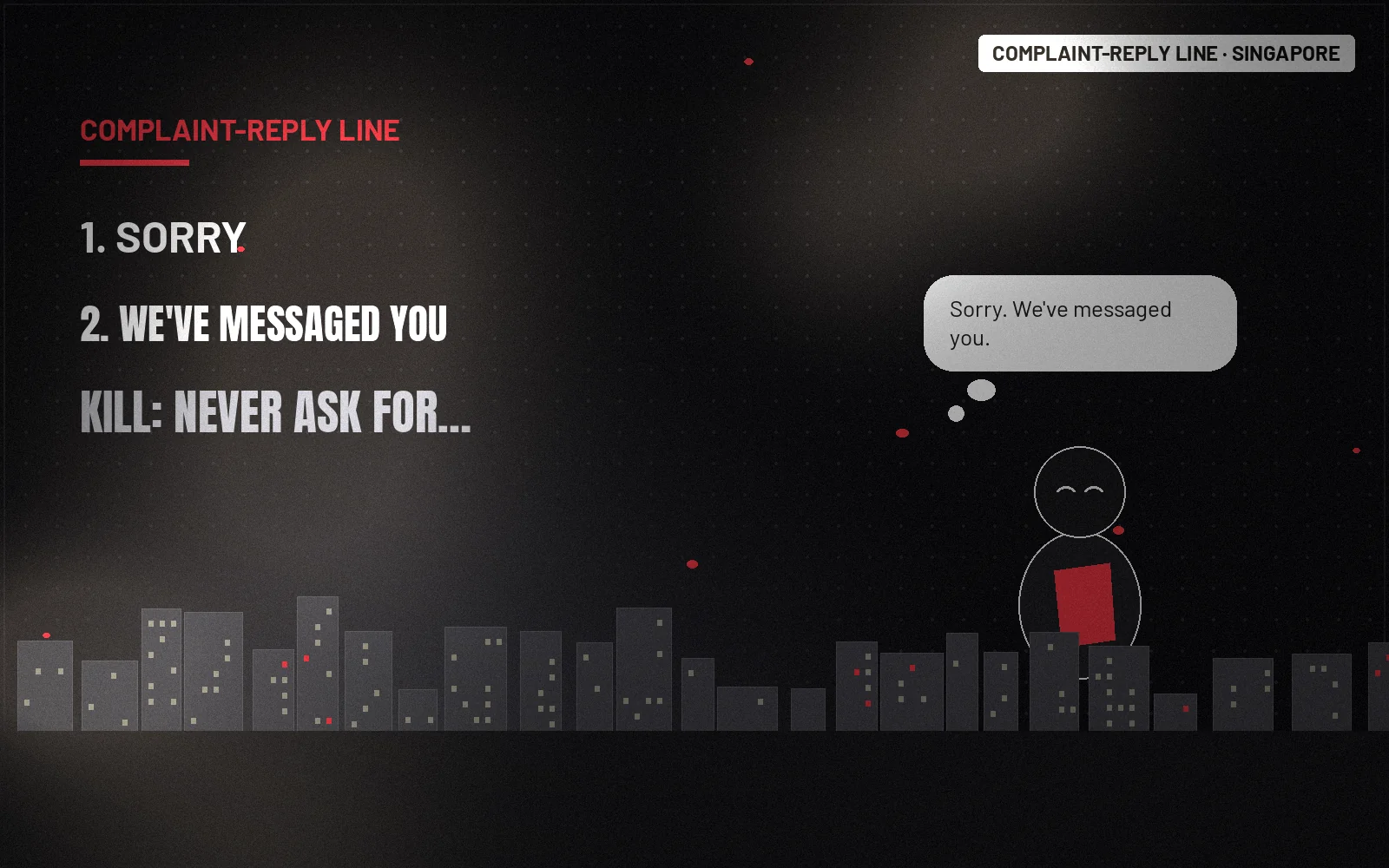
Complaint-reply line English APAC is the short public reply to a complaint in the comments: sorry for the trouble, we’ve messaged you, and no details in public.
Quick answer: A complaint-reply line English APAC is the page admin’s public answer to a complaint: hi, sorry for the trouble, we’ve sent you a private message so we can sort it out. Reply fast, apologise for the experience, move names and details into the private message, and then follow up.
Street-smart APAC English: short sentences a tired operator can say out loud.
It is the public reply under the post; the DM holding-reply line English APAC is the private inbox answer that comes next. It also differs from comment moderation English APAC, which decides what to pin, hide or escalate; here you answer a real complaint.
What goes in a complaint-reply line English APAC?
A complaint-reply line English APAC has three parts: a short acknowledgement, an apology for the trouble, and a pointer to the private message. It does not argue the facts in public or ask for details there. Other followers see a page admin who listens and acts, which matters more than winning the thread.
Complaint-reply line (illustrative):
“Hi, thanks for telling us, and sorry for the trouble.”
“We’ve sent you a private message so we can sort this out.”
“We’ll update you there today.”
How do I reply to a complaint without making it worse?
Reply soon, with one calm, short message. Do not explain, blame the venue or defend the team in public. Thank them for raising it, say sorry for the trouble, and move the conversation to a private message. Long public defences invite more replies, and a single complaint can quickly turn into a pile-on.
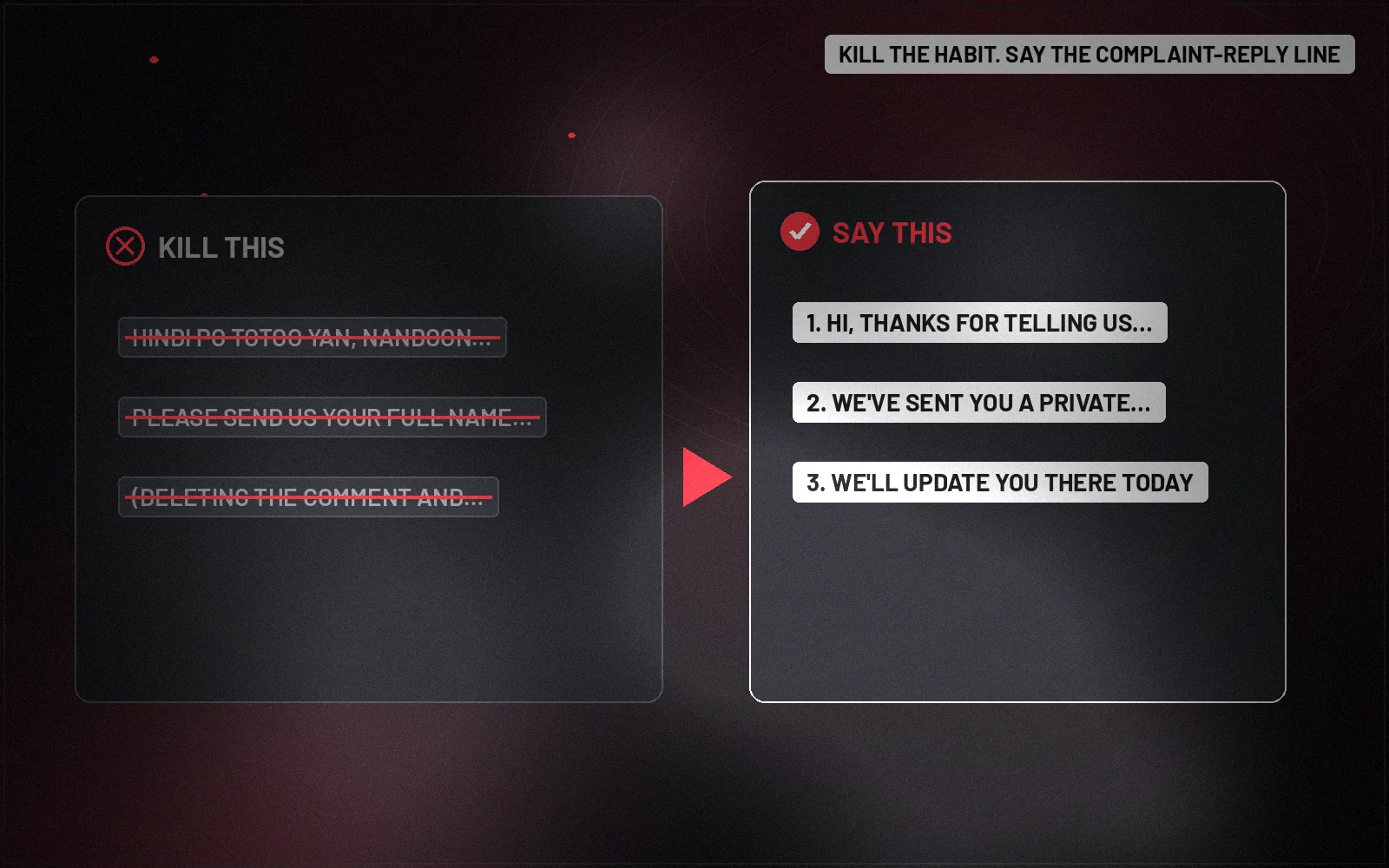
| Kill this | Say this (illustrative) | Why |
|---|---|---|
| Hindi po totoo yan, nandoon naman ang bus! | Hi, thanks for telling us, and sorry for the trouble. | Acknowledges first |
| Please send us your full name and number here lah. | We’ve sent you a private message so we can sort this out. | No details in public |
| (deleting the comment and saying nothing) | We’ll update you there today. | Shows follow-up |
| Sige po, sorry, ganun talaga minsan. | Sorry again, our team is checking what happened. | Owns it, no excuses |
What should never go in a public complaint reply?
Never post names, phone numbers, addresses, booking details or internal blame in a public reply. Do not ask the person to post their details either. Keep the facts for the private message, where you can check them properly. If the complaint is about safety or money, flag it to your lead at once.
When should a complaint go beyond the page admin?
Escalate when the complaint is about safety, harm or a legal threat, or when many people report the same problem. Then the page admin posts the same short line and hands the issue to the lead or the crisis team. A pattern of complaints is an issue to manage, not a thread to answer one by one.
How does this play out in PH and SG?
The three parts hold in both markets, but complainers and audiences react differently. Use the desk notes below to adjust the tone, the language and the speed of the public reply for Philippine and Singapore pages, and agree with your lead who signs off on replies.
Philippines desk. On Philippine pages, complaints often come in Taglish, so a warm, plain reply helps. Use po where it fits and avoid stiff corporate English. If supporters jump in, thank them and stay calm.
Singapore and wider APAC desk. On Singapore pages, people often expect a quick, specific reply and a clear next step. Keep campaign communications plain, give a follow-up time, and reply in standard English even if the complaint is in Singlish.
Paste-ready lock
Speakable lock (illustrative): “Hi, thanks for telling us and sorry for the trouble, we’ve sent you a private message so we can sort this out today.”
Monday field kit
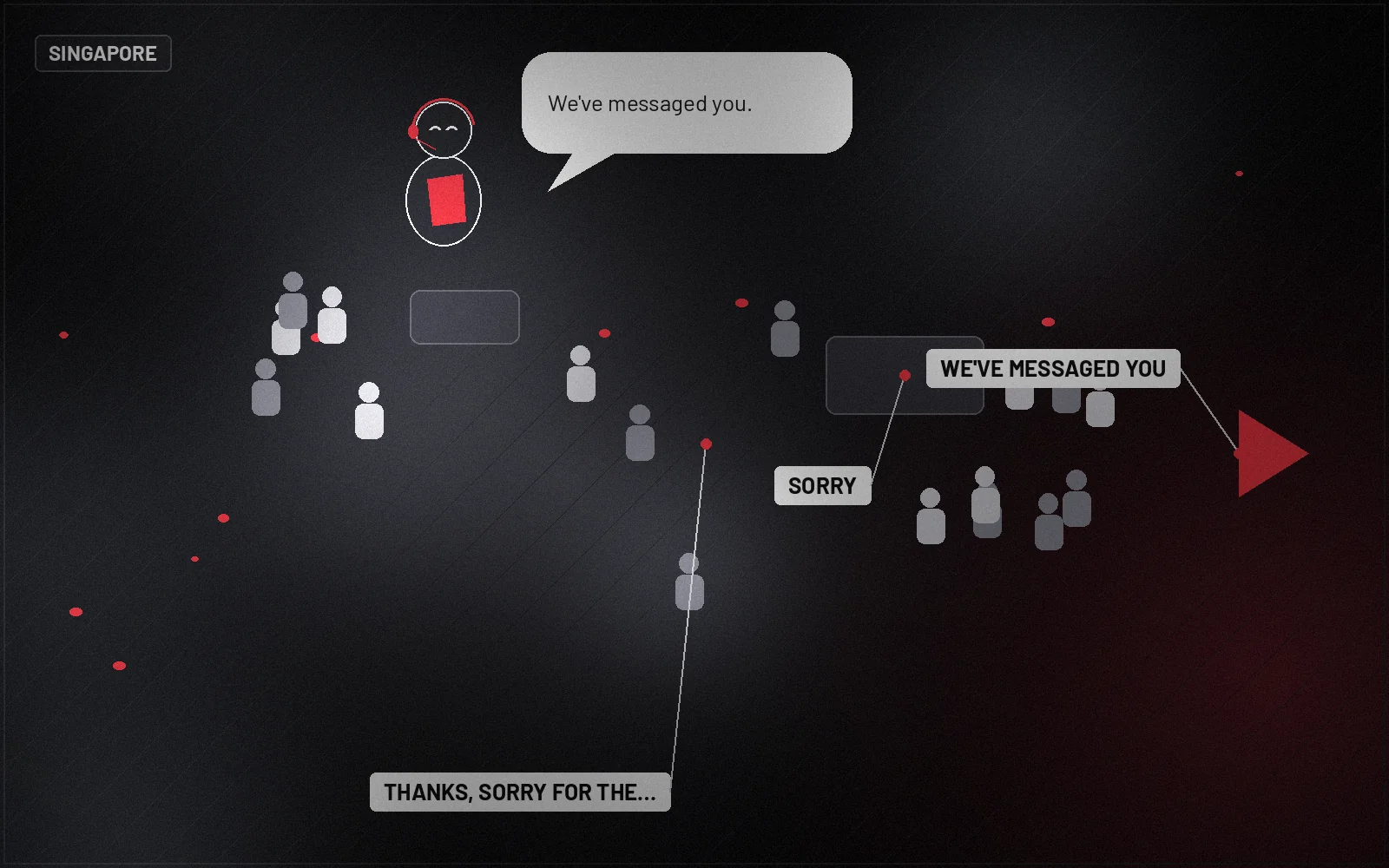
- Thanks, sorry for the trouble, we’ve messaged you.
- A saved reply ready to paste.
- A private message template for the follow-up.
- A named lead for safety and money complaints.
- Kill rule: never ask for personal details in a public comment.
What to do this week
- Save the line as a quick reply on the page.
- Write the follow-up private message.
- Agree who answers complaints at night.
- List the topics that go straight to the lead.
Kill rule: promise an update only if you will send it.
FAQs
What is a complaint-reply line English APAC?
A complaint-reply line English APAC is the short public reply a page admin posts under a complaint. It says sorry for the trouble, points to a private message and keeps details out of public view.
How do you reply to a complaint in the comments?
Reply to a complaint in the comments with a short thank you, an apology for the trouble and a pointer to a private message. Then follow up privately and fix the problem.
Should you delete a complaint comment?
Do not delete a genuine complaint comment, because followers notice and it often makes things worse. Reply calmly in public and move the details to a private message.
What should you not say in a public reply?
In a public reply, do not share names, numbers or booking details, and do not blame anyone. Keep the public reply to thanks, sorry and the private message.
Neuwark Communications builds page scripts and campaign communications as part of our crisis and rapid response work and wider services. More street-smart lines live in Insights.
Related: DM holding-reply line English APAC · Comment moderation English APAC
Talk to us about your next page script.
Illustrative lines only. Communications craft, not legal advice.