
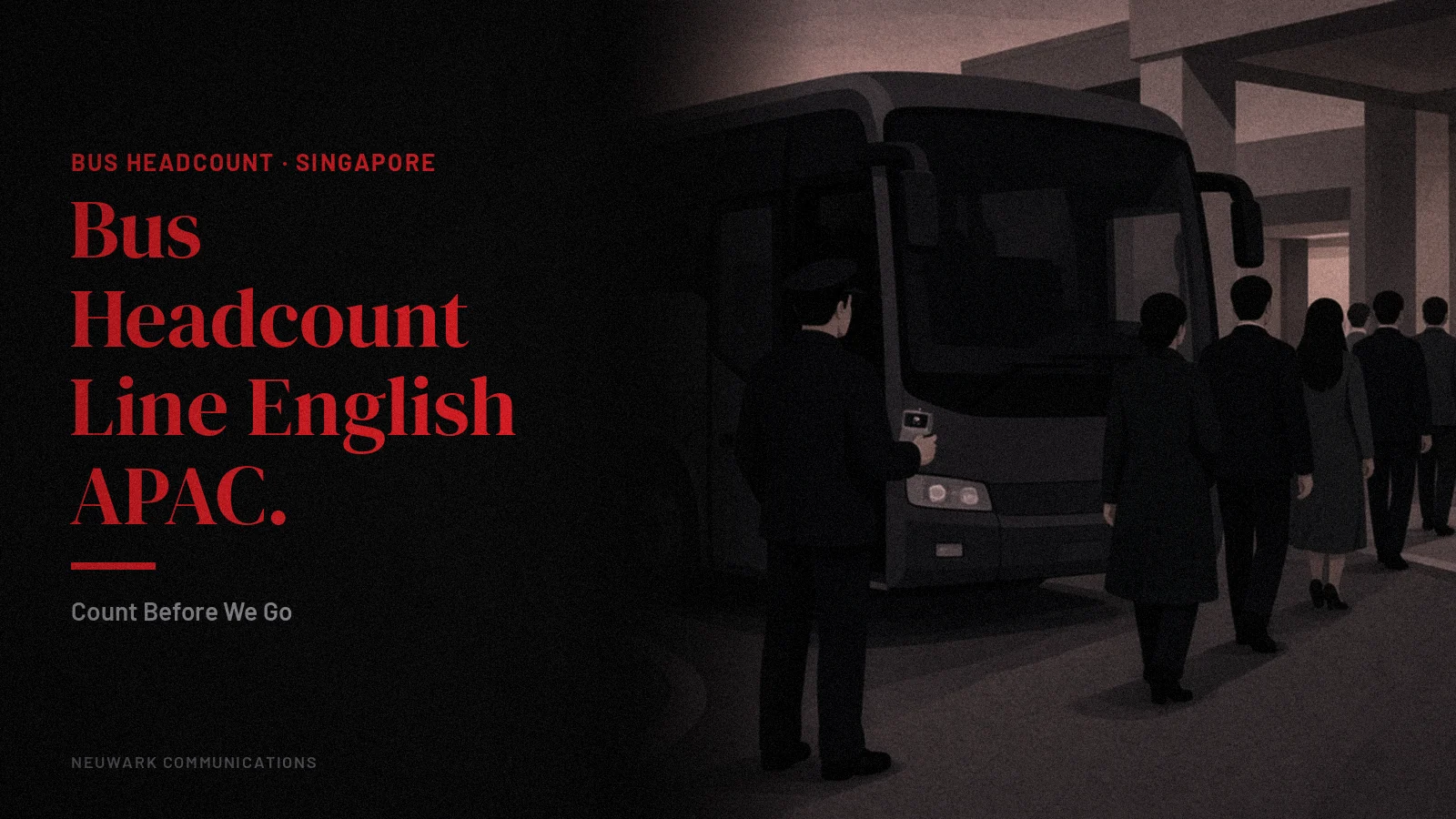
A site visit outside Clark, late in the afternoon. Two coaches are loading at once, guests are swapping seats to sit with friends, and the driver wants to leave on time.
Bus headcount line English APAC is the short marshal line at the bus door: one count, one list, nobody left behind, then we go.
Street-smart APAC English: short sentences a tired operator can say out loud.
It is the line spoken at the door before departure, not the message for a late vehicle; for that, use the shuttle delay text English APAC. At the end of the day it pairs with the ride-share pickup text English APAC for guests leaving on their own.
Quick answer: A bus headcount line English APAC is the marshal’s call at the bus door before departure: please take your seat, we are counting, and we leave once everyone is here. Count at the door, match the count to the list, check the seat next to you, and never let the coach go until the numbers agree.
What goes in a bus headcount line English APAC?
A bus headcount line English APAC has three parts: please take your seat, we are counting now, and we leave when the count matches. The marshal says it at the door, counts every guest on a clicker, then checks the list before telling the driver the coach can leave.
Bus headcount line (illustrative):
“Please take your seat, we’re doing a quick headcount.”
“Look at the seat next to you: is your seatmate here?”
“Count matches. Thank you, we’re off.”
How do I count heads at the bus door?
Stand at the door and click once for each guest who boards. Then walk the aisle once and count again, seated. If both numbers match the list, tell the driver. Plain event language keeps guests still while you count, because they know exactly why you are asking them to wait.
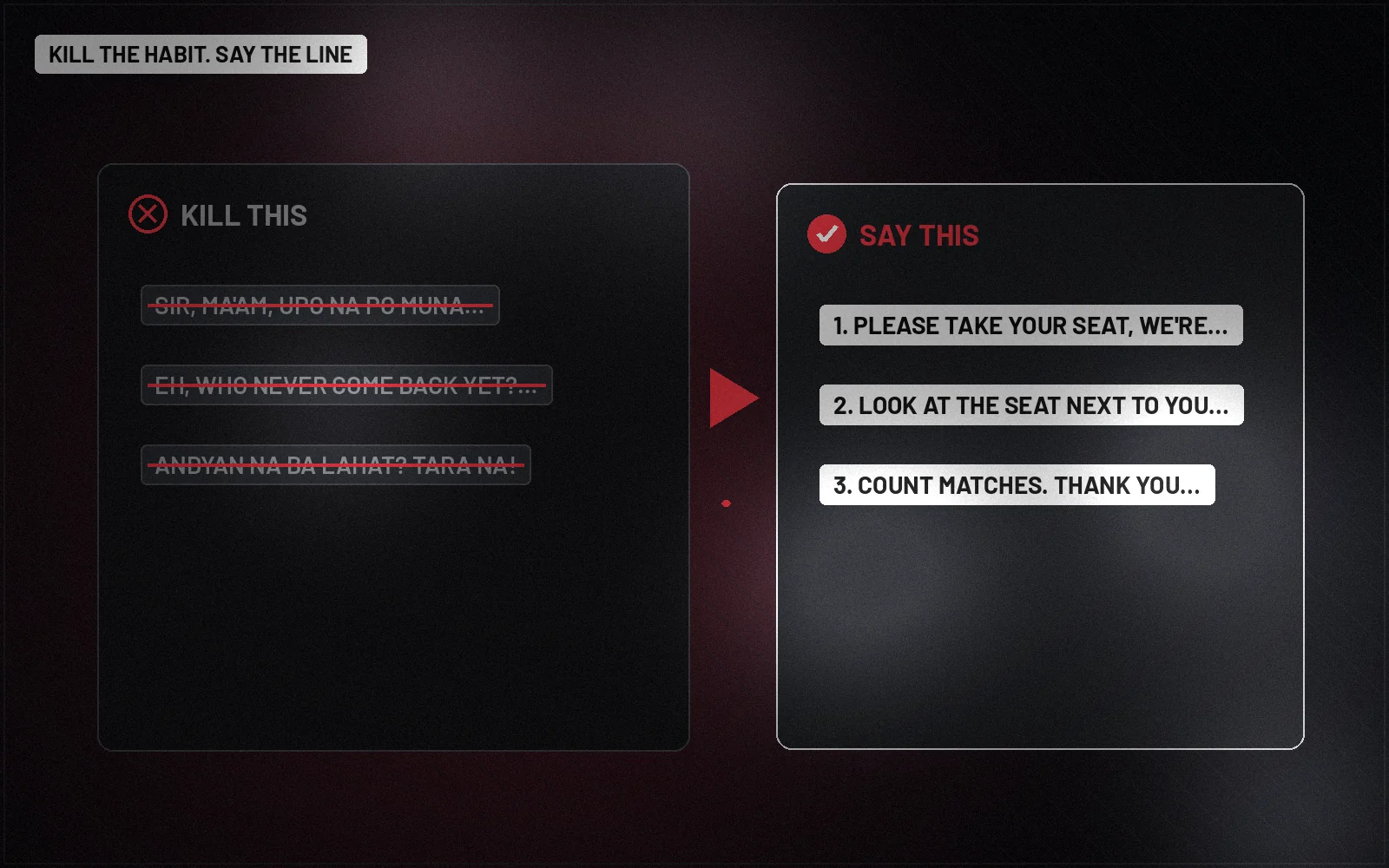
| Kill this | Say this (illustrative) | Why |
|---|---|---|
| Sir, ma’am, upo na po muna, bilangan lang! | Please take your seat, we’re doing a quick headcount. | Gives the reason |
| Eh, who never come back yet? Wait lor. | Look at the seat next to you: is your seatmate here? | Guests help the count |
| Andyan na ba lahat? Tara na! | Count matches. Thank you, we’re off. | Count, then go |
| (counting from the front seat) | (count at the door, then walk the aisle) | Two counts, not one |
| Iwan na natin, susunod na lang siya. | We’ll wait a few minutes while I call them. | Nobody left behind |
What if the count does not match the list?
Do not leave. Say the count out loud to the guests, ask them to check the seat next to them, and call or text anyone missing from the list. Agree a fixed waiting time with the event lead before the trip, so the decision to go or wait is never made on the spot.
Who should hold the list on each bus?
One named marshal per coach holds the list and the clicker, and that person owns the count. They sit near the door, not at the back, and they report each count to the transport lead by radio or text before the coach moves. Any swaps between coaches go through that marshal.
How does this play out in PH and SG?
The three parts hold in both markets, but trips and kerbside rules differ. Use the desk notes below to adjust the line, the recount rhythm and the waiting time for Philippine and Singapore trips, and agree the plan with the transport lead before the first pickup.
Philippines desk. In the Philippines, guests may swap coaches to ride with friends, and some trips run long with stops. Ask guests to stay on their assigned bus, recount after every stop, and say the line in English or Filipino so everyone understands why you are counting.
Singapore and wider APAC desk. In Singapore, coaches often have tight pickup windows and short waits at the kerb. Keep the line in plain English, count fast and twice, and keep campaign communications staff on the same headcount list as guests.
Paste-ready lock
Speakable lock (illustrative): “Please take your seat, we’re doing a quick headcount, so check the seat next to you, and we leave once the count matches.”
Monday field kit
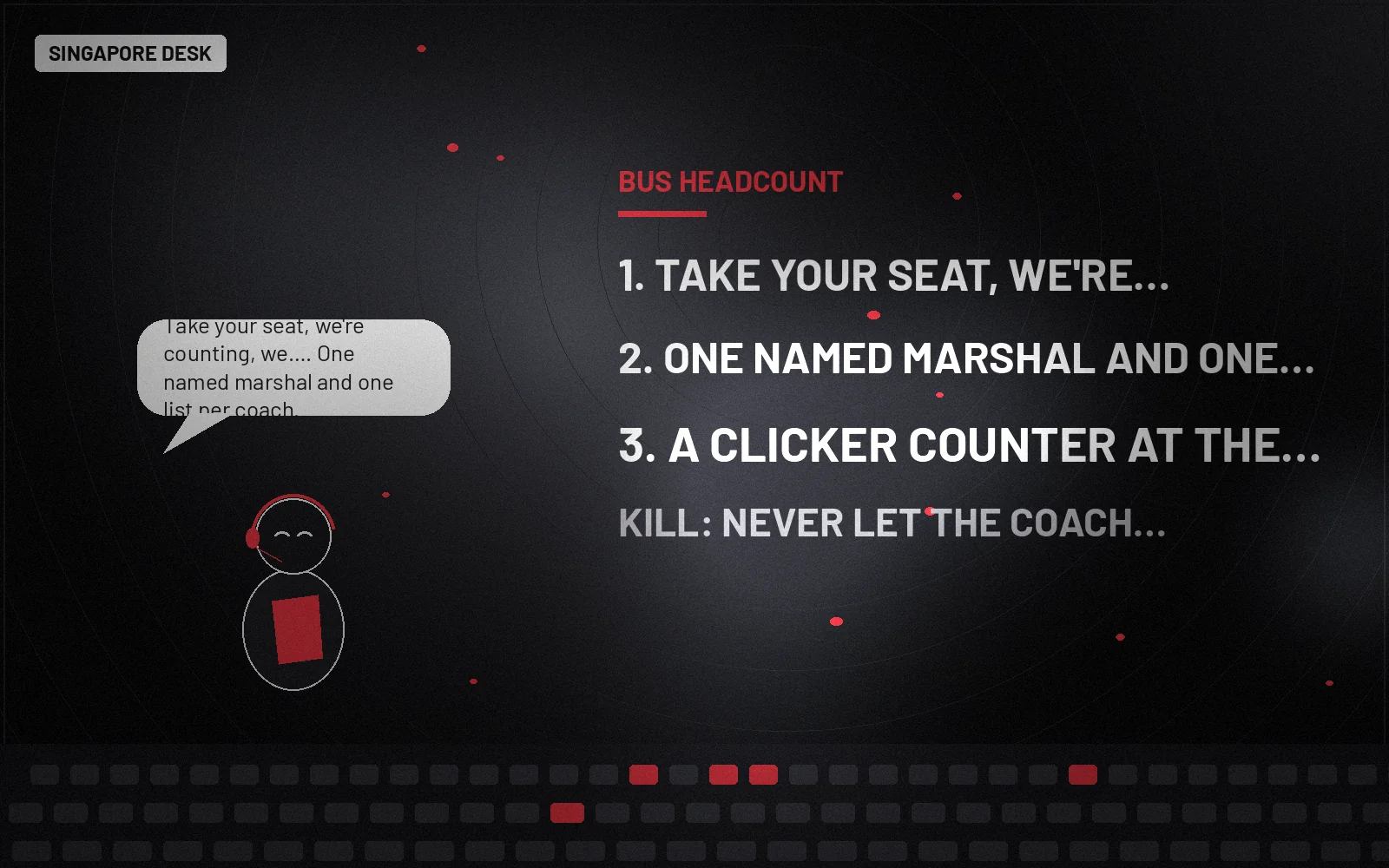
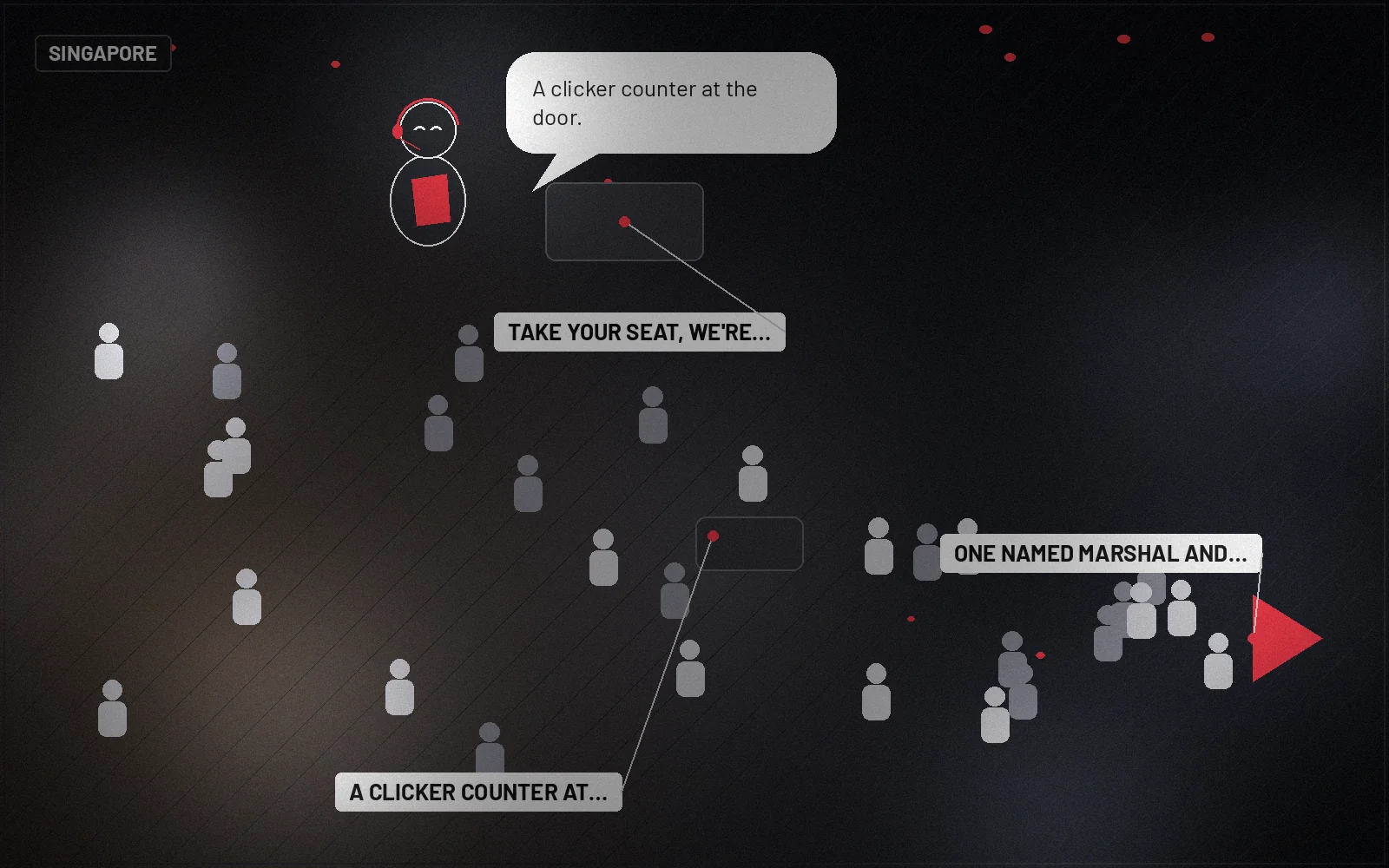
- Take your seat, we’re counting, we leave when it matches.
- One named marshal and one list per coach.
- A clicker counter at the door.
- A recount after every stop.
- Kill rule: never let the coach leave until the count matches the list.
What to do this week
- Assign one marshal to each coach.
- Print a list per coach, not one master list.
- Get a clicker for every marshal.
- Agree the waiting time for missing guests.
Kill rule: if the count is off, wait and call; do not guess.
FAQs
What is a bus headcount line English APAC?
A bus headcount line English APAC is the short marshal line at the bus door before departure. It asks guests to sit, counts every head and leaves only when the count matches.
How should a marshal count heads on a bus?
A marshal should count heads at the bus door, clicking once for each guest who boards. Then the marshal counts again seated and matches the total to the list.
What happens if the headcount does not match?
If the headcount does not match, the bus does not leave. The marshal asks guests to check the seat next to them and calls anyone missing.
Who holds the list on each bus?
One named marshal holds the list on each bus, along with the clicker. That marshal owns the count and reports it before the bus moves.
Neuwark Communications builds event scripts and campaign communications as part of our strategy and messaging work and wider services. More street-smart lines live in Insights.
Related: Shuttle delay text English APAC · Ride-share pickup text English APAC
Talk to us about your next event script.
Illustrative lines only. Communications craft, not legal advice.