
A ballroom lunch in Cebu after a long morning programme. The emcee says “lunch is served”, and the whole room heads for one end of one table.
Buffet-open line English APAC is the short emcee line that opens the buffet: table by table, a line on each side, plenty for everyone.
Street-smart APAC English: short sentences a tired operator can say out loud.
It works best when the dietary request text English APAC went out days earlier. For drinks, the water-station line English APAC does the same job at the refill point.
Quick answer: A buffet-open line English APAC is the emcee’s call that opens the buffet in order: tables by number, a line on each side of the serving table, and a reassurance that there is enough food. Agree the order with the F&B lead, and call two or three tables at a time.
What goes in a buffet-open line English APAC?
A buffet-open line English APAC has three parts: which tables go now, how the line works, and that there is enough for everyone. The emcee says it slowly, names table numbers clearly, and the F&B lead confirms each wave is moving before the next tables are called up.
Buffet-open line (illustrative):
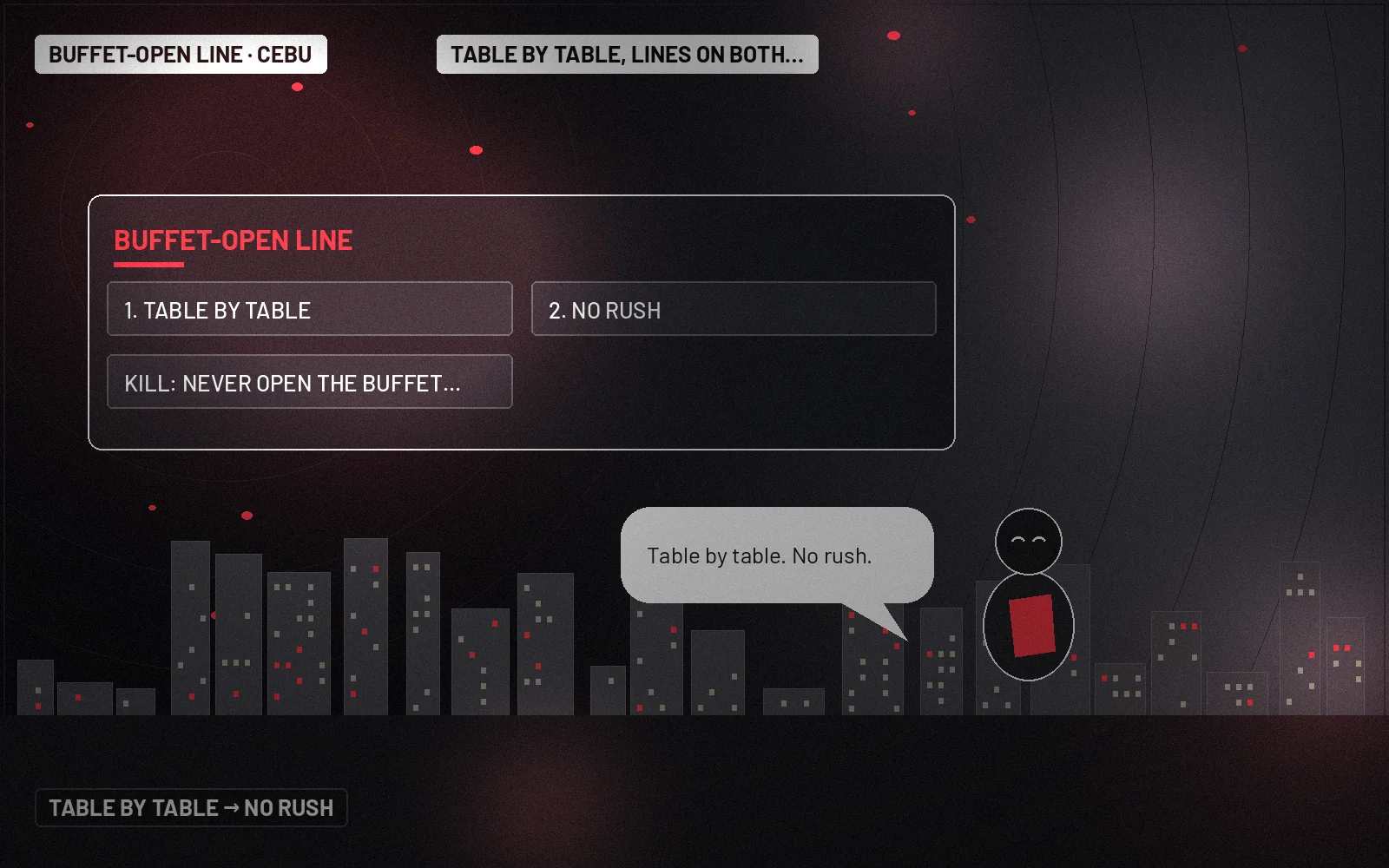
“Lunch is now served. We’ll go table by table.”
“Tables one to three, please come up first.”
“There are lines on both sides of the buffet, and there is plenty for everyone.”
How do I call tables to the buffet without a rush?
Call two or three tables at a time by number, and say when the next group will go. Waiters can point to each table as the emcee calls it. Calm event language at the mic tells the room there is a plan, so nobody needs to stand up early and queue.
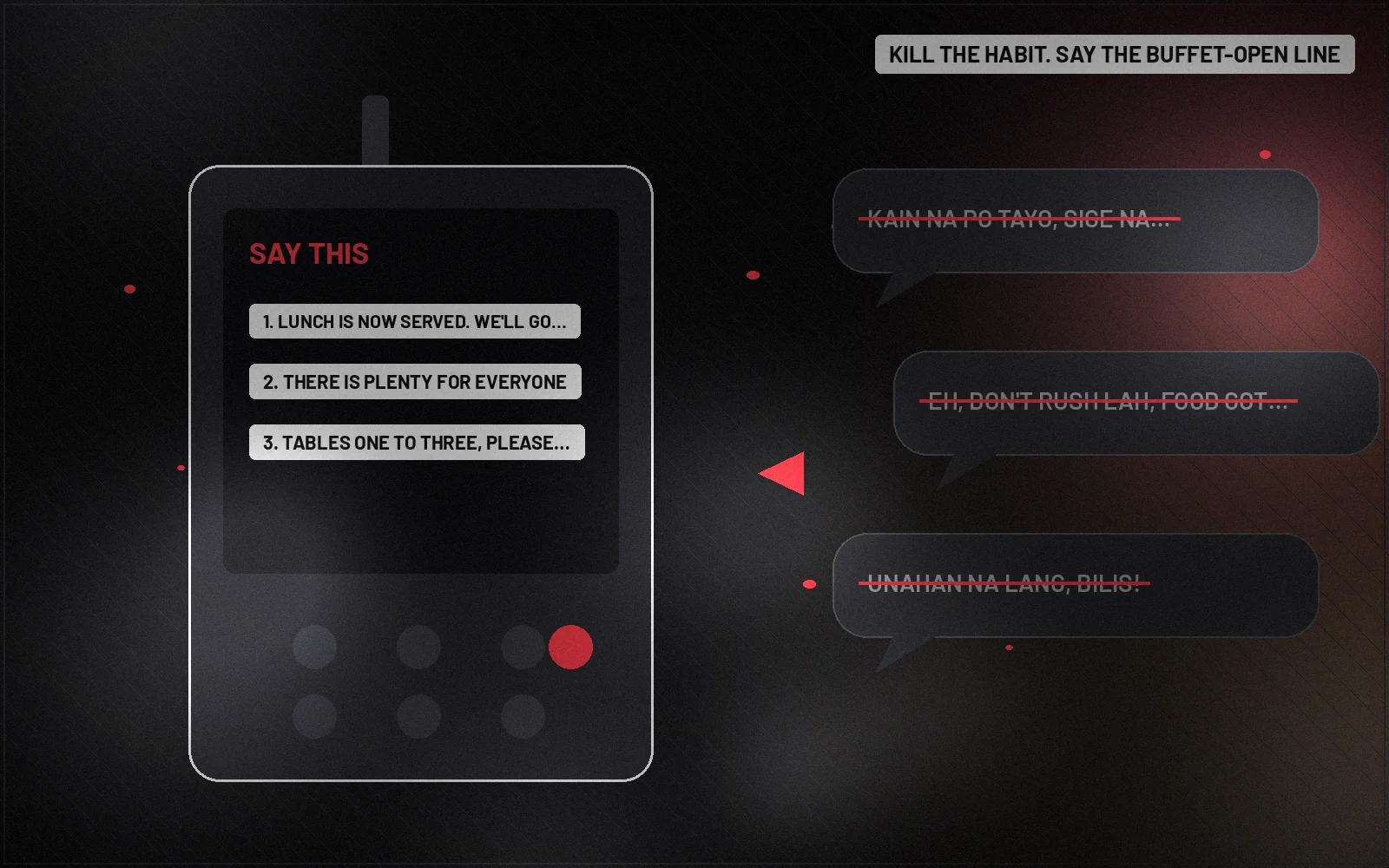
| Kill this | Say this (illustrative) | Why |
|---|---|---|
| Kain na po tayo, sige na, lahat na! | Lunch is now served. We’ll go table by table. | Order before appetite |
| Eh, don’t rush lah, food got enough one. | There is plenty for everyone. | Reassures in plain words |
| Unahan na lang, bilis! | Tables one to three, please come up first. | Numbers, not a race |
| Bahala na kayo sa pila. | There are lines on both sides of the buffet. | Doubles the speed |
Where should the emcee and F&B lead stand?
The emcee stays at the mic with a clear view of the tables and the buffet. The F&B lead stands at the head of the serving line and signals when a wave has moved through. Agree a simple hand signal, so the emcee knows when to call the next tables without guessing.
What if guests queue before their table is called?
Do not scold from the mic. Thank them, say their table is coming up shortly, and keep calling in order. If a group needs to eat early, such as elders or speakers due back on stage, the F&B lead can quietly walk them up along the side of the line.
How does this play out in PH and SG?
The three parts hold in both markets, but buffet habits differ. Use the desk notes below to adjust the order, the tone and the pacing for Philippine and Singapore rooms, and agree the call order with the F&B lead and the venue before the programme starts.
Philippines desk. In the Philippines, guests may wait politely for the host to start, and elders are often served first. Invite the head table or elders up first if that is the custom, then go table by table, and say the line in English or Filipino.
Singapore and wider APAC desk. In Singapore, guests often expect a clear order and short waits. Keep the line in plain English, call tables by number, point out halal or vegetarian stations, and keep campaign communications materials off the buffet.
Paste-ready lock
Speakable lock (illustrative): “Lunch is now served, we’ll go table by table starting with tables one to three, and there is plenty for everyone.”
Monday field kit
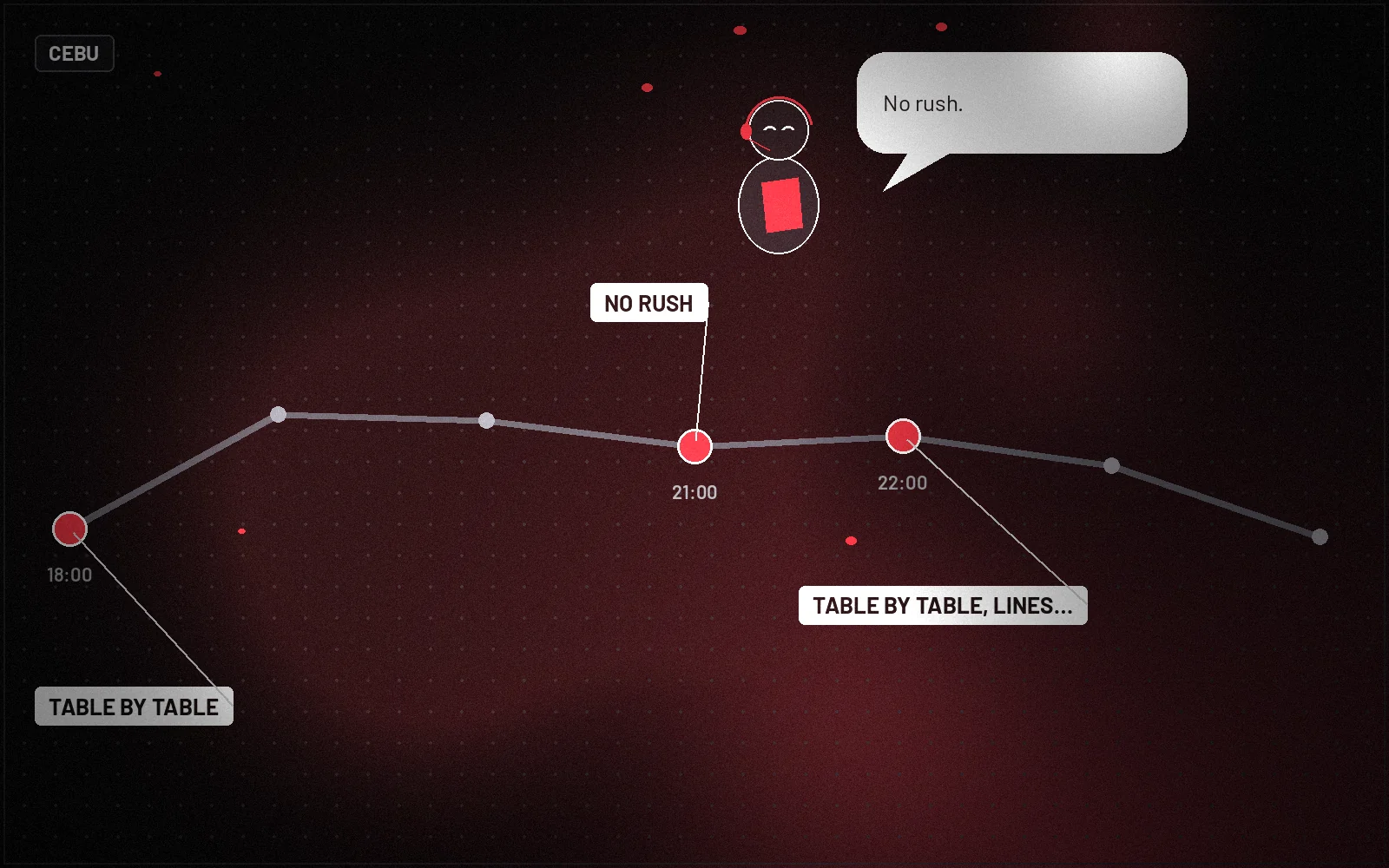
- Table by table, lines on both sides, plenty for everyone.
- A call order agreed with the F&B lead.
- Table numbers visible from the mic.
- A hand signal for the next wave.
- Kill rule: never open the buffet to the whole room at once; call tables by number.
What to do this week
- Agree the call order with the F&B lead.
- Ask for lines on both sides of the buffet.
- Write the line on the emcee’s card.
- Mark who goes up first.
Kill rule: if the room stands up early, keep calling by number rather than giving up the order.
FAQs
What is a buffet-open line English APAC?
A buffet-open line English APAC is the short emcee line that opens the buffet table by table. It names the tables, the lines and the promise of enough food.
How do you call tables to a buffet?
Call tables to the buffet two or three at a time, by number. Tell the room which tables are next, so nobody queues early.
Should elders or speakers eat first at a buffet?
Elders or speakers can eat first if that is the custom or the programme needs it. The F&B lead walks them up quietly along the side of the line.
What if guests queue before their table is called?
If guests queue before their table is called, thank them and say their table is coming up shortly. Keep calling in order from the mic.
Neuwark Communications builds event scripts and campaign communications as part of our strategy and messaging work and wider services. More street-smart lines live in Insights.
Related: Dietary request text English APAC · Water-station line English APAC
Talk to us about your next event script.
Illustrative lines only. Communications craft, not legal advice.