
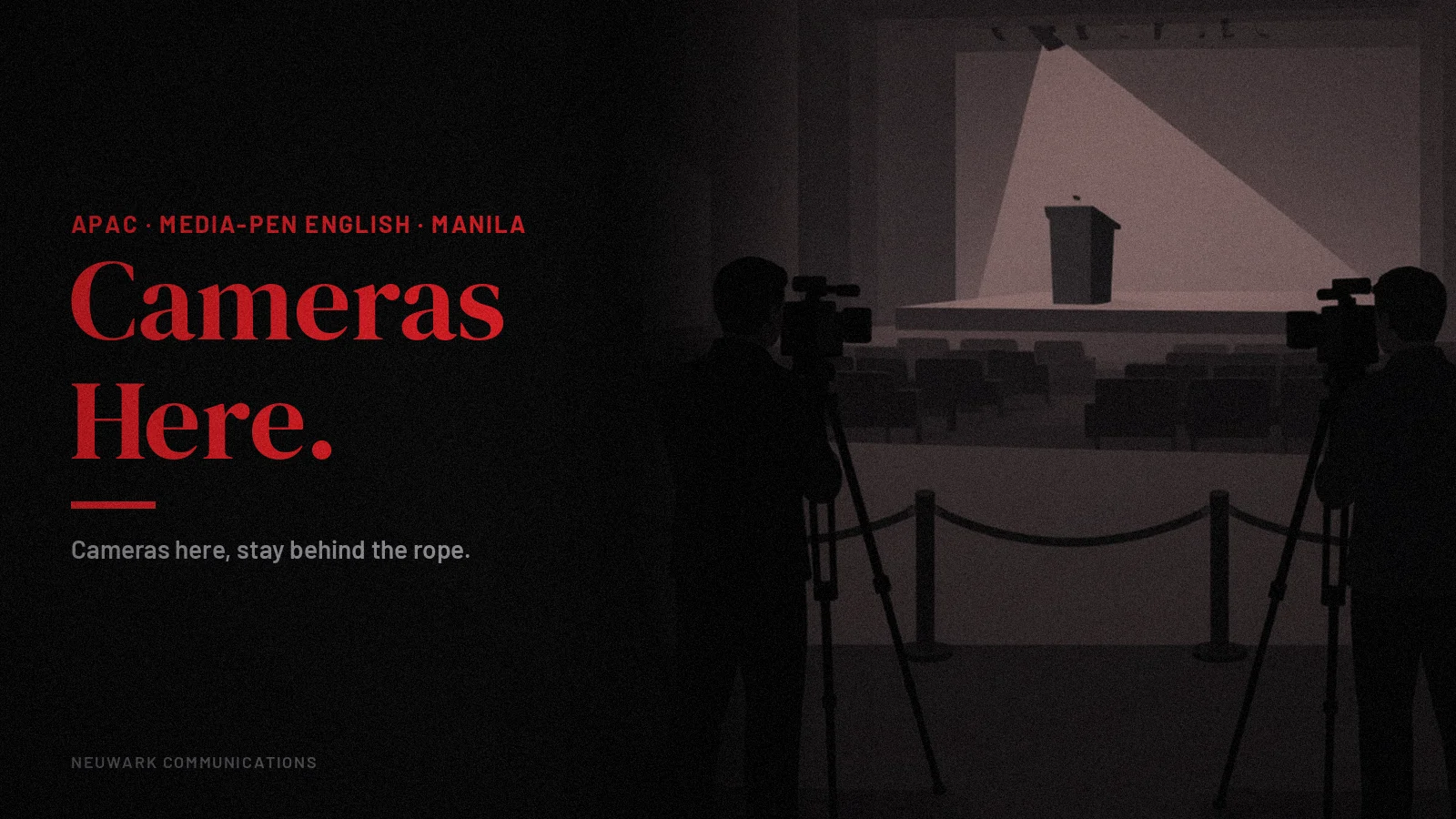
A policy launch in a Manila hotel ballroom. Six camera crews arrive at once, tripods spread into the aisle, and one cameraman steps onto the stage edge for a better angle.
Media-pen line English APAC is the short press-officer line at the camera pen: cameras here, stay behind the rope, here is when you can move.
Street-smart APAC English: short sentences a tired operator can say out loud.
It is a different job from our media wall line English APAC, which moves guests past a backdrop, and it follows on from the press availability English APAC notice that brought the crews in.
Quick answer: A media-pen line English APAC is the press officer’s short line for camera crews: the pen is here, please keep tripods behind the rope, and here is when you can move for close-ups. Set the pen before crews arrive, say the line at arrival, and repeat the timing before each moment.
What goes in a media-pen line English APAC?
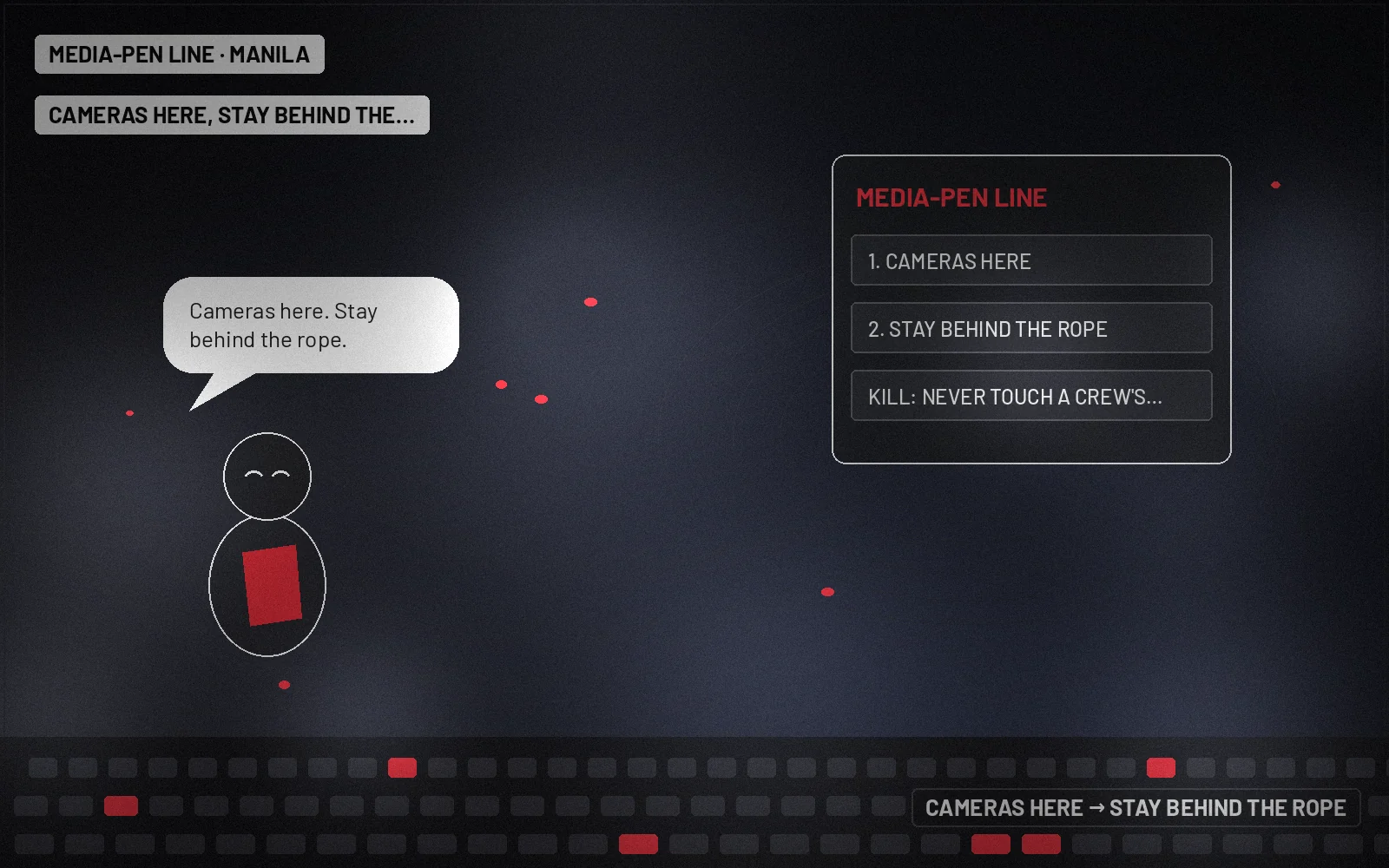
A media-pen line English APAC has three parts: cameras set up here, please stay behind the rope, and here is when you can move. The press officer says it as each crew arrives, points to the riser and rope, and gives the same timing to every outlet so nobody feels shut out.
Media-pen line (illustrative):
“Welcome. Cameras set up here, on the riser.”
“Please keep tripods behind the rope during the programme.”
“After the speeches, I’ll walk you up for close-ups, two minutes each.”
What do I tell camera crews when they arrive?
Tell them where the pen is, what the rope means and when they can move. Point to the riser, show the power and sound feed if there is one, and give the close-up timing now. Clear event language at arrival saves arguments later, when the speaker is on stage and crews want a better angle.
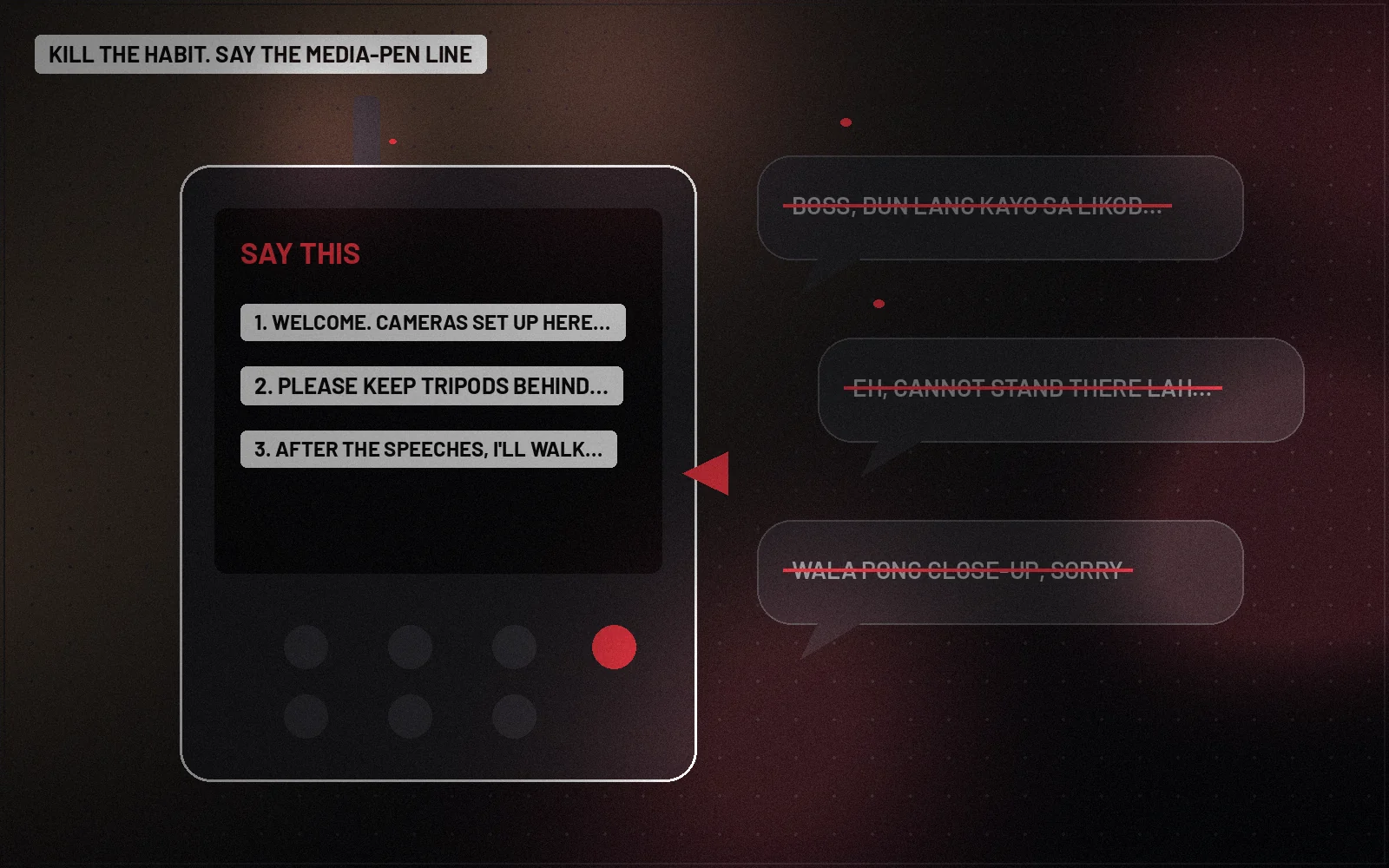
| Kill this | Say this (illustrative) | Why |
|---|---|---|
| Boss, dun lang kayo sa likod ha, bawal dito. | Welcome. Cameras set up here, on the riser. | A place, not a ban |
| Eh, cannot stand there lah, move back. | Please keep tripods behind the rope during the programme. | The rule and when |
| Wala pong close-up, sorry. | After the speeches, I’ll walk you up for close-ups. | A real chance later |
| (pulling a tripod back by hand) | Could you move behind the rope, please? Thank you. | Ask, never touch kit |
| First come, first served sa riser! | Each outlet gets a spot; here’s yours. | Fair to every crew |
Why keep crews behind the rope during the programme?
The rope keeps aisles clear for guests, keeps the stage edge safe and gives every outlet the same view. It also protects the speaker from cameras at arm’s length mid-speech. Crews accept the rope more easily when they know exactly when they will get closer and for how long.
What if a crew steps over the rope?
Walk over, keep your voice low and ask them to step back: “Could you move behind the rope, please? Close-ups are right after the speeches.” Never touch their equipment. If they refuse, bring in the lead press officer. Most crews comply once they hear the timing again.
How does this play out in PH and SG?
The three parts stay the same in both markets, but press rooms behave differently. Use the desk notes below to adjust the pen layout, the timing and the language, and agree the pen position with the venue and organiser before the crews arrive.
Philippines desk. At Philippine launches, TV, radio and online crews may all arrive at once. Set a clear riser and say the line in English or Filipino.
Singapore and wider APAC desk. At Singapore events, crews often expect a marked pen and a timed photo opportunity. Keep the line in plain English, and keep campaign communications materials at the press desk, not in the pen.
Paste-ready lock
Speakable lock (illustrative): “Cameras set up here on the riser, please keep tripods behind the rope during the programme, and after the speeches I’ll walk you up for close-ups.”
Monday field kit
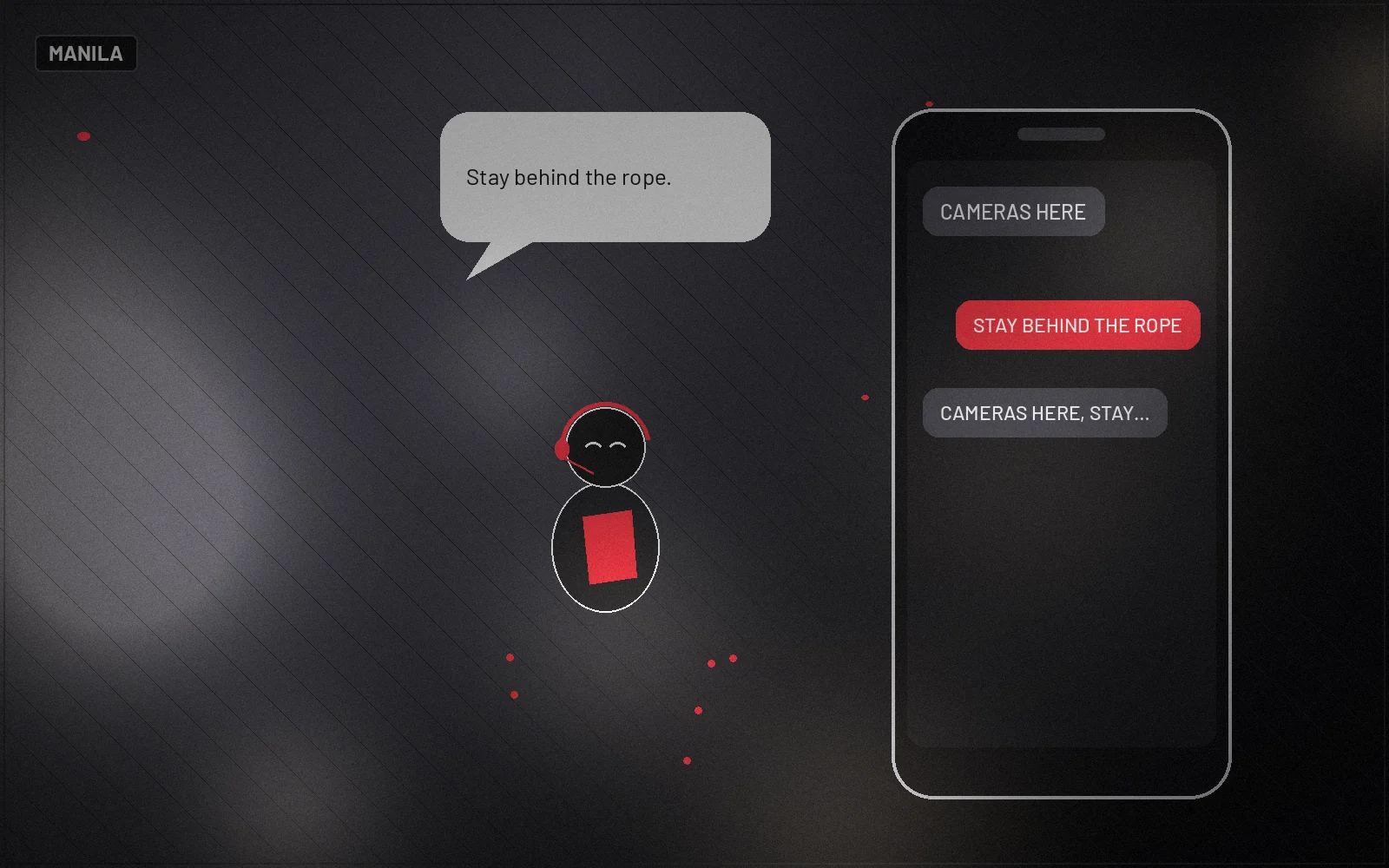
- Cameras here, stay behind the rope, here is when you can move.
- Riser, rope and power set before crews arrive.
- Close-up timing given at arrival and before each moment.
- A lead press officer for crews who will not step back.
- Kill rule: never touch a crew’s equipment; ask, repeat the timing, escalate.
What to do this week
- Mark the media pen on the floor plan.
- Book the riser, rope and power with the venue.
- Agree close-up timing with the speaker’s team.
- Write the line on the press officer’s card.
FAQs
What is a media-pen line English APAC?
A media-pen line English APAC is the short press-officer line at the camera pen: cameras here, stay behind the rope, here is when you can move. The press officer says it as each crew arrives.
What should a press officer tell camera crews on arrival?
A press officer should tell camera crews where the pen is, to keep tripods behind the rope and when close-ups happen. The same timing goes to every outlet.
Why keep camera crews behind a rope?
Keeping camera crews behind a rope keeps aisles clear and gives every outlet the same view. It also keeps cameras off the stage edge mid-speech.
What if a crew steps over the rope?
If a crew steps over the rope, ask them quietly to step back and repeat the close-up timing. Never touch their equipment, and escalate if they refuse.
Neuwark Communications builds event and campaign communications as part of our public affairs and crisis and rapid response work. More street-smart lines live in Insights.
Related: Media wall line English APAC · Press availability English APAC
Talk to us about your next event script.
Illustrative lines only. Communications craft, not legal advice.