
A viewer joins the stream late. Sound off. Someone is talking at a podium.
The bar under them lists three honorifics and a full committee title, then runs off the screen. The viewer scrolls on.
Livestream lower-third English APAC is the on-screen bar that tells a viewer who is talking and why they matter, in about six words.
Street-smart APAC English: short sentences a tired operator can say out loud.
It is the screen version of our spokesperson intro English APAC: the intro is spoken, the bar is read. It is not the ask at the end of the stream. That job belongs to the townhall livestream CTA English APAC.
What goes on a livestream lower-third English APAC bar?
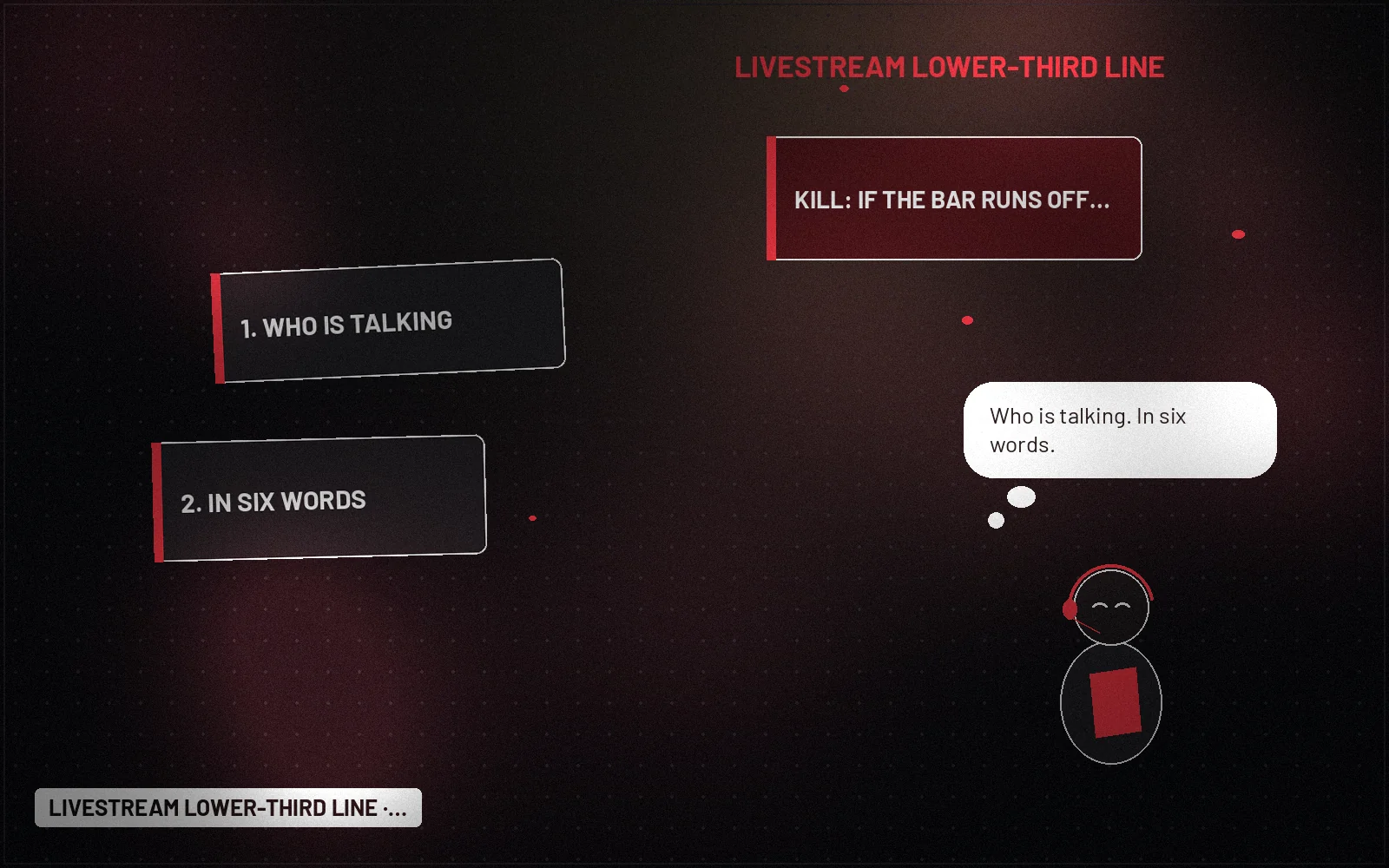
Two lines. Name on top, stake underneath. About six words between them.
Lower-third (illustrative):
“Ana Cruz”
“Leads Riverside flood-watch volunteers”
The name tells the viewer who. The stake tells them why they should listen. Titles, honorifics and logos can live in the description box.
Why only six words?
Because the bar is up for seconds, often on a small phone, often muted. People read a few words at a glance, not a sentence.
Six is a working limit, not a platform rule. The test: can someone read it aloud while the bar is up? If not, cut.
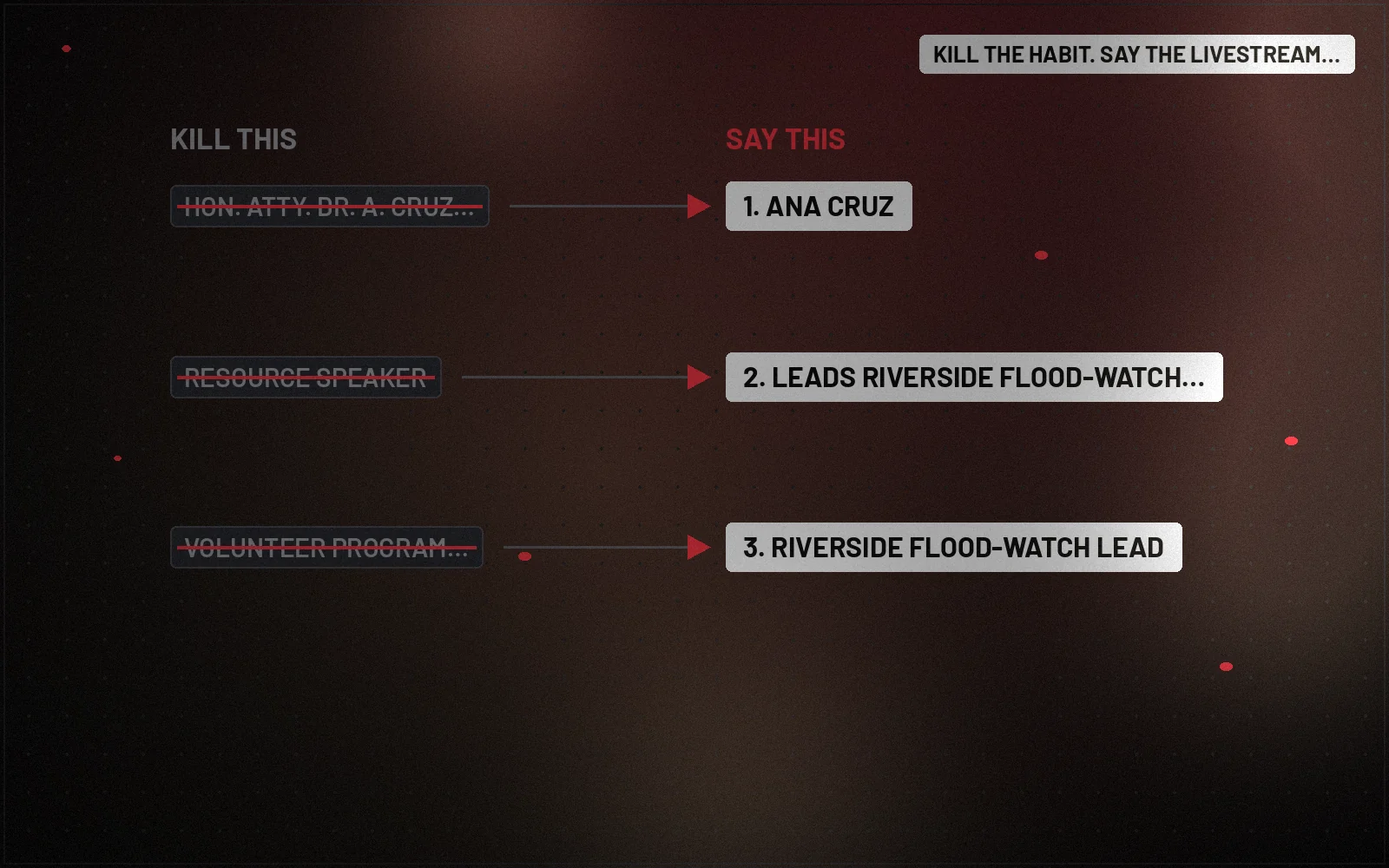
| Kill this | Say this (illustrative) | Why |
|---|---|---|
| Hon. Atty. Dr. A. Cruz, Chairperson | Ana Cruz | Name first, titles in the description |
| Resource speaker | Leads Riverside flood-watch volunteers | A stake, not a role label |
| Volunteer Program Coordinator, Riverside Neighbours Network Inc. | Riverside flood-watch lead | Short enough to read muted |
| Speaker 2 | Maria Reyes, tenants’ association | Every speaker gets a name |
| ALL CAPS NAME IN A SCRIPT FONT | Ana Cruz, in plain sentence case | Readable on a phone |
Who writes the lower-thirds, and when?
The comms lead writes them, each speaker approves their own, and the operator gets the list before the stream. Never typed live.
Build one card per speaker in running order: name, stake, pronunciation. Send each speaker their card the day before with one question: is this how you want to be named? Typos on screen get screenshotted. Fix them before air.
When does the bar go up and come down?
Up when the speaker starts, down once a viewer has had time to read it, and up again later for people who joined late.
Agree the cues with the operator: on at the first sentence, off when the speaker gets to the point, back on after a break. A bar that stays up the whole time covers faces and gets ignored.
How does this play out in PH and SG?
Same two lines. What changes is how people expect to be named.
Philippines desk. Honorifics and professional titles matter to many speakers, and some will ask for them. Agree in advance: name and stake on the bar, full title in the spoken intro and the description. If the stream runs in Filipino or a regional language, write the stake in that language and keep an English version on file.
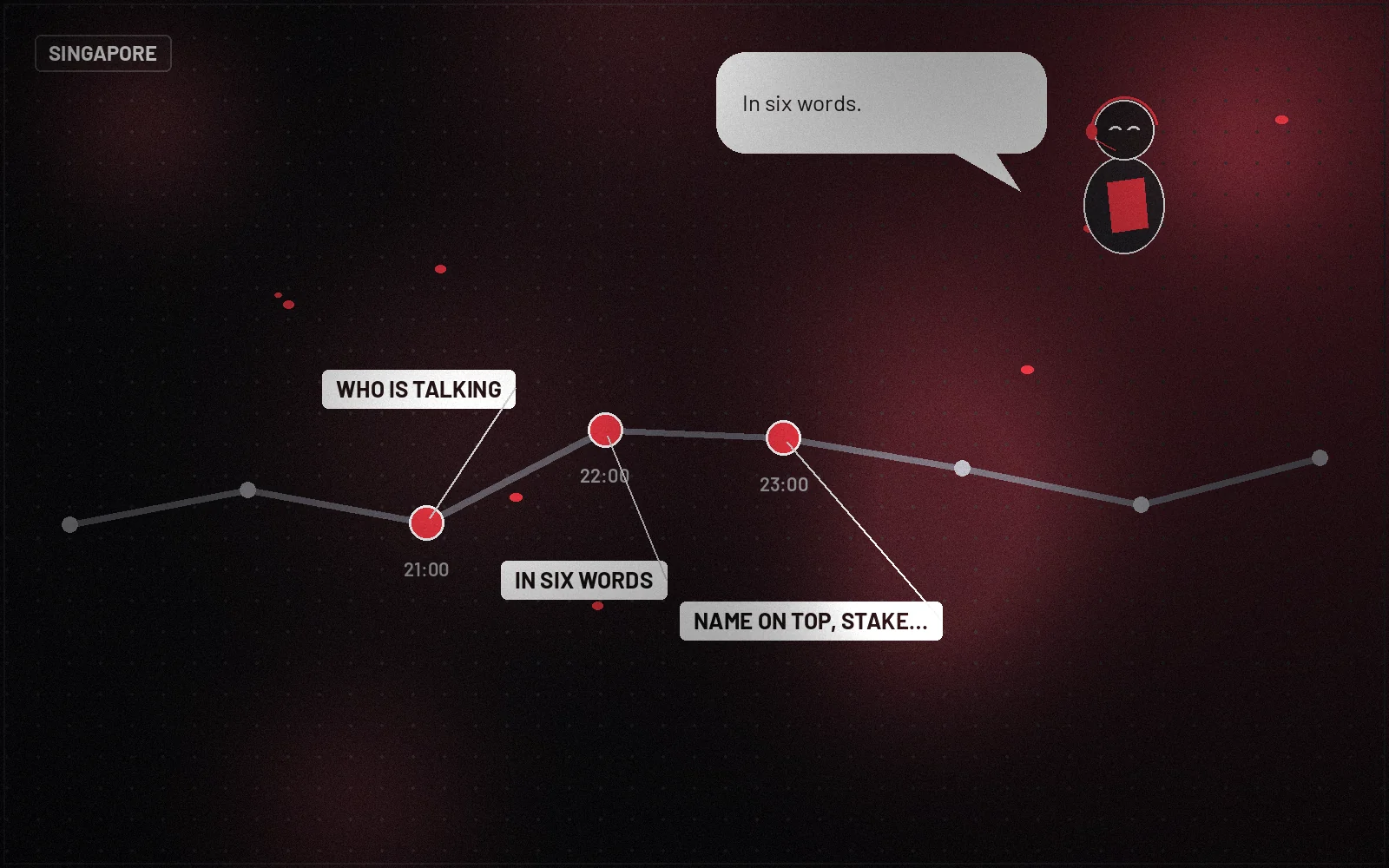
Singapore and wider APAC desk. Name order and formal titles vary by community. Ask each speaker how their name should appear. For multilingual streams, pick one bar language per segment instead of stacking two scripts in a tiny bar.
Monday field kit
- Name on top, stake underneath. Nothing else on the bar.
- Six words is the working limit. Read it aloud to test.
- Every speaker approves their own bar before the stream.
- The operator gets a typed list in running order, with pronunciation.
- Kill rule: if the bar runs off the screen or needs a second glance, rewrite it.
What to do this week
- Pull the lower-thirds from your last stream and count the words on each.
- Rewrite each one as name plus stake.
- Build a running-order card template for the operator.
- Test one bar on a phone, muted, at arm’s length.
Kill rule: if a viewer cannot tell who is talking in one glance, the bar failed. Fix it before the next stream.
FAQs
What is livestream lower-third English APAC?
Livestream lower-third English APAC is the on-screen bar that tells a viewer who is talking and why they matter, in about six words. It works because muted, late viewers read the bar before anything else. It is not the spoken intro or the closing ask.
Should the bar include the organisation logo?
Only if it fits without shrinking the words. Name and stake come first, and the logo can sit in a corner or the description.
What if a speaker insists on their full title?
Put the full title in the spoken intro and the description. Keep the bar to name and stake so it stays readable.
Can we reuse the bar on replay clips?
Yes, if the speaker approved it for reuse. Check it still reads when the clip is cropped for vertical video.
Neuwark Communications plans livestreams and on-screen copy as part of our services, including Digital & Social. If your lower-thirds read like business cards, talk to us at Contact. More language companions live in Insights.
Communications craft, not legal advice. Counsel checks election-period, consent and platform rules, plus any rules on showing officials or minors on screen, before a stream goes live.
Related: Spokesperson intro English APAC · Townhall livestream CTA English APAC