

The volunteers walk back in wet, tired and hungry. The coordinator asks, “So, how was it?” Everyone says “okay” and goes home.
Three days later, a resident calls to ask why nobody came back with the schedule they were promised.
Canvass debrief English APAC is the three-line report each volunteer gives after a shift: what they heard, what they promised, and what needs follow-up.
Street-smart APAC English: short sentences a tired operator can say out loud.
It closes the loop our door-knock opener English APAC piece opens. The opener is the first line at the gate. The debrief is the last line at the table.
What are the three lines of a canvass debrief English APAC?
Heard, promised, follow-up. One sentence each. Said out loud and logged before anyone leaves.
Debrief card (illustrative):
“Heard: houses near the creek kept asking about the drainage works.”
“Promised: I said we would bring the schedule to the house with the green gate.”
“Follow-up: the green gate house wants a call, not a visit.”
The first line is the street’s mood in one fact. The second is every promise the volunteer made, because those are now the organisation’s promises. The third is what someone must do next, and how.
Why not just ask how it went?
Because “how was it” gets feelings, and feelings do not get logged. Three fixed prompts get facts a coordinator can act on.
Tired people answer open questions with “okay.” They answer specific questions with specifics. The same three prompts every shift also make it easy to compare streets and weeks.
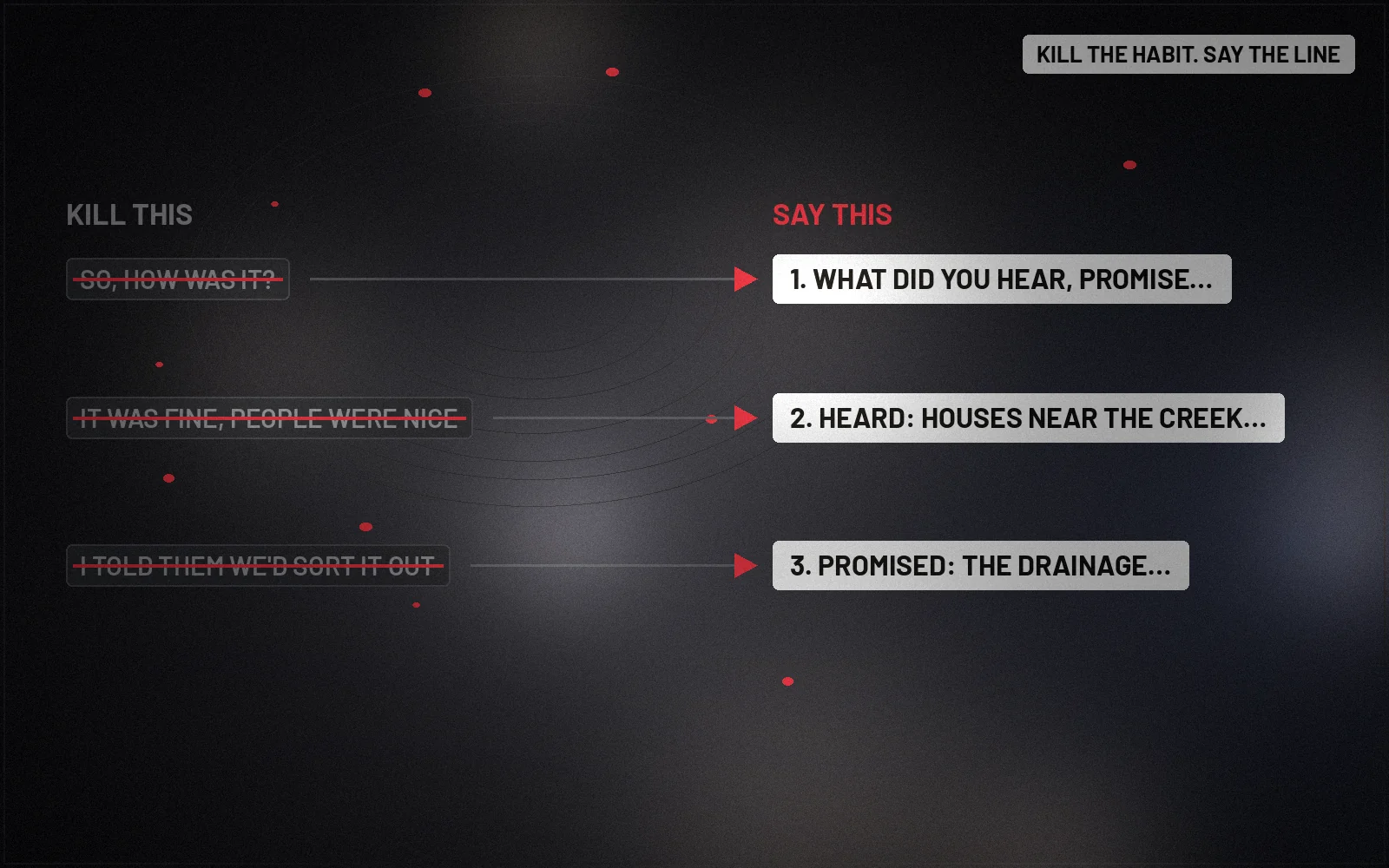
| Kill this | Say this (illustrative) | Why |
|---|---|---|
| So, how was it? | What did you hear, promise, and need followed up? | Three prompts, three facts |
| It was fine, people were nice | Heard: houses near the creek asked about drainage. | A fact, not a mood |
| I told them we’d sort it out | Promised: the drainage schedule, by Friday. | A promise someone can keep |
| Someone should call them | Follow-up: call the green gate house, mornings. | Who, how, when |
| Let’s discuss it at the next meeting | Logged now. Coordinator assigns tonight. | No promise waits a week |
How long should the debrief take?
A few minutes for the whole team. Each volunteer gives three lines, and the coordinator writes them into three boxes and assigns follow-ups.
Run it standing up if you have to. Water first, then debrief, then home. A debrief that turns into a long meeting teaches volunteers to skip it. If someone has a story that needs more time, the coordinator books a separate call.
Who owns the follow-ups?
The coordinator assigns every follow-up to a named person with a day, at the table. Nothing leaves the room as “someone should.”
Assignment line (illustrative):
“Follow-up one: Ben calls the green gate house Thursday morning. Follow-up two: I send the drainage schedule to the street group tonight.”
If a promise cannot be kept, the follow-up is a call saying so, plainly and fast. A broken promise you flag costs less than one you forget.
How does this play out in PH and SG?
The three lines travel. The setting, the language and what you are allowed to record change.
Philippines desk. Shifts often end at a barangay hall, a supporter’s house or a covered court, with merienda waiting. Run the debrief before the food, or volunteers drift off. Let people give their lines in Filipino or the local language, and log in English so the data desk reads one version.
Singapore and wider APAC desk. Estate outreach often ends at a void deck or community space, with a smaller and more structured team. Keep the same three boxes and log straight into the team sheet. In every market, record names, addresses and contact details only the way your data and consent rules allow. Counsel confirms those rules before the first shift.
What to do this week
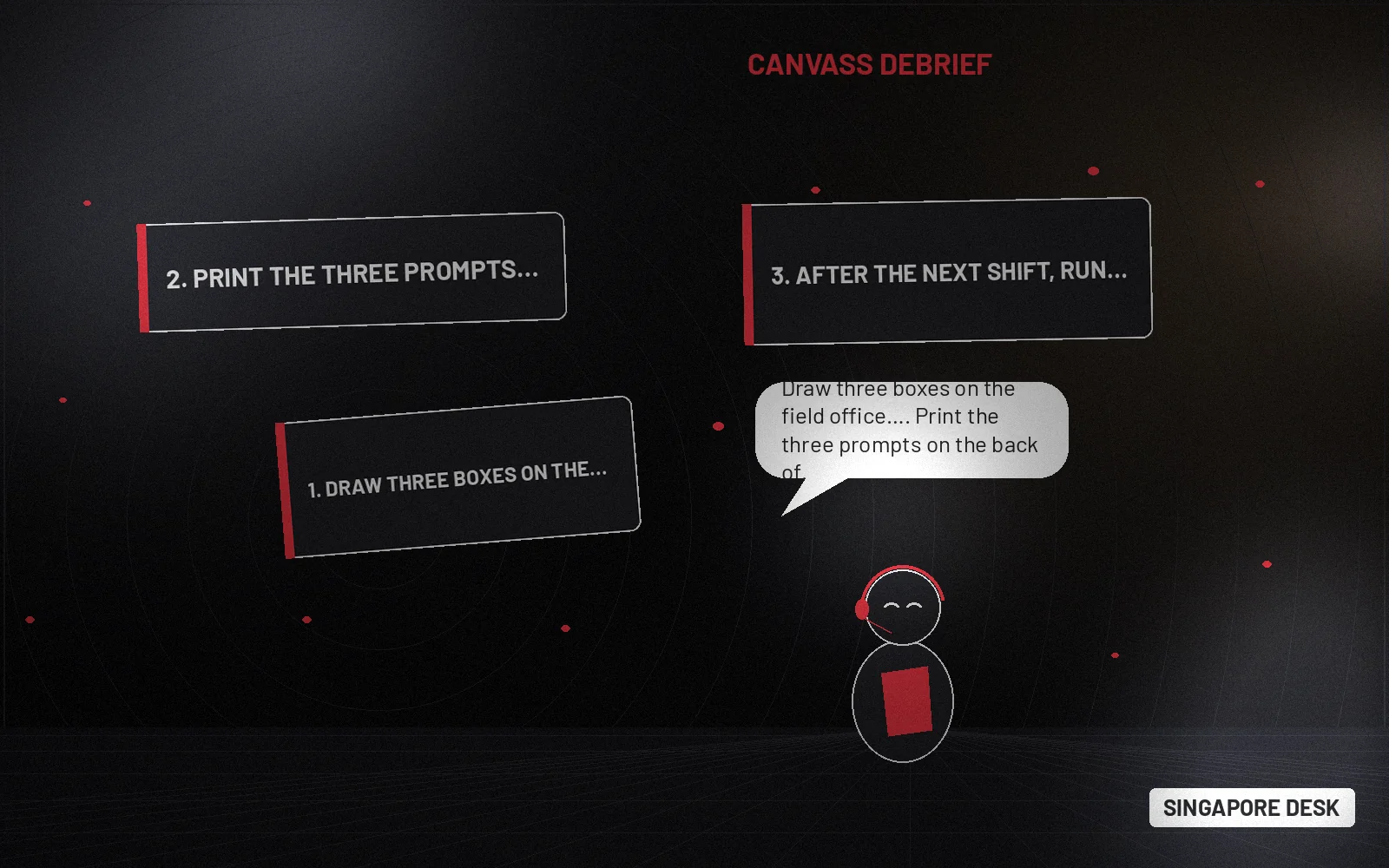
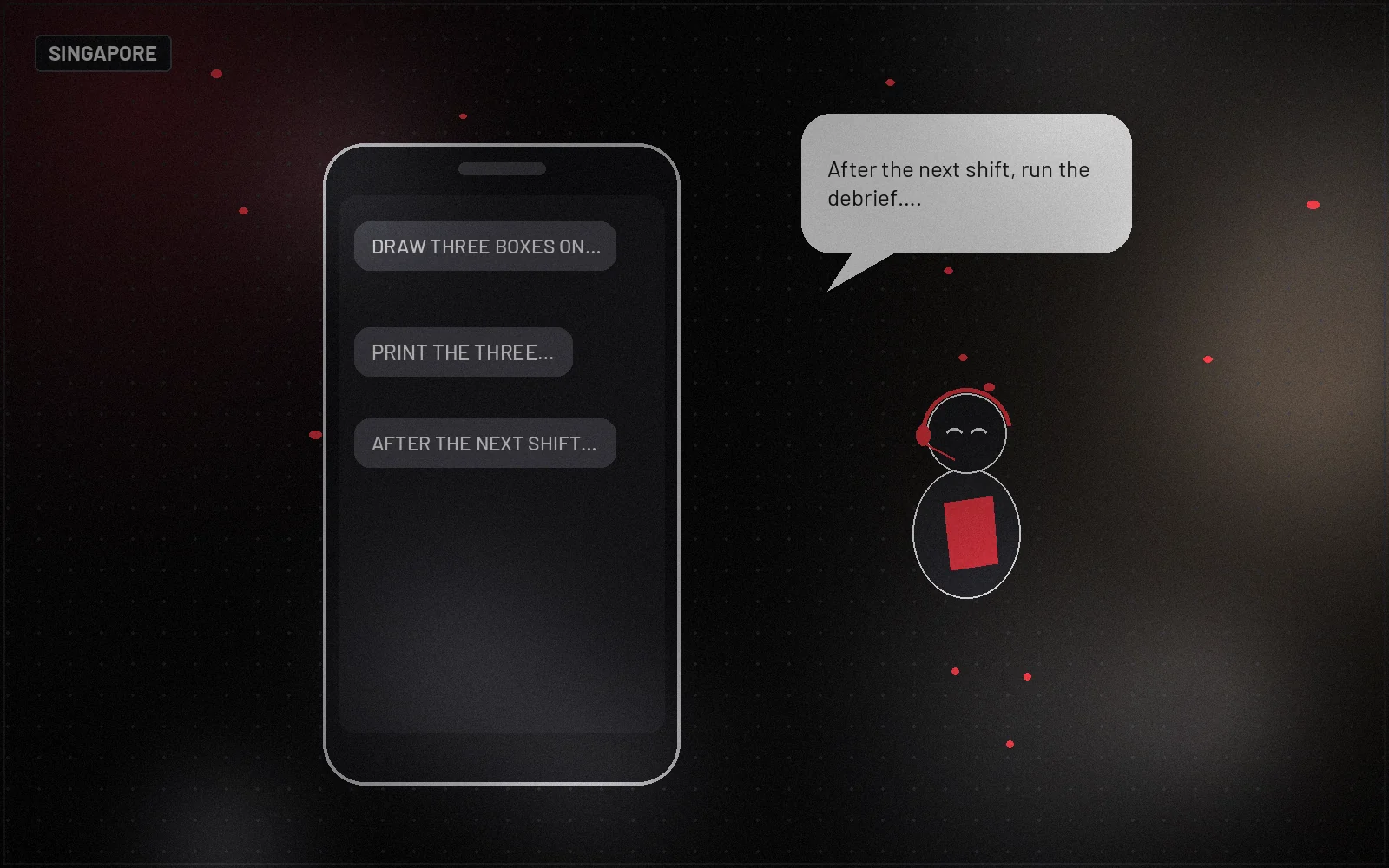
- Draw three boxes on the field office whiteboard: heard, promised, follow-up.
- Print the three prompts on the back of every clipboard.
- After the next shift, run the debrief before food or goodbyes.
- Assign every follow-up to a named person with a day.
- Check last week’s promises. Close or call every one.
Kill rule: if a follow-up leaves the table without a name and a day, it is not a follow-up. Assign it or drop it out loud.
FAQs
What is canvass debrief English APAC?
Canvass debrief English APAC is the three-line report each volunteer gives after a shift: what they heard, what they promised, and what needs follow-up. It takes minutes and happens before anyone leaves.
What if a volunteer heard nothing useful?
They still say it. “Heard: nobody home on most of the street” is useful for planning the next route.
Should volunteers write the debrief or say it?
Say it, and the coordinator writes it down. Tired people say three lines faster than they write them.
Can we run the debrief in a group chat instead?
Only when the team cannot meet. Use the same three lines and log them the same night.
Neuwark Communications builds field and volunteer systems as part of our services, including Philippines local presence. If your shifts end with “okay,” talk to us at Contact. Our volunteer door card English APAC note covers what volunteers leave at the gate. More language companions live in Insights.
Communications craft, not legal advice. Counsel checks election-period, consent and platform rules, plus data rules for canvass logs, before the first shift.
Related: Door-knock opener English APAC · Volunteer door card English APAC