
The emcee calls your name. The mic squeals. Half the plaza is still buying fishballs.
People decide fast whether to walk closer or walk away. Call it the first 20 seconds. Most speakers spend them tapping the mic, thanking a long list of names and asking “Is this on?”
Rally mic check English APAC is the first 20 seconds a speaker spends on stage: one line to test the sound, one line to say who you are, and one line that gives the crowd a reason to stay.
Street-smart APAC English: short sentences a tired operator can say out loud.
It is the stage cousin of our spokesperson intro English APAC piece. The intro is for a reporter. The mic check is for a plaza full of people who did not come for you.
What does a rally mic check English APAC sound like?
Three short lines. Sound, name, reason. Each one fits in a breath.
Mic check card (illustrative):
“Good evening, San Roque. Can the back row hear me? Raise a hand.”
“I’m Ana. I run the flood-watch volunteers on Riverside Street.”
“I have one thing to ask you tonight, and it takes two minutes.”
The first line does the sound check out loud, with the crowd, instead of tapping and blowing into the mic. The raised hands tell the sound desk what it needs. The second line is name and stake. The third gives a reason to stay and a time limit.
Why not just tap the mic and start?
Because the crowd hears the tap, not you. Tapping, blowing and “testing, testing” waste the only seconds when attention is free.
A line that asks the back row to raise a hand does the same job and starts the relationship. The sound desk adjusts. The crowd moves in. You have already asked them to do something small.
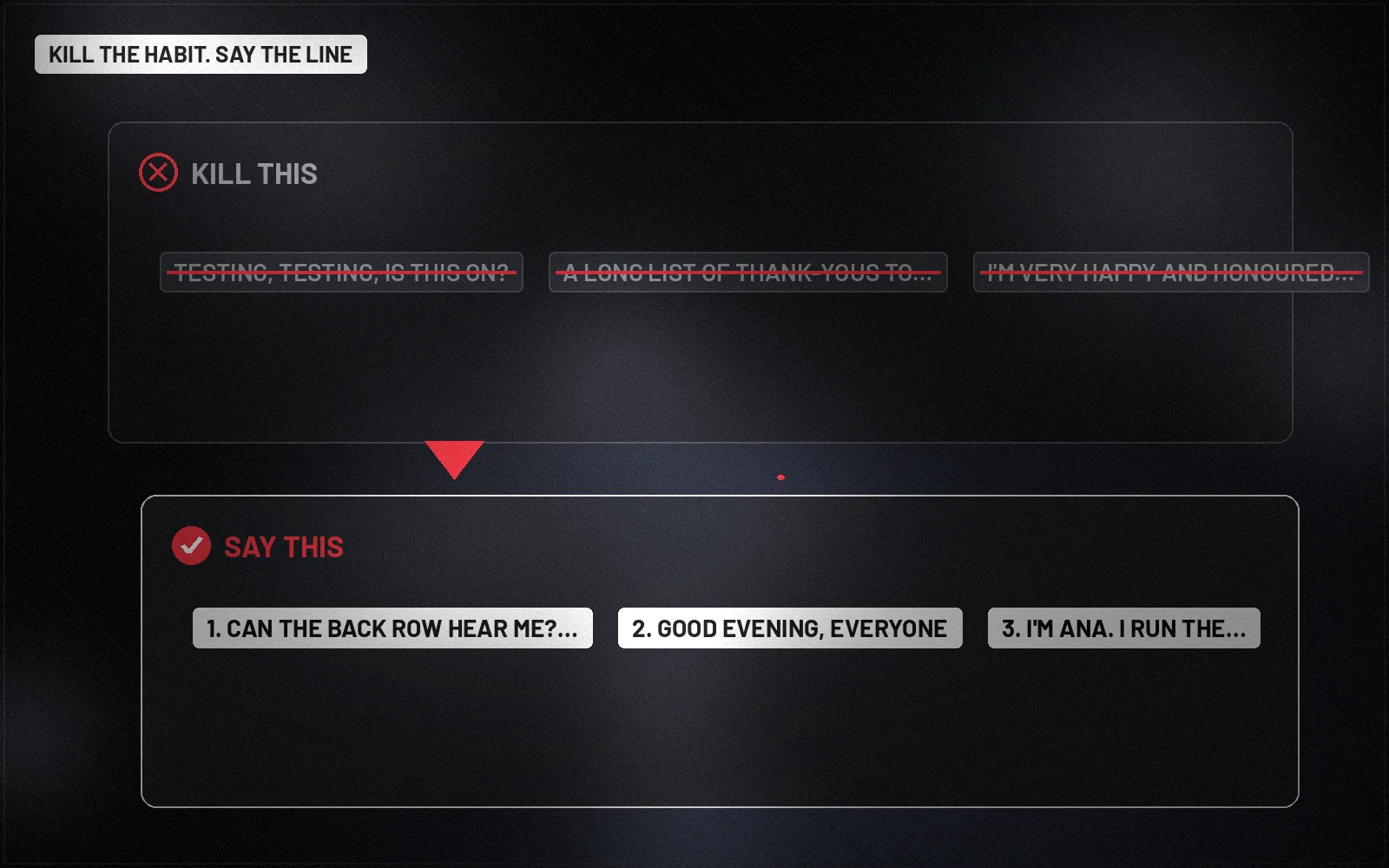
| Kill this | Say this (illustrative) | Why |
|---|---|---|
| Testing, testing, is this on? | Can the back row hear me? Raise a hand. | Sound check with the crowd |
| A long list of thank-yous to every guest | Good evening, everyone. | Protocol goes to the emcee |
| I’m very happy and honoured to be here tonight | I’m Ana. I run the flood-watch volunteers. | Name and stake |
| I will be brief | I have one ask. It takes two minutes. | A real time limit |
| Can everyone come closer? Please? | Come in a little. I’ll keep it short. | A reason to move |
Who checks the sound before the speaker walks up?
The sound desk and a stage runner, not the speaker. The speaker’s line is the last confirmation, not the first test.
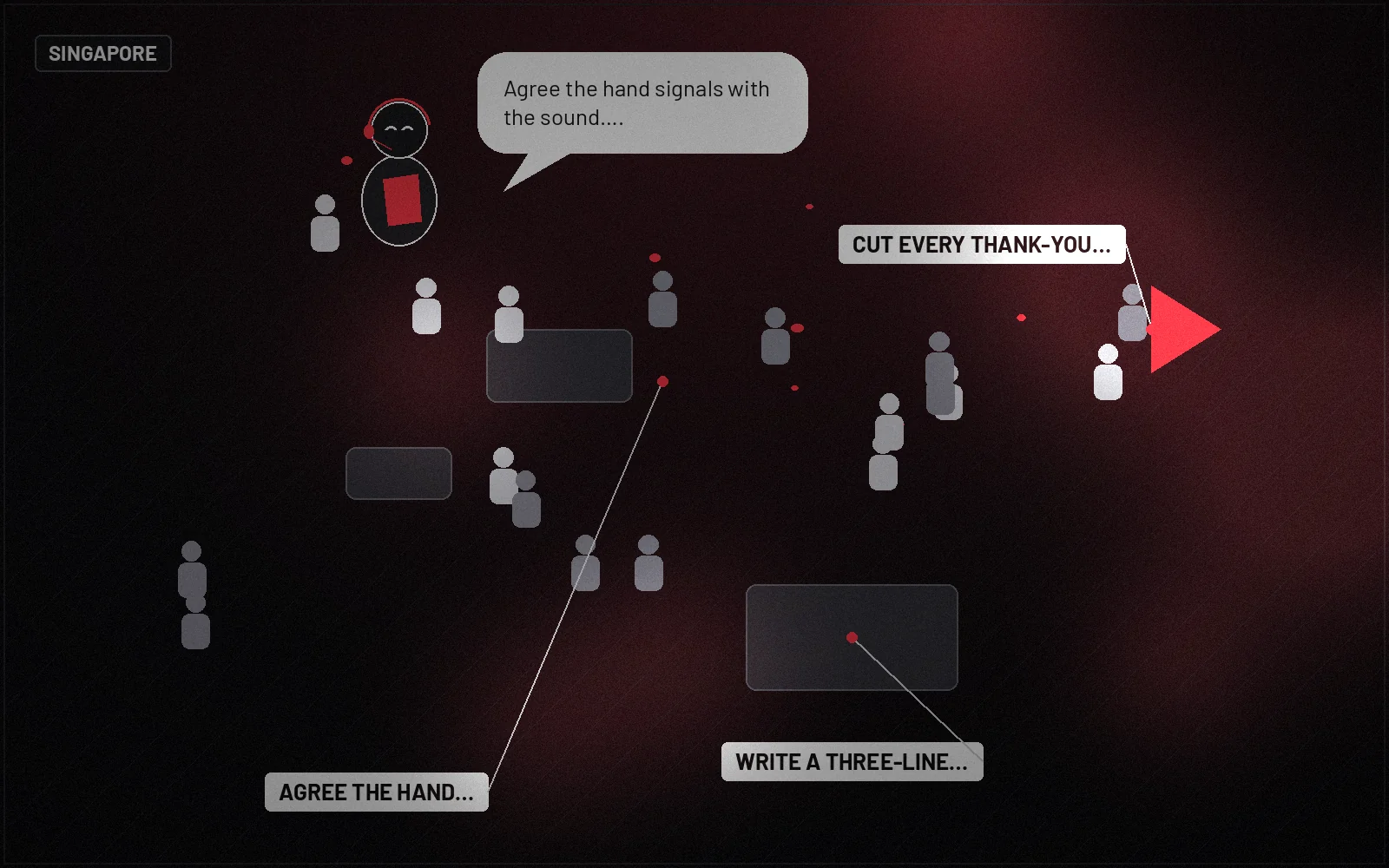
Before the program starts, the runner stands at the back of the crowd area while someone reads the same three lines into the mic the speaker will use. The sound desk sets the level. A spare mic sits on the stand, switched on. Agree one hand signal: thumb up means fine, flat hand means louder.
What if the mic fails mid-sentence?
Stop, wait, and repeat the last full sentence when it comes back. Do not shout over a dead mic and do not joke at the sound crew.
Mic-fail line (illustrative):
“We lost the sound. I’ll start that again.”
The runner hands over the spare. If the gap was long, restart from the name line. The crowd forgives a dead mic. It does not forgive a speaker who blames the crew.
How does this play out in PH and SG?
Same three lines. Different crowds, and different rules for when and where you can speak.
Philippines desk. Plaza and covered-court events often run long programs with many speakers and many acknowledgements. Your opening competes with the heat, the speakers and the food stalls. Use the local greeting, name the barangay or street, and switch to Filipino or the local language if that is how the crowd talks. Keep the English card as the base so the team checks one version.
Singapore and wider APAC desk. Outdoor speeches and public events can come with permit and venue conditions. Check those with counsel and the venue before anyone writes a script. Indoor forums and dialogue sessions use the same three lines, delivered quieter, with the sound check aimed at the room.
Where does the card live?
On the backstage clipboard, in large type, one card per speaker. Not on a phone and not in memory.
The stage manager holds the cards in running order. Each card has the three lines, the time limit and the hand signals. If a speaker changes a line, the card changes too, before they walk up.
What to do this week
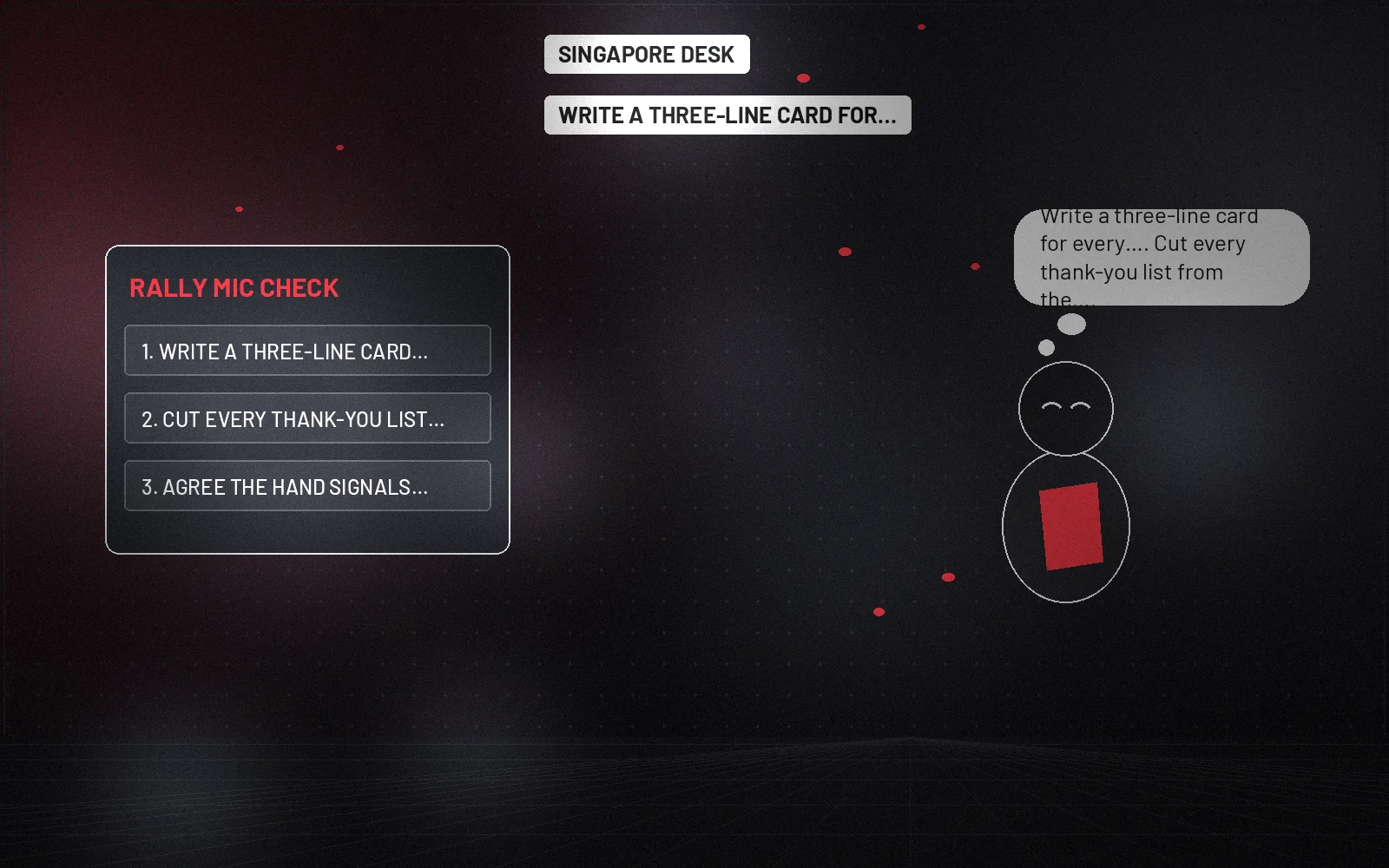
- Write a three-line card for every speaker at your next event: sound, name, reason.
- Cut every thank-you list from the opening. Move acknowledgements to the emcee.
- Agree the hand signals with the sound desk and the runner.
- Put a spare mic, switched on, on the stand.
- Rehearse each card once, out loud, on the real stage if you can.
Kill rule: if the first 20 seconds contain the word “testing,” rewrite the card.
FAQs
What is rally mic check English APAC?
Rally mic check English APAC is the first 20 seconds a speaker spends on stage: one line to test the sound, one line to say who you are, and one line that gives the crowd a reason to stay. It replaces tapping the mic and the old “testing, testing” routine.
Should the speaker thank officials first?
Keep acknowledgements short and let the emcee handle the protocol list. The speaker opens with the crowd, not the guest list.
What if the crowd is small?
Use the same three lines. Ask people to come closer and give them a reason to.
Does the same card work on a livestream?
Yes, with one change. Repeat the name and stake a little later, because livestream viewers join late.
Neuwark Communications preps speakers and stage programs as part of our services, including Strategy & Messaging. If your openings start with “is this on,” talk to us at Contact. More language companions live in Insights.
Communications craft, not legal advice. Counsel checks election-period, consent and platform rules, plus permits and venue conditions, before a rally program is set.
Related: Spokesperson intro English APAC · Hearing testimony English APAC