
The resident decides in the first breath whether to open the gate. The pitch never gets a second one.
Volunteers love the speech. Residents hate the speech. The gap between those two is where most canvass shifts lose their doors.
Door-knock opener English APAC is the first spoken line at a gate: your name, who sent you, and one question the resident can answer in a word.
Street-smart APAC English: short sentences a tired operator can say out loud.
It is the spoken partner of our volunteer door card English APAC piece. The card is what you leave. The opener is what you say before you have earned the right to leave anything.
What are the three parts of a door-knock opener English APAC?
Name. Who sent you. One question. In that order, said in one breath.
Door-knock opener (illustrative):
“Good afternoon po. I’m Rica, a volunteer with the barangay drainage group.”
“We’re asking neighbours one thing: did your street flood during the last heavy rain?”
That is it. No mission statement. No candidate biography. The resident can answer yes or no, and now you are talking.
Why only one question?
Because one question gets an answer and two questions get a closed gate. One question also gives the clipboard one clean field.
Pick the question that sorts your list. Flooded or not. Interested or not. Home on Saturday or not. The story comes after the answer, if the resident wants it.
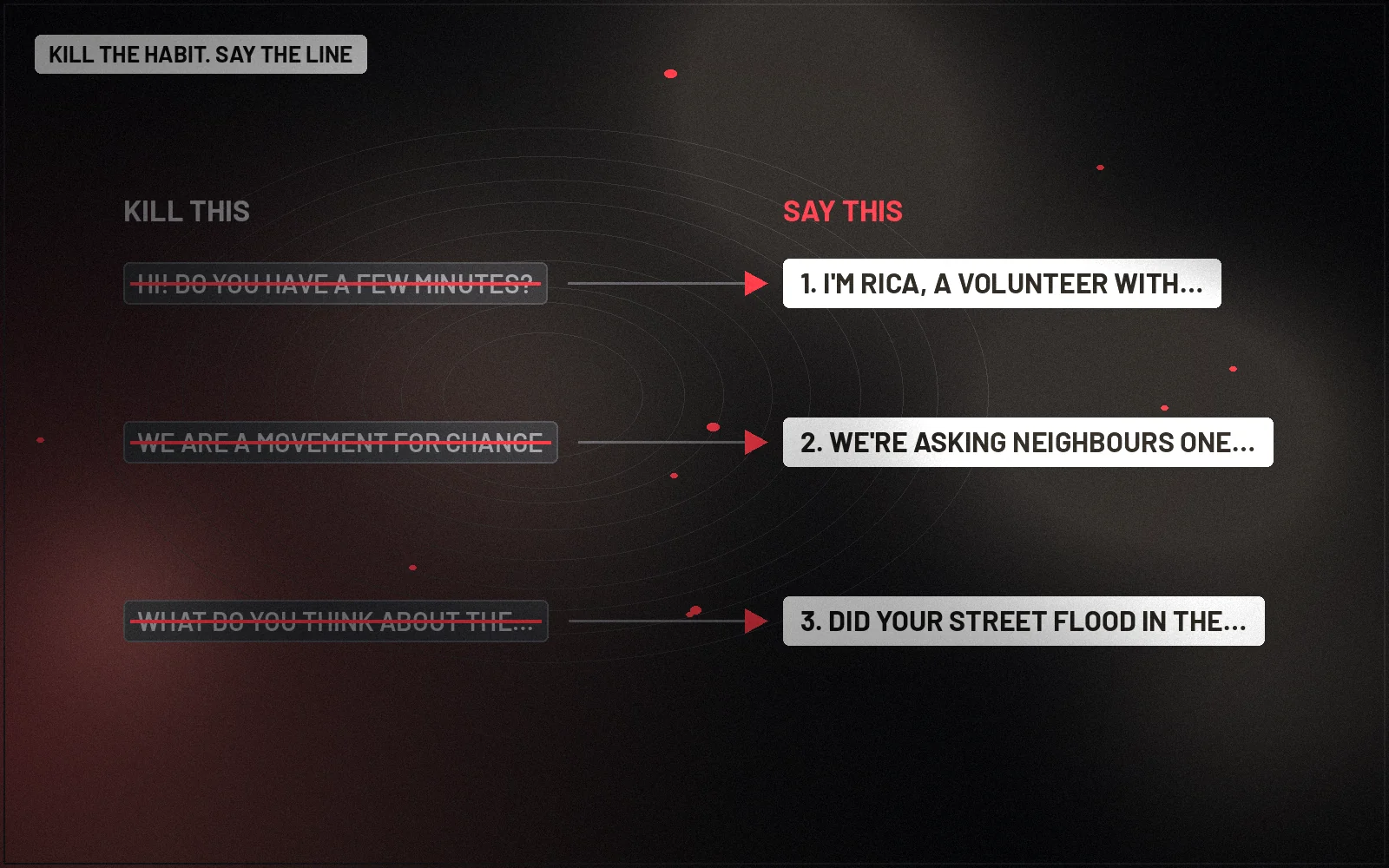
| Kill this | Say this (illustrative) | Why |
|---|---|---|
| Hi! Do you have a few minutes? | I’m Rica, a volunteer with the drainage group. | Name first, no time ask |
| We are a movement for change… | We’re asking neighbours one thing. | Sets a short frame |
| What do you think about the issues? | Did your street flood in the last heavy rain? | Answerable in a word |
| Can I tell you about our candidate? | Can I leave a card with the meeting date? | Smaller ask, real next step |
| Sorry to bother you! | Thank you po. Have a good evening. | Exit without apology spiral |
What if nobody comes to the gate?
Say “Tao po” or your local equivalent, wait, then leave the card. Do not shout the pitch over the wall.
In many Philippine neighbourhoods, “Tao po” is how a visitor announces themself at a gate. Use it. Then wait long enough to be polite, not long enough to be strange. If no one comes, the door card does the job, and the clipboard logs “not home”, not “refused”.
Why does the opener need an exit line?
Because the resident needs to know the conversation can end. People open gates for visitors who will leave.
Exit line (illustrative):
“Thank you po. If you want the meeting details, they’re on this card. Have a good evening.”
Say it whether the answer was yes, no or “not interested”. The exit line is what the neighbour remembers when the next volunteer knocks.
How does this play out in PH and SG?
Differently at the gate, same at the core. Short, named, one question.
In the Philippines, a canvass is often barangay-level and face to face. Residents may know the volunteer’s family. Respect markers like “po” matter, and so does not lingering at someone’s gate at dinner time. Shift leads pick the hours with the local team, not from a template.
In Singapore, door-to-door outreach in estates comes with its own building management norms and resident expectations. Check those with the estate and with counsel before the walk, not on the corridor.
In both, volunteers code-switch. Write the opener in plain English, then let volunteers say it in the language the resident answers in. Same name, same group, same question.
What should the volunteer never say at the door?
Anything they cannot back up. No figures, no accusations against named people, no promises of help the group cannot deliver.
If a resident asks something outside the script, the volunteer says: “Good question. I’ll pass it to our coordinator, and they’ll follow up.” Then writes it on the clipboard. Our volunteer message discipline note covers the longer conversation.
How do you train the opener before a shift?
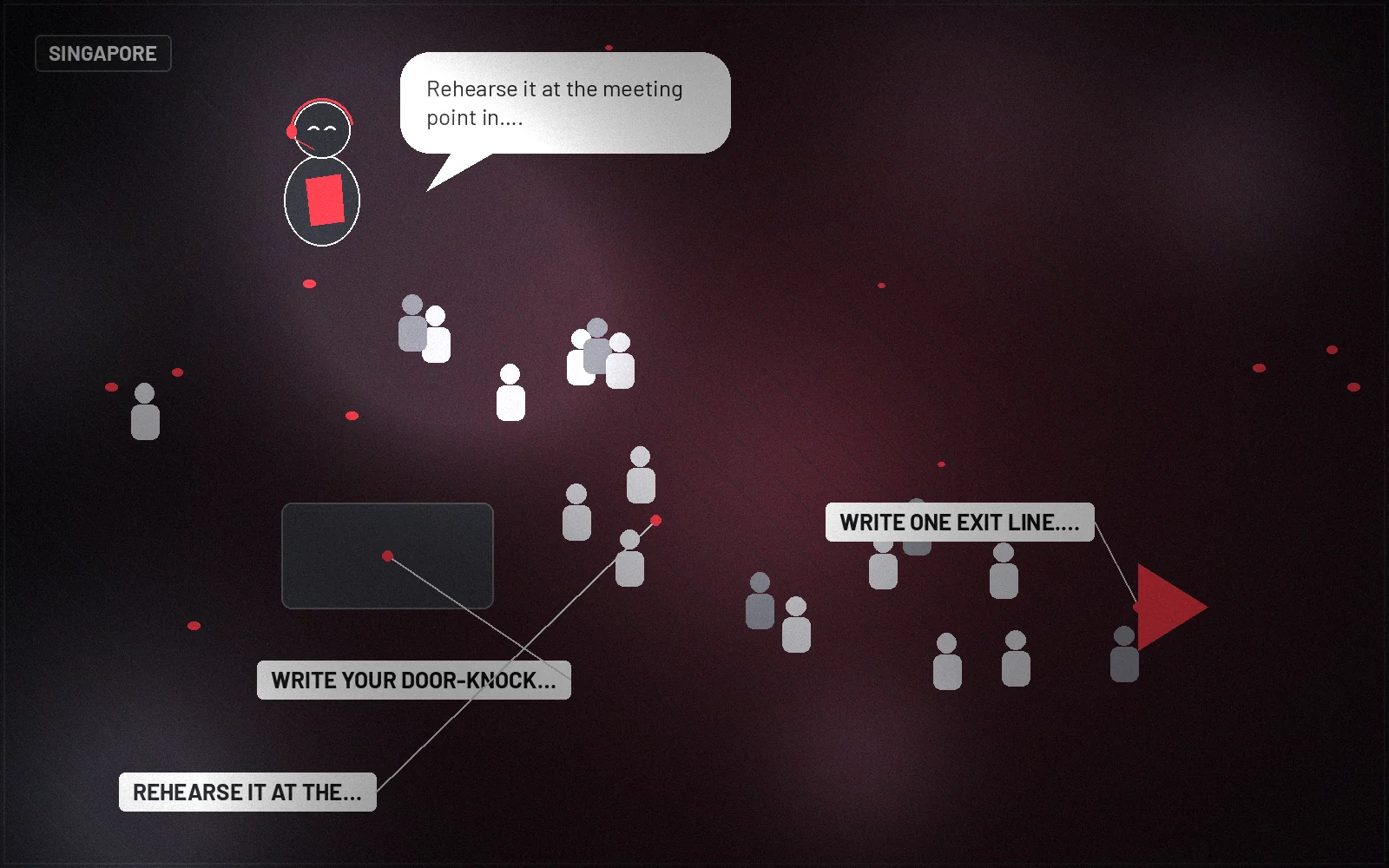
Out loud, at the meeting point, in pairs. Each volunteer says it three times to a partner before walking.
Shift leads listen for drift: an extra sentence, a second question, a pitch slipping in. Correct it at the covered court, not after the first ten doors. Pair new volunteers with someone who has walked before, and let the new one knock second.
What to do this week
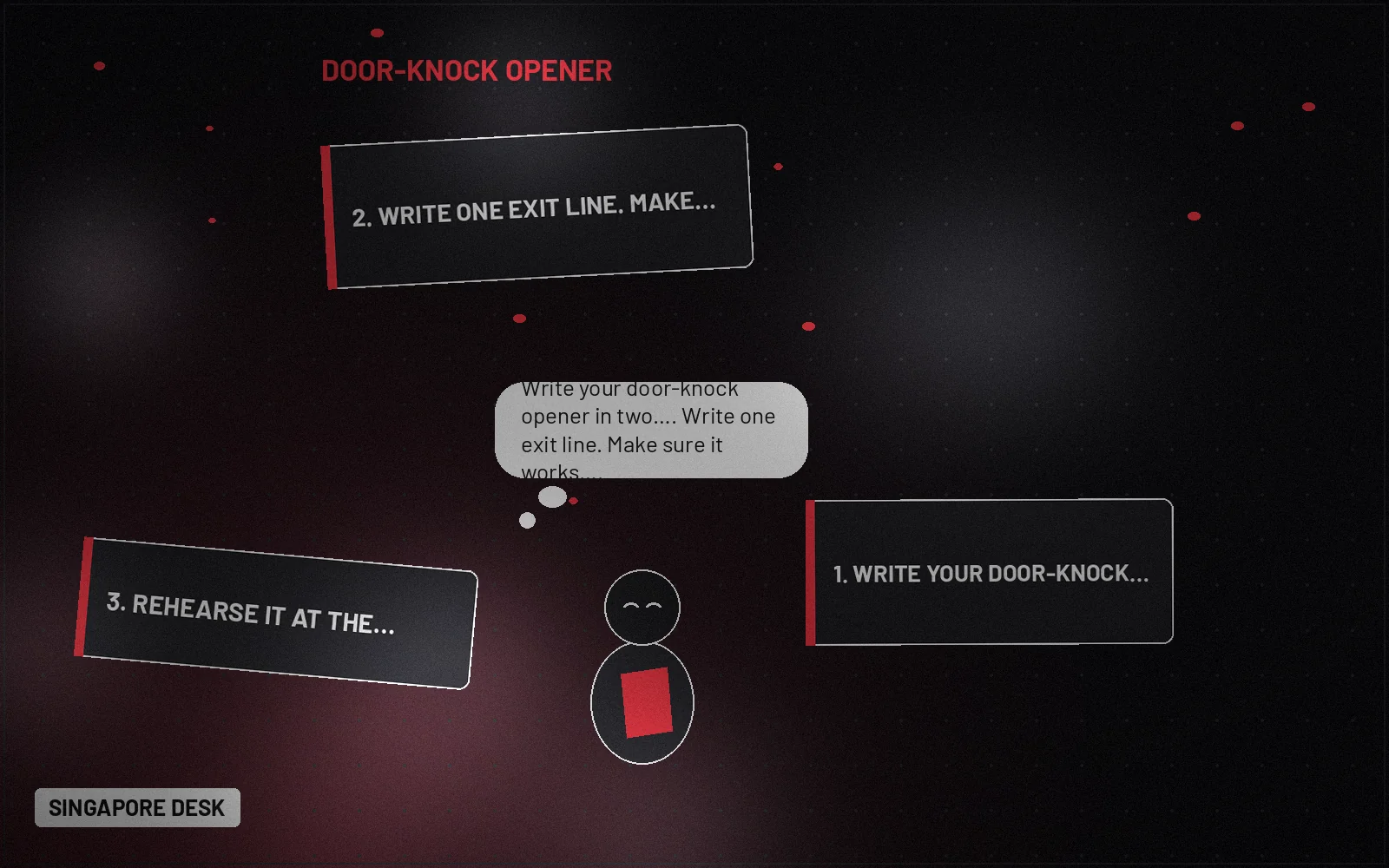
- Write your door-knock opener in two lines: name and group, then one question.
- Write one exit line. Make sure it works for yes, no and not interested.
- Rehearse it at the meeting point in pairs before the next shift.
- Add one field to the clipboard for the answer to your one question.
- Count gates opened against gates knocked, per volunteer. Look for drift, not blame.
FAQs
What is door-knock opener English APAC?
Door-knock opener English APAC is the first spoken line a volunteer says at a gate: name, who sent them and one question the resident can answer in a word. It earns the next thirty seconds, nothing more.
Should volunteers mention a candidate in the opener?
Only if that is the honest answer to who sent you. Keep the question about the issue, not the person.
What if the resident wants to argue?
Thank them, use the exit line and move on. The clipboard logs the answer, not the argument.
Is English the right language for the opener?
Use the language the resident answers in. Write it in plain English first so every translation keeps the same name, group and question.
Neuwark Communications builds field scripts under Philippines Local Presence and Strategy & Messaging. If your volunteers are still giving speeches at gates, talk to us at Contact. More language companions live in Insights.
Communications craft, not legal advice. Counsel checks election-period rules, campaign-period dates and any local or building rules on door-to-door outreach before volunteers walk.
Related: Volunteer door card English APAC · Volunteer shift confirm English APAC · Volunteer message discipline for barangay canvass · Petition page English APAC